Categories
Uncategorized

The Savior: Shavarsh Karapetyan

The content below is from Episode 77 of the Who’d a Thunk It? Podcast

RECOMMENDATION SEGMENT

  • This week’s recommendation segment is brought to you by…. Shannon. LOL my Fiancee Shannon.
    • Tune in to the audio podcast to hear what she recommended this week.

NOW FOR THE MAIN EVENT

  • Meriam and Webster define heroism as: heroic conduct especially as exhibited in fulfilling a high purpose or attaining a noble end.
  • In 1953 Armenia, back when it was Armenian Soviet Socialist Republic, part of the Soviet Union, a boy was born.
  • Shavarsh attended school as a child, but when it came time to choose his career path, he choose auto mechanics. He went to a tech school to learn the trade.
    • Witnessing Shavarsh’s athleticism on a regular basis, his friends and family convinced him to learn how to swim, and he was a natural. He later set his sights on finswimming at the age of 17.
      • Finswimming is when you put those big black rubber fins on your feet and use them to swim like a mermaid.
      • Just 2 years after putting on his first set of fins, Shavarsh became the European champion of finswimming.
  • During his career as a finswimmer, Shavarsh Karapetyan:
    • set 11 finswimming world records
    • claimed victory in 17 world championships
    • won 13 European championships.
    • It is safe to say Shavarsh could swim like a fish. But this isn’t what made him famous!
      • Ok, that isn’t THAT hard to believe. Even though he won all these world championships at finswimming and was arguably the best finswimmer on the planet at the time… that doesn’t mean he is automatically famous. That is a cool feat and all, but I’ll bet you can’t name another finswimmer right now without looking it up on your phone. You probably can’t even name 1 world champion swimmer… that isn’t Michael Phelps.
  • What made Shavarsh stand out to the world was his acts of heroism. TRUE acts of heroism.
    • In 1974 Shavarsh was on his way back home city of Yerevan. He was on a bus with over 30 other passengers when the bus driver realized something was wrong with the bus.
    • On a steep hill the driver departed the bus to try and fix the issue. That is when the bus began to drift downhill… with no driver.
    • Shavarsh jumped to attention and took action. He broke the driver’s window and steered the bus to safety. He averted tragedy.
  • On September 16, 1976,
    • this  Merited Master of Sports of the USSR and 11 time finswimming world champion was training when when he witnessed something that would put his swimming skills to better use than any other swimming feat before.
    • While jogging alongside Yerevan Lake with his brother Kamo, also a finswimmer, Karapetyan had just completed his usual distance of 20 km (12 miles).
      • You know, 12 mile run, no biggie.
    • When all of the sudden he heard the sound of a crash and saw a sinking trolleybus which had gone out of control and fallen from a dam wall.
    • The trolleybus lay at the bottom of the reservoir some 25 metres (80 ft) offshore at a depth of 10 metres (33 ft). Shavarsh swam to it through the 13 degree celsius (55 degrees Fahrenheit) and, despite conditions of almost zero visibility, due to the silt rising from the bottom, he broke the back window with his legs.
      • The trolleybus was crowded, it carried 92 passengers, Shavarsh started bringing people up from the bottom of the lake, to his waiting brother who was waiting on the surface with a boat he found and was now using to bring Shavarsh’s rescued to shore.
      • Although Sharvarsh was quickly losing strength, he kept rescuing as many people as he could. Due to the murky water and delirium from exhaustion, one of his dives to save somebody resulted in him bringing a bus seat cushion to the surface. He mistook the cushion for a person.
        • Years later in interviews he said that seat cushion gave him nightmares of regret. He regretted wasting time and not being able to save 1 more person.
      • The doctors at the local hospital assumed the crash victims were being attended to by a professional search and rescue crew. They couldn’t believe all those people were being saved by a single swimmer with the help of his brother.
      • After bringing an unbelievable 46 of the 92 passengers to the surface, his brother Kamo told him “Shavarsh, there is no point in diving down there anymore.”
        • The exhausted Shavarsh asked “Why?”
        • And his brother pointed out “it has been over 20 minutes. They are already dead.”
      • Out of the 46 people Shavarsh was able to bring to the surface, 20 people survived.
      • Without Shavarsh and his brother it is likely no one would have survived. It wasn’t until 45 minutes after the crash that the trolley bus was towed out of the water.
      • By then, Shavarsh was lying unconscious on the ground.
    • The combined effect of multiple lacerations from glass shards led to Shavarsh’s hospitalization for 45 days, as he developed pneumonia and sepsis. Subsequent lung complications prevented Shavarsh from continuing his sports career.
    • Now legal systems aren’t perfect and Shavarsh’s achievement was not immediately recognized.
      • All related photos were kept at the district attorney’s office and were only published two years later. It was years until the story of the 1976 trolley bus crash was picked up by the press. But when it was, Shavarsh said in interview that he didn’t want any big rewards because, in his words, “anyone else in my situation would have done the same thing.”
      • He was awarded the Medal “For the Salvation of the Drowning” and the Order of the Badge of Honor. His name became a household name in the USSR on October 12, 1982, when Komsomolskaya Pravda published the article on his feat, entitled “The Underwater Battle of the Champion”. This publication revealed that he was the rescuer; and he received about 60,000 letters.
  • If that true story wasn’t enough to pull on your heart strings,
    • On February 19, 1985, Shavarsh just happened to be near a burning building that had people trapped inside. He rushed in and started pulling people out without a second thought. Once again, he was badly hurt (severe burns) and spent a long time in the hospital.
    • He was later awarded a UNESCO “Fair Play” award for his heroism.
  • Nowadays, the 68 year old Shavarsh Karapetyan has grown quite the substantial beer gut and he is still adored by his fellow countrymen for his acts of bravery.
  • Thanks for Listening!

CREDIT

This is the image my dad sent to me one day hoping I would make this episode. Thanks Dad
Categories
Uncategorized

Explosives

The content below is from Season 2 Episode 76 of the Who’d a Thunk It? Podcast with Zeb.

RECOMMENDATION SEGMENT

  • Disney’s Atlantis: The Lost Empire
    • It came out in 2001 but the animation holds up.
    • Starring Michael J Fox and featuring some of the most entertaining ensemble of characters in any adventure story I’ve ever seen… I recommend you watch Atlantis: The Lost Empire.
    • You’ve probably seen it before, but just re-watch it.
    • My favorite characters are Cookie the cook and Vinny the explosives guy
  • That scene where Cookie gives the bacon grease to Milo at the end always cracks me up.
    • My dad and all his old hunting buddies always used the left over bacon grease when they cooked anything on the stove.

NOW FOR THE MAIN EVENT!

  • I like things that go boom.
    • I’m aware that explosives have been used for violence throughout history and are still used that way today.
    • But that’s not what this episode is about. This episode is about the explosives themselves, the chemistry behind them, and how they shaped our society as a whole.
  • Why do things explode?
    • Let us start by explaining the chemistry behind it. Don’t worry, I’ll try to keep this brief and relatively simple. Even though I LOVE chemistry, I’m aware that most people are not big fans of the subject.
    • You have the elements: Hydrogen, Helium, Carbon, Oxygen, etc.
    • Atoms are the most basic unit of elements. When more than one atom binds together, scientists call this a molecule. Molecules are the building blocks of chemicals what most people call chemicals
      • SIDE NOTE: Technically everything is a chemical… but usually when people refer to chemicals they mean a compound or substance that has been purified or prepared, especially artificially.
    • A chemical reaction occurs when two or more chemicals, called the reactants, combine and rearrange their atoms in a way so that what comes out at the end, the product, is different than the starting materials.
    • Everything wants to move toward a lower energy. Reactions are driven by energy
    • Some reactions occur spontaneously like how iron reacts with oxygen to form rust, or iron oxide. The product of this reaction, iron oxide, has a lower energy than the reactants, iron and oxygen.
    • But not all reactions happen spontaneously. Sometimes you gotta add energy (typically in the form of heat) to cause the reaction.
    • An explosion occurs when the reaction is so favorable that there is a large release of energy. An explosion can then drive more reactions.
    • The reactions keep going until there are no more molecules left to react and create a product. The energy released usually comes out as heat, which can cause fires to break out.
      • SIDE NOTE: that is why you shouldn’t mix household chemicals. You can create an explosion or even poisonous gas.
        • Whenever you mix ammonia and bleach it makes mustard gas. If you mix a cup of strong urine with a cup of bleach, a violent reaction will occur and you could make Chlorine gas. When cleaning the area around a toilet or when pets stains are cleaned. Both chloramine and chlorine gases are immediately irritating with a very pungent odor, causing watering of the eyes, runny nose and coughing.
    • So to sum up my chemistry lesson:
      • An explosion is caused by a rapid expansion of gas from a chemical reaction. It is a violent expansion in which energy is transmitted outward as a shock wave.
      • When certain elements or compounds come in to contact with each other they explode.
      • Now let’s talk about some of those certain compounds:
  • Gun Powder
    • The term gun powder refers to a number of substances used to propel missiles out of guns and for blasting work in mines. But I will only be talking about the first of these substances to be created: Black Powder.
    • Black Powder is made up of saltpetre (potassium nitrate), sulfur, and charcoal. When prepared in roughly the correct proportions (75 percent saltpetre, 15 percent charcoal, and 10 percent sulfur).
      • Once you light it, black powder burns fast. What’s left is 40% gas to about 60% solid byproduct. If you light Black Powder in a confined space the gas that comes from the explosion can be used to propel things. That’s a very crude description of how a gun works.
      • Black powder is sort of insensitive to shock and friction… sort of lol (meaning don’t press your luck, too much shock could still set it off). Most of the time you have to ignite (or cause a reaction) by using a an open flame or high amounts of heat.
      • The gun industry has mostly switched to smokeless powder these days, but black powder is still used for ignition charges, primers, fuses, and blank-fire charges in military ammunition.
      • If you switch up the ingredients just a smidge used in fireworks, time fuses, signals, squibs, and spatting charges for practice bombs.
      • So Black Powder is made up of a fuel (that’s the charcoal or sugar) and an oxidizer (saltpeter or niter), and sulfur, to allow for a stable reaction. The carbon from the charcoal plus oxygen forms carbon dioxide and energy. The reaction would be slow, like a wood fire, except for the oxidizing agent. Carbon in a fire must draw oxygen from the air. Saltpeter provides extra oxygen. Potassium nitrate, sulfur, and carbon react together to form nitrogen and carbon dioxide gases and potassium sulfide. The expanding gases, nitrogen and carbon dioxide, provide the propelling action.
      • Gunpowder tends to produce a lot of smoke, which can impair vision on a battlefield or reduce the visibility of fireworks. Changing the ratio of the ingredients affects the rate at which the gunpowder burns and the amount of smoke that is produced.
    • History of Black Powder
      • The farther back you go in history the harder it is to pin point an exact date and the culture that created Black Powder is about as old as they come. Historians believe Black Powder originated in China, where it was being used in fireworks and signals by the 10th century.
      • Originally, it was made by mixing elemental sulfur, charcoal, and saltpeter (potassium nitrate). The charcoal traditionally came from the willow tree, but grapevine, hazel, elder, laurel, and pine cones have all been used. Charcoal is not the only fuel that can be used. Sugar is used instead in many pyrotechnic applications.
      • When the ingredients were carefully ground together, the end result was a powder that was called “serpentine.” The ingredients tended to require remixing prior to use, so making gunpowder was very dangerous. People who made gunpowder would sometimes add water, wine, or another liquid to reduce this hazard since a single spark could result in a smoky fire. Once the serpentine was mixed with a liquid, it could be pushed through a screen to make small pellets, which were then allowed to dry.
      • Between the 10th and 12th centuries, the Chinese developed the huo qiang (“fire lance”) what a cool name. It was a short-range proto-gun (that means sort-of gun). The Fire Lance channeled the explosive power of gunpowder through a cylinder—initially, a bamboo tube.
      • The Chinese would light their fire lances then projectiles like arrows or bits of metal would shoot out of the other end, along with a lot of fire. I imagine they didn’t always get the proportions right and these things probably blew up in their faces a lot or the opposite of that where they’d light it and it would just fizzle a bit, a tiny puff of smoke would hiss up and no projectile would shoot out.
      • By the late 13th century the Chinese were making legit guns, made of cast brass or iron. Then guns began to appear in the West by 1304, when the Arabs produced a bamboo tube reinforced with iron that used a charge of black powder to shoot an arrow. Black powder was adopted for use in firearms in Europe from the 14th century but was not employed for peaceful purposes, such as mining and road building, until the late 17th century.
      • It remained a useful explosive for breaking up coal and rock deposits until the early 20th century, when it was gradually replaced by dynamite for most mining purposes.
    • Before Gun Powder the world’s wars were waged up close and personal with only Bows&Arrows being the most effective long range weapon.
      • Also there were no fireworks before Black Powder and we couldn’t really mine for squat.
      • I know this sounds counter intuitive, but I think without Black Powder (the first explosive) the world would probably be a lot more barbaric.
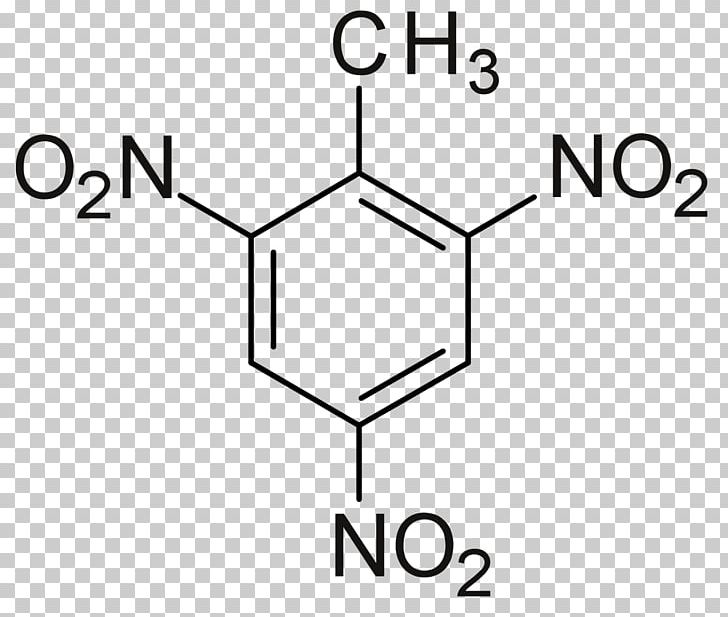
TNT Chemical Substance Chemical Compound Chemical Synthesis Explosive  Material PNG, Clipart, Angle, Black, Black And White,
  • TNT
    • Can’t do an episode on explosives and not talk about TNT. It is literally the standard for measuring other explosions. When an asteroid smacks earth’s surface the news tells us how powerful the blast was by saying it how many sticks of TNT it would take to replicate the force of said asteroid. We do the same thing with other bombs.
      • The “kiloton (of TNT)” is a unit of energy equal to 4.184 terajoules (4.184×10¹² J)
    • Trinitrotoluene more commonly known as TNT, or more specifically 2,4,6-trinitrotoluene, is a chemical compound with the formula C6H2(NO2)3CH3 (Carbon, Hydrogen, Nitrogen Dioxide, and Methyl).
    • TNT is a yellow solid. It is sometimes used a s reagent in chemical synthesis, but we all know it as an explosive.
    • One of the things that makes TNT so special is that it is actually hard to get TNT to explode. In order to get it to go boom you can’t just smack it against a rock or even put it in a conventional oven unless you crank the temperature up really high. TNT melts at 82° C (178° F) and does not explode below 240° C (464° F). So you can do lots with TNT before it melts your face off. That’s why militaries of the world would melt it down and pour it in to munitions’ casings all the time.
    • TNT’s History
      • That’s why TNT’s origins are a bit peculiar: It was first used as a dye for yellow coloring in 1863 by a German chemist named Julius Wilbrand.
      • Because TNT is so insensitive to heat and shock it took 3 decades until someone realized it would make a fantastic explosive.
      • In 1891 a guy named Carl Häussermann (another German Chemist) was the one who realized TNT’s potential to go *my best impression of an explosion*.
      • TNT is so insensitive that it was exempted from the UK’s Explosives Act 1875. It was not considered an explosive for the purposes of manufacture and storage.
      • The German armed forces adopted it as a filling for artillery shells in 1902. TNT-filled armour-piercing shells would explode after they had penetrated the armour of British capital ships, whereas the British Lyddite-filled shells tended to explode upon striking armour, thus expending much of their energy outside the ship.[8] The British started replacing Lyddite with TNT in 1907.
    • TNT is poisonous,
      • and if you get it on your skin it gets real itchy and irritated. TNT will also turn your skin bright yellow. During the First World War, all the men were on the fronts lines fighting in the war and the women were filling up munitions on a massive scale back home. The female munition workers who handled the TNT chemical found that their skin turned bright yellow, which resulted in their acquiring the nickname “canary girls” or simply “canaries”.
      • People exposed to TNT over a prolonged period tend to experience anemia and abnormal liver functions.
        • Anemia is a decrease in the total amount of red blood cells (RBCs) or hemoglobin in the blood or a lowered ability of the blood to carry oxygen. It can be rough on the heart.
        • And your liver is really important.
      •  Blood and liver effects, spleen enlargement and other harmful effects on the immune system have also been found in animals that ingested or breathed trinitrotoluene. There is evidence that TNT adversely affects male fertility.
      • TNT is listed as a possible human carcinogen, with carcinogenic effects demonstrated in animal experiments with rats, although effects upon humans so far amount to none (according to IRIS of March 15, 2000).
      • If you eat TNT your pee turns red because of chemical break down… but most people who experience immediatly think it is blood in their urine so they freak out.
        • Imagine that conversation with your doctor: “Doc you gotta help me. I’m pissing blood.”
        • Then he comes back after running tests: “Good news and bad news imaginary patient. Good news is you are not peeing blood. Bad news is that someone has been putting TNT in to your raisin brand every morning!”
      • TNT doesn’t only poison people, it pollutes its surroundings quite terribly. Residual TNT from manufacture, storage, and use can pollute water, soil, atmosphere, and biosphere.
      • In Sept. of 2001, the United States Environmental Protection Agency (USEPA) declared TNT a pollutant and made the removal of TNT from military and industrial sites not just a requirement, but a priority.
        • So don’t eat TNT. Don’t let you babies play with TNT. and Don’t store TNT in your basement. … it’s bad for the environment lol
    • With TNT we humans were able to do so much more with explosives. I mean you can pour the stuff in to bottles… there are so many more uses for TNT than other explosives.
Nitroglycerin - Wikipedia
  • Nitroglycerin
    • Nitroglycerin, also called glyceryl trinitrate, a powerful explosive and an important ingredient of most forms of dynamite. It is one of the most easily ignitable explosives on my list for this episode.
      • It is also used with nitrocellulose in some propellants, especially for rockets, missiles, and the race cars that used to be on the Fast and Furious movies back when they were actually about racing.
      • Nitroglycerin is also used as a vasodilator in the easing of cardiac pain.
      • Lots of people think TNT and Dynamite are the same thing… they are NOT.
    • Pure nitroglycerin is a colourless, oily, somewhat toxic liquid having a sweet, burning taste.
      • When I read that sentence doing my research I burst out laughing. I pictured a scientist in a lab coat with this stuff in a petri dish. He looks at it – takes some notes. Smells it – takes some notes. Then he tastes it and is like oh that’s not bad…. then his head explodes. THIS IS NITROGLYCERIN!!! WHY WOULD ANYONE TASTE IT?!
    • It was first prepared in 1846 by the Italian chemist Ascanio Sobrero by adding glycerol to a mixture of concentrated nitric and sulfuric acids.
      • The find caused a sensation because nitroglycerin’s explosive power was far beyond that of gunpowder. Ascanio thought 19th century Italy was going to have lazer guns in no time! The trouble was, nitroglycerin was highly unstable. It caused grisly explosions, including one in San Francisco that leveled a building and killed 15 people.
    • Nitroglycerin, with the molecular formula C3H5(ONO2)3, has a high nitrogen content (18.5 percent) and contains sufficient oxygen atoms to oxidize the carbon and hydrogen atoms while nitrogen is being liberated, so that it is one of the most powerful explosives known. Detonation of nitroglycerin generates gases that would occupy more than 1,200 times the original volume at ordinary room temperature and pressure; moreover, the heat liberated raises the temperature to about 5,000 °C (9,000 °F). The overall effect is the instantaneous development of a pressure of 20,000 atmospheres; the resulting detonation wave moves at approximately 7,700 metres per second (more than 17,000 miles per hour). Nitroglycerin is extremely sensitive to shock and to rapid heating; it begins to decompose at 50–60 °C (122–140 °F) and explodes at 218 °C (424 °F).
    • A serious problem in the use of nitroglycerin results from its high freezing point (13 °C [55 °F]) and the fact that the solid is even more shock-sensitive than the liquid. So at room temperature Nitro is super really sensitive to shock ( if you are handling it you have to do that awkward shuffle that you do when you pour a drink too full to the brim). If Nitro is in Vegas weather at like 120 degrees F it starts to decompose and become even more unstable. If Nitro is in nice fall weather at like mid 50 degrees F it freezes and when it is a solid it is even more irritable… This is one angry explosive.
    • The safe use of nitroglycerin as a blasting explosive became possible after the Swedish chemist Alfred B. Nobel developed dynamite in the 1860s by combining liquid nitroglycerin with an inert porous material such as charcoal or diatomaceous earth. Nitroglycerin plasticizes collodion (a form of nitrocellulose) to form blasting gelatin, a very powerful explosive. The Nobel prize is named after Alfred B Nobel…. yeah the internationally recognized prize for peace is named after a guy who made one fo the deadliest explosive a WHOLE lot easier for the world militaries to use.
      • At about the same time Nobel was perfecting dynamite, scientists in Britain were using a molecule called amyl nitrite to treat angina, an excruciating chest pain connected with inadequate flow of blood and oxygen to the heart.
      • Noting similarities between amyl nitrite and nitroglycerin, London physician William Murrell became the first to recommend nitroglycerin as a treatment for angina in 1879. He did so after carrying out several studies with nitroglycerin (on himself as well as on other people).
      • The World Health Organization considers nitroglycerin one of its essential medicines for a basic health system. Even Alfred Nobel got a prescription for nitroglycerin from his doctor. Nobel declined the medication, and wrote about it in a letter:
        • My heart trouble will keep me here in Paris for another few days at least, until my doctors are in complete agreement about my immediate treatment. Isn’t it the irony of fate that I have been prescribed [nitroglycerin], to be taken internally! They call it Trinitrin, so as not to scare the chemist and the public.
    • Another fun use of Nitro is that is can help keep your pecker pecking lol. The same blood-flow-stimulating properties that make nitroglycerin such a useful medication for relieving chest pain also may “enable a longer lasting sexual experience,” according to UK firm Futura Medical.
        • The company’s nitroglycerin gel, with the brand name of Zanifil, goes inside a latex condom. It is designed to stimulate blood flow to sustain men who report having trouble keeping erections with a condom. (The goal is to encourage safer sex by convincing those same men to stick with condoms.)
    • As an explosive Nitro is testy as heck! But when combined with Nobel’s porous material it is super handy! Plus the compound is good for your heart and can keep your willy hard!
  • There are a lot of explosives out there. If I covered them all this episode would be long as poop. Instead I think I discovered a pattern.
    • It seems all explosives aren’t just used for destruction and violence. All of them seem to have a beautiful Yin and Yang to them.
    • For example: Without doing any research I know nuclear power can be used as THE greatest destructive force wielded by man or it can be a virtually infinite source of electric power to help improve the lives of everyone.
    • I’ve said it before and I’ll say it again. Tools aren’t evil. It is the ones who wield them.
      • I swear I wasn’t trying to make a political statement with this episode. Just wanted to learn about explosives.
      • I think I might be a bit of a pyromaniac, but like the explosive version of that. Kind of like the explosives expert archetype from half of every heist/adventure movie. Like Vincenzo “Vinny” Santorini from that Disney movie Atlantis.
      • They fascinate me.

CREDIT

Categories
Uncategorized

Cocaine Hippos

The content below is from Season 2, Episode 33 of the Who’d a Thunk It? Podcast.

RECOMMENDATION SEGMENT

  • Free Guy
    • Every once in a blue moon I like to take myself on a “Me Date.”
      • I used to go on them all the time when I was single.
      • I’ll wear whatever clothes I feel most comfortable in, pop on over to a Fro-Yo place, and catch a movie that is playing in theaters. All by my self.
      • Now that I’ve found my lady Shannon, Me Dates don’t happen as often. I’d rather go places with her. But this past weekend she was invited to a baby shower and I was like “have fun honey, this guy’s got a movie to catch!”
      • And it was rather glorious I might say.
      • I chose to see the new Ryan Reynolds movie: Free Guy.
      • I plopped down in a big reclining movie theater seat with my Hawaiian shirt, white socks and sandals, and a large giant coke zero. The 2 hours that followed were hilarity-filled cinema fun.
    • There were a few jokes that got 0 laughs from the theater I was in, but other than that it was fun. The plot was modern, the references were refreshing, and Reynolds had me cracking up throughout the entire movie. His facial expressions alone were comedy gold. It felt like people had fun making this movie which is always a good quality in a film.
    • One of my biggest worries was that they would dumb down all the video game and Technological concepts so that a larger audience could follow along. But they walked a fine line of being general enough for non-gamers to get it, and detailed enough for gamers to not be bored.
    • I liked Deadpool and Reynolds’ comedic delivery doesn’t get much better than Deadpool. However, it was nice to see him as a less sinister character and without a mask on his face.
    • So that’s what I thought of Free Guy. You should check it out for yourselves… aaaaand….

NOW FOR THE MAIN EVENT!

  • – Cocaine Hippos- got your attention didn’t it? But what’s the title of this episode all about?
    • Am I going to tell you the story of hippo that came across a duffle bag filled with 76 pounds of cocaine that fell from the plane of a drug smuggler?
    • Will I go in to great detail about how that hippo ate said 76 pounds of cocaine, partied all night in the wilderness like a raged out frat boy until its heart eventually exploded?
      • No, that’s not what this episode is about… because that wasn’t a hippo, it was a 175 lbs. black bear. You heard me right. That is the very TRUE story of Pablo Esco-bear.
      • Yep, an actually black bear ate cocaine until it died in November of 1985.
  • Perhaps I will do a podcast episode on that legendary black bear some other time.
    • This is about the private zoo that was created in Columbia in the 1980’s, particularly the hippos and their bizarre story.
    • THIS podcast episode is about the hippos that are still alive and did NOT die from overdosing on hardcore drugs that dropped from the sky.
  • We’ve all heard of the drug kingpin from Columbia who was known as the King of Coke: Pablo Escobar
    • But incase you haven’t heard of him:
      • Pablo Escobar was born in Rionegro, Colombia in 1949. His father was a farmer, and his mother was a schoolteacher.
      • In 1976, a 27-year-old Pablo Escobar married Maria Victoria Henao Vellejo, who was then just 15.
      • Escobar was responsible for killing about 4,000 people, including an estimated 200 judges and 1,000 police, journalists, and government officials. In the 1980s, Escobar’s Medellin cartel was responsible for 80 percent of the cocaine that was sent to the United States.
        • And if you know anything about the 80’s, there was A LOT of cocaine in the US at the time.
        • Some might even argue there was so much coke in the 80’s that it influenced our television, music, fashion trends, and our pop culture as a whole.
      • Escobar is said to have smuggled cocaine into plane tires. Depending on how much product pilots flew, they could earn as much $500,000 per day.
      • While the Escobar family was in hiding, Pablo’s daughter, Manuela, got sick. To keep her warm, Escobar burned about two million dollars.
      • Ol’ Pablo spent around $2,500 a month on rubber bands used to hold his money.
      • At his peak, he had earned 30 Billion dollars.
      • In the late 1980s, Colombian authorities seized some of Escobar’s enormous fleet, including 142 planes, 20 helicopters, 32 yachts, and 141 homes and offices.
      • His business was so big and so scrutinized that in addition to planes, helicopters, cars, trucks, and boats, he even bought two submarines for transporting his cocaine into the United States.
    • Once you learn all that about the man (the guy who had so much wealth and power that he changed the US culture for decades) it isn’t hard to believe that he had his own private zoo.
  • Although their owner was gunned down on a roof top in Medellín Columbia in December of 1993, the hippos have managed to flourish in the Columbian environment.
    • Escobar’s private zoo located on his beautiful ranch in  Hacienda Napoles housed about 200 exotic animals like kangaroos, elephants, ostriches, zebras, camels, and giraffes.
    • The Ranch/Zoo was a luxurious country estate built and owned by Pablo Escobar that has since been transformed into a popular theme park with a waterpark and public zoo. Hacienda Napoles Theme Park is located about four hours east of Medellín and it covers about 7.7 square miles (20 square km) of land.
    • Back in the 1980s, Escobar imported one male and three female hippos to join his menagerie. Upon his death, other species of exotic animals were relocated, but the hippos were left because they were difficult to capture and transport.
      • The local authorities probably hoped the hippos would die out, but that didn’t happen.
      • Much like bears, Hippos are depicted as cute and docile by cartoons and stuffed animal toys. But you should know they are one of the most aggressive species on the planet. Hippos don’t eat meat. They are herbivores, but they are extremely territorial. They are Responsible For An Estimated 3,000 Deaths Per Year.
      • Females can get up to 3,300 pounds and males up to 4,000 pounds. The big bull hippos can be anywhere from 9.5 to 14 feet long and weigh from 5,000 to 8,000 pounds. The heaviest known hippopotamus was approximately 9,900 pounds. They are big, they are tough, and they are mean.
      • In their natural habitat of Africa, Big cats such as Lions and other animals like Hyenas and Crocodiles are the most common predators of the Hippopotamus, particularly of the young or sick individuals.
      • But nothing in south America is willing to take on the hippo.
      • These hippos are taking advantage of an evolutionary opportunity. The weather also helps: in Africa, the population is in part controlled by droughts that do not take place in Colombia. Indeed, conditions in their South American home seem so ideal for the hippos that studies show they start reproducing at earlier ages
      • These factors have lead to the hippos thriving. Estimates range from 80 to 120 hippos now live in Columbia. It is the largest herd of hippos outside of Africa.
  • The descendants of those 4 hippos imported by Pablo Escobar are now spreading through one of the country’s main waterways – the River Magdalena. Last month, a study published in the Biological Conservation journal said culling the animals was the only way to mitigate their environmental impact.
    • Environmental scientist predict that as early as 2034 there could be 1,400 hippos in Columbia.
      • They want to kill or castrate at least 30 hippos a year to stop such a population boom.
    • Scientists studying the hippos’ environmental impact believe they could affect the local ecosystem in a number of ways: from displacing native species already under threat of extinction, like the manatee, to altering the chemical compositions of waterways, which could endanger fisheries.
      • There other studies suggest they might help the environment too. But that is a National Geographic article that kept requiring me to sign up with an email in order to read their research. So sadly we won’t be going that information today lol. I make no money off this podcast and I’m not about to sign up for subscription for it.
      • Fun fact: hippos poop a lot. They are big animals that eat 88 pounds of food a night (which is only 1.5% of their body weight). But that still translates to a lot of hippo poop. That poop creates algea blooms in Columbia’s watershed which messes with the ecosystem. So it is the hippo poop that scientist believe will destroy local fisheries.
  • So if these cocaine hippos pose such a large threat to the local environment why don’t they kill them?
    • Well there is the moral issue. These hippos didn’t ask to be transported to Columbia by the King of Coke. But that is far from the biggest reason why these hippos aren’t dead already.
    • The local community LOVES these hippos. Remember how I said Pablo Escobar’s ranch was turned in to an amusement park/zoo? Well these hippos are a part of that attraction. They bring in a lot of tourist revenue. Plus the locals just adore their hippo neighbors.
Fear, love surround Escobar's hippos thriving in Colombia - The Columbian
https://www.bbc.com/news/world-latin-america-56011594
  • So the other option, instead of killing them is to castrate them.
    • But that is easier said than done.
    • Castrating your pet dog or cat is very different from castrating a 4,000 pound hippopotamus.
    • The BBC actually interviewed a veterinarian who helped with one of these procedures:
      • In 2009, Carlos Valderrama performed a castration of a male “cocaine hippo” as part of an experiment to study options to control the growing population.
      • “We are talking about an animal that can weigh five tonnes and be very aggressive,” Mr Valderrama said. “Even though we had sedated the animal, it almost tipped the crane we were using to help with the procedure. It was like being with a dinosaur in a Jurassic Park movie.”
      • The veterinarian said the main lesson of the experiment was that castration alone was simply not an option – especially considering the $50,000 (£36,000) bill. Official government statistics show only four animals underwent sterilisation between 2011 and 2019.
      • “Many of these hippos live in the wild. It is simply not possible to reach all of them easily. Meanwhile, they will keep on reproducing,” Mr Valderrama said.
      • From 2011 to 2019 four males were castrated and two females were sterilized, but this “does not seem to have an important impact on reproduction,” 
  • There have been no fatalities in Colombia, but last May local media reported that a farm worker was seriously injured by a hippo in a town near Hacienda Napoles.
    • Still, there was a massive public outcry when Colombian Army soldiers gunned down the hippo Pepe in 2009, after it was deemed a threat to local communities. It was enough to lead authorities to make hippos legally protected, which is an obstacle to any plans to cull them.
  • You know what I think: humans aren’t going to be able to fix this issue.
    • The deed is done. Escobar brought over 4 hippos and now hippos live in south America.
    • Will it be “bad” for the environment? IDK. Depends on what you consider bad.
    • Will this change the environment? NO DOUBT ABOUT IT
    • But these are hippos we are talking about.
    • These things can weigh more than a Ford F-150 pickup truck for Pete’s sake.
Again, heaviest hippo ever weighed was 9,900 pounds

  • In the end these hippos will continue to be a part of this ecosystem. They may even spread farther across the Americas in the centuries to come. That is if we human’s don’t destroy the natural world beyond saving before they can do so.
    • My point is that environmentally speaking we’ve got much larger problems on our hands. Sea levels are rising, global temperatures are getting higher each year, the ice caps are melting, and California is on fire.
    • I say we focus on some of those problems first, then circle back to the pesky cocaine hippo issue later.

CREDIT

Categories
Uncategorized

Japan Cow

The content below is from Season 2, Episode 32 of the Who’d a Thunk It? Podcast.

RECOMMENDATION SEGMENT

  • Wilfred
    • Wilfred started out as a dark comedy short film from Australia back in 2002. But later in 2011 would be adapted as a television series starring Jason Gant (who also played the original Wilfred) and Elijah Wood.
    • The show came out when I was in high school. The premise is a severely depressed lawyer name Ryan (played by Elijah Wood) goes through a existential crisis. At that very moment his doorbell rings. Ryan opens his door to see a 6 foot tall Australian guy in a cheap dog costume named Wilfred (played by Jason Gant) standing on his door step.
    • Ryan soon finds out that everyone else sees Wilfred as an actual dog. Ryan is the only one who sees Wilfred as a dude and can understand him.
      • Yeah, Wilfred speaks English with and Australian accent. He even drinks beer and does recreational drugs.
    • The show is still a dark comedy like it’s short film predecessor, but the show adds a psychological element. You find out more about Ryan and his tragic life. You will laugh hysterically as you watch the show, but you will also find out more about the human condition along the way.
    • When Wilfred aired in 2011 I was in High School and I only appreciated it for it’s comedic value, which is pretty good. But when I came back to the show while I was studying to get my Masters I realized how deep the show really is.
      • Wilfred is one of my favorite shows of all time. It helped me understand myself a little bit during a time in my life when that seemed really hard to do.
      • I strongly suggest you give it a go. It is currently on Hulu.
  • Just please keep in mind that the show Wilfred is only meant for adults… not for children.

NOW FOR THE MAIN EVENT!

  • Meat tastes amazing.
    • It isn’t always the healthiest choice. There are other ways to get a good source of protein and fat that are more healthy.
      • But meat is pretty fantastic tasting.
    • Morally speaking, meat is probably the worst common food in existence. It requires the death of a living breathing animal.
      • However, biting in to a quality hunk of meat is one of the most satisfying experience one can have… because it is so tasty.
    • When it comes to economics, meat doesn’t fair much better than the other categories I just mentioned. The world is experiencing it’s worst water crisis in recent history with shortages affecting more than 3 billion people around the world. The amount of fresh water available for each person has plunged by a fifth over two decades. And most meats are at the top of the list of how much water is necessary to create. For example, It takes approximately 1,847 gallons of water to produce 1 pound of beef — that’s enough water to fill 39 bathtubs all the way to the top.
      • With all that in mind, please note that the taste of meat is phenomenal.
  • What’s the point I’m trying to make here? No, don’t worry, this isn’t an episode about how you shouldn’t eat meat. I myself love meat.
    • I just wanted to present the many arguments against meat production and consumption before I do an entire episode on a meat product.
    • Because they are there, they do make great points, perhaps our world would be better if we all became vegetarians… then again… meat tastes great.
    • And this episode is about perhaps the greatest tasting meat to have ever existed: Wagyu Beef.
    • The term Wagyu is from Japan.
    • It translates to “Japanese Cow”
  • So Wagyu isn’t a specific cut of beef, nor is it a certain way to prepare the beef.
    • Wagyu refers to the breeds of cows that are from the Island Nation of Japan.
  • The roots of Wagyu’s superiority can be traced to the late 1800s. During the 1880s, several breeds of European cattle were introduced to Japan and crossbred with native Japanese breeds. The four strains of cattle that resulted dominate the Japanese beef trade to this day.
    • When Japan opened up to international markets for beef production in 1991, their local farmers began to worry.
    • While places like America, Argentina, and Australia have tons open pastures to grow HUGE quantities of beef, Japan has little land. What land Japan does have is mostly made up of rocks or cities.
    • So the Japanese agriculture industry decided they wouldn’t try to compete with the international market with quantity. No, they decided they would compete with quality.
      • Instead of marketing their beef the same way as other markets, Japan markets their beef as a luxury good, only to be eaten in small quantities.
      • When we think beef here in the States we think of a big juicy steak or burger as the central component of the dish. But in Japan they eat their beef in small bits. The beef compliments Japanese dishes instead of being the largest and most important portion on the plate.
    • When Japan did finally open up their beef industry to international markets the world was shocked. The result of the European cows from the 1880s carefully being bred with native breeds were cows that yielded meat with ridiculously high fat marbling.
      • Marbling is the white flecks of intramuscular fat in meat, most notably red meat. The fat in lean muscle creates a marble pattern—hence the name.
      • Wagyu (or Japanese cows) were bred to have intramuscular fat on levels that had never been seen before outside of Japan. I mean the meat from Japanese cows almost looks like bacon.
    • Although they did open up to international beef markets in 1991, Japan still enforces strict regulation on the production of its beef. This is what has kept Wagyu beef at such a high level demand.
  • There are 4 different breeds of Japanese Cow (above)
    • Only the Kuroge and Akage (Japanese Black and Japanese Brown) breeds can be found outside of Japan.
      • The Nihon Tankaku and Mukaku breeds (Japanese Shorthorn and Japanese Polled) are forbidden to be bread outside of Japanese borders.
    • The most popular breed of Wagyu is the Kuroge breed (also known as Japanese Black).
      • These entirely black cattle are the most popular breed of Wagyu. They are raised throughout Japan.
        • Although there are 4 different kinds of Wagyu breeds, when someone is talking about Wagyu, they are almost always talking about the Japanese Black breed as they make up 90% of Japans cattle.
      • Japanese Black have the strongest genetic predisposition to the quality Wagyu is renowned for – intense marbling. Within the Japanese Black Strain, there are different bloodlines, each with their own specific traits. The three primary Japanese Black bloodlines include:
  • 1. Tajima [Tah•ji•ma] also referred to as Tajiri
    • Tajima are the marbling Wagyu. Even within the Japanese Black breed, this specific bloodline is the one known best to produce the highest percentage and best quality marbling. They are generally smaller framed, have slower growth rates, and expected to yield superior meat. 
    • Tajima originally hail from the Hyogo Prefecture in Japan and are responsible for the best beef in the world. All beef that is eligible to be certified as Kobe is pure Tajima, bred, raised, and slaughtered in the Hyogo Prefecture. Historically and today, Tajima are highly regarded for Fullblood breeding in Japan and abroad. 
Hyogo Prefecture
  • 2. Shimane [Shi•mah•nee] also referred to as Fujiyoshi
    • Originating from the Shimane Prefecture of Japan, these cattle are known for large frames, medium growth, very strong maternal capabilities, and average meat quality. Their offspring tend to exhibit a large body size, however their marbling is generally less refined than Tajima. 
Shimane Prefecture
  • 3. Kedaka [Keh•dah•kah] also referred to as Tottori
    • The Kedaka line originates from the Tottori Prefecture of Japan and, similar to Shimane, are known for their larger frames but with a higher meat quality. They also tend to have a good growth rate and high levels of fertility.
  • These Japanese Black bloodlines can be crossbred to impart diversity into herds. For example, breeding Tajima (or high Tajima bulls) with Kedaka or Shimane cows, has the potential to produce offspring that have the dense, delicate marbling of a Tajima with the larger size, faster growth rates, and stronger maternal instincts of a Kedaka or Shimane. In fact, Kedaka are often considered to play a critical role in Japanese Fullblood Wagyu production.
  • It may seem strange to most people that this much attention is paid to tracking breeds, bloodlines, and every attribute of each. These farmers are meticulous.
    • but Keeping track of breed and bloodline activities and attributes is important to Wagyu farmers as it is with most domesticated animal industries
    • For example, the bloodline of race horses is also carefully analyzed and documented.
  • Wagyu cows are raised by specialty breeders until they are between seven and 10 months old, when they are sold to a farmer along with a birth certificate certifying their pure bloodline. These animals cost farmers as much as $30,000 each, which is as much as 10 times more than the typical American Angus! 
    • After auction, the cows are taken to feeding farms where they’re given names. Wagyu farmers take great pride in providing a humane life for their cows, and they are given plenty of room in their pens. They often share a pen with only four or five other cows, whereas mass operations tend to keep dozens of cows in a single pen.
    • Only pregnant cows and breeding cattle are allowed to graze in the pasture. The cattle designated for slaughter are kept in pens.
    • During this period, the cows mature for two or three years or until they reach about 1,500 pounds or gain around 50% fat. The way Wagyu are fed and cared for is important to ensuring that they reach this milestone. Wagyu are never given growth promotants, steroids, hormones or drugs to help them gain weight faster. The process is natural, which means it takes more time than it does in the typical methods used in the U.S.
    • Most Wagyu farmers provide their cows with three meals a day made up of high-energy ingredients, including hay, grain and wheat. Often, this feed is imported from other countries, which contributes to the high cost of Wagyu cultivation. They are generally weighed once a month and are expected to gain around 2.5 pounds per day.
  • There is a special kind of Wagyu Steak called Olive Wagyu.
    • It is a brand of Wagyu that comes from cattle raised on a small Japanese island called Shodoshima that is famous for its olive oil industry. In 2006, cattle farmer Masaki Ishii wanted to find a way to use the by-product of olive oil production as feed for his cows
      • He went to olive oil makers, took the olive peels and toasted them so they became sweeter and mixed it with rice straw, barley, grains, and the cows loved it
    • He shared the recipe with other farmers in the area and they all bought in and started doing it
      • Because of the cows’ diet, Olive Wagyu is highly marbled with fat that’s a light yellow color, and it produces a flavor profile so unique that the meat beat out 182 others for the Best Fat Quality category at the 2017 Wagyu Olympics, a six-day contest that takes place every five years. Beef producers from all over Japan enter their finest cuts.
  • Contrary to popular belief, Wagyu cattle are not routinely massaged or serenaded with classical music (at least not daily).
    • However, farmers do take great care to ensure that their muscles do not become tense. This generally means simply avoiding rigorous activity and stress, but it may also involve using a stiff brush to increase blood circulation and work out tension. It’s important for Wagyu to remain in a stress-free environment because stress increases adrenaline and contributes to tensed muscles and tough meat.
    • The length of time it takes to fatten the cows and the price of importing their feed is what contributes to the high cost of wagyu beef.
  • After reading about all the breeding and how the cows are processed and how much money they are worth… my next question was: What cut do people usually buy?
    • According to LiveJapan.com: The most sought-after is sirloin meat (サーロイン / sāroin), generally used to make wagyu steak or sukiyaki. The meat around the loin boasts a fine marbling and thus makes for the best cuts to savor the characteristic taste of Japanese wagyu beef.
    • For people who don’t stare at butcher posters all day, the sirloin is on the cows back. It is towards the rear end of the cow, but not quite it’s butt (which is referred to as the round).
Taken from: https://www.foodbeast.com/news/a-cheat-sheet-to-beef-cuts-price-and-best-cooking-method/
  • Now if you have heard of Wagyu, chances are you have heard of Kobe Beef. Here’s the difference
    • Kobe, in short, is a variety of Wagyu. … So “Wagyu” refers to any cattle that is bred in Japan or the Japanese-style. Kobe beef is comprised of a very particular strain of Wagyu called Tajima-Gyu that is raised to strict standards in the prefecture of Hyogo. (Hyogo’s capital city is Kobe, thus the name).
    • Because Kobe beef exemplifies everything that makes Wagyu better. Kobe beef is considered the most abundantly marbled in the world, brimming with the creamiest, most decadent, most flavorful streaks of fat a steak can have. period
    • A major factor in the quality of Kobe steaks is the uncompromising regulations the region uses for its cattle. To be labelled Kobe, cattle must meet the following seven standards upon slaughter:
      • Bullock (steer) or virgin cow.
      • Tajima-Gyu born within Hyogo Prefecture.
      • Fed on a farm within Hyogo Prefecture.
      • Meat processed within Hyogo Prefecture.
      • Marbling rating (BMS) of 6 or higher on a 12 point scale.
      • Meat quality rating of 4 or higher on a 5 point scale.
      • An overall weight not exceeding 470 kg (1,036 pounds).
    • Because of these stringent standards, only between 3,000 and 4,000 head of cattle qualify as authentic Kobe cattle each year.
  • So if you have ever seen a menu in the States advertising that they serve Kobe or Wagyu even, they are most likely lying.
    • When it comes to wagyu, the label may be more than a little misleading. In the mid-2010s, some of New York City’s most famous steakhouses and restaurants were listing “Kobe” wagyu beef on their menus. An investigation by Inside Edition brought one problem to light, however: places like Old Homestead Steakhouse and Le Bernardin weren’t serving true Kobe wagyu beef like what was listed on the menu. The restaurant brand McCormick & Schmick’s was doing the same, and it had to settle a class-action lawsuit because of it.
    • The problem comes down to labeling regulations set by the United States Department of Agriculture. The US law states that beef only has to have 46.9 percent wagyu genetics to sell as wagyu at retail, according to Bon Appetit, and the rest can be angus. Restaurants don’t have to listen to these labeling regulations at all and can call whatever beef they wish wagyu. This makes wading through wagyu beef labels like walking through the Wild West of questionable information.
    • Only certain restaurants are permitted to sell the imported Kobe Beef, the real stuff. So if you are out on the town and decide to fork over ridiculous prices for a Kobe Beef dish, ask to see the “From Japan” sticker on the package. In my book, if You are paying those crazy prices then that is not an inappropriate request.
  • While the popularity of Wagyu has risen internationally (with Japans exports rising by 200% in the past 5 years) the demand for Wagyu in Japan has actually dropped.
    • And while Wagyu Beef, Kobe, and Olive Wagyu are still insanely expensive (some plates costing $300), that may soon change.
    • All those regulations Japan enforces on their Beef industry didn’t keep the Wagyu genetics from leaving the island.
    • Wagyu beef that has been genetically tested as 100% authentic Wagyu is now being bred in places like the UK. Other countries such as US, Australia, and some Middle Eastern countries are interbreeding Wagyu with their own cattle creating a meat with similar quality.
    • Here’s only hoping: A much more affordable Wagyu dish might be available to everyone within the near future.

Thanks for Listening Who’d a Thunkers! Until next week 🙂

CREDIT

This video is long. Very long. But it was incredibly satisfying to see that I wasn’t the only one to understand the show Wilfred this way.
Categories
Uncategorized

Whoever Dies with the Most Stuff Wins

The content below is from Season 2, Episode 31 of the Who’d a Thunk It? Podcast.

Just to give credit where credit is due: the title for this episode is a quote by English author David Mitchell from his book Number9Dream published in 2001.

RECOMMENDATION SEGMENT

  • Shannon did this week’s recommendation segment again… sorry blog readers. But if you want to listen to it all you have to do is click the link above. Shannon’s segment is at the very beginning of the audio podcast.

NOW FOR THE MAIN EVENT!

  • This week’s episode is about a guy in history named Musa and what I learned from his story.
    • Throughout his lifetime Musa would accumulate so much wealth but we aren’t exactly sure how much. Every record historians found in hopes of tallying up just how much money Musa had is just a guy who basically wrote “I can’t even describe it.”
  • Musa was born in the year 1280 into a royal family.
    • Musa would become King in the year 1312. At which point people started calling him Mansa Musa as the word “Mansa” means sultan, king, or emperor in the Mandinka language.
    • The story of how Musa became Mansa Musa does come with some mystery and wonder, but we’ll get to that later.
    • When Musa inherited the kingdom of Mali in North West Africa he had already inherited one of the richest kingdoms on Earth.
      • The kingdom of Mali sits on a huge amount of natural resources, namely Salt and Gold. Both of which were and still are very valuable.
      • For whatever reason, gold has always been valuable and you and I can easily wrap our heads around that, but salt might be more difficult for us, people of this modern era.
      • But until relatively modern times, salt was prized mainly for its ability to preserve foodstuffs as well as season food. While gold looks nice, salt can make your food taste good and can preserve food so you and your family don’t starve. There have been times throughout history where salt was just as, if not more valuable than gold.
  • Even though Musa inherited an already prosperous kingdom, he didn’t just sit back and enjoy the labors of his predecessors. He got to work building upon the wealth he already had and turned it into something even greater.
    • Under his rule, the kingdom of Mali grew significantly. He annexed 24 cities, including Timbuktu.
    • The kingdom stretched for about 2,000 miles, from the Atlantic Ocean all the way to modern-day Niger, taking in parts of what are now Senegal, Mauritania, Mali, Burkina Faso, Niger, The Gambia, Guinea-Bissau, Guinea and Ivory Coast.
    • Historians estimate that during Mansa Musa’s reign the kingdom of Mali had about half of the “Old World’s” gold… and when you are king, what ever the kingdom has is yours. So Mansa Musa had about half of all gold in the Eastern Hemisphere (keep in mind that they didn’t know there was a western hemisphere during the 1300’s).
      • Even though having half of all known gold and a lot of salt is one heck of a first step to becoming unconceivably wealthy, that wasn’t the only factor that contributed to Mansa Musa’s wealth. He also had MAJOR trading ports and cities within his territory such as the legendary Timbuktu.
      • So not only did he have the largest supply, he had one of the best distribution networks as well. If you’ve seen Breaking Bad or perhaps Miami Vice then you know it isn’t just about the supply. It’s also about the crew you got runnin’ in.
  • Mecca Bound
  • Mali was filthy rich, but it wasn’t particularly famous. Other than its citizens and neighboring lands, Mali wasn’t spoken about by commoners throughout Europe or even the Mediterranean. That is until Mansa Musa’s legendary road trip!!!
    • No, this wasn’t a road trip with gas station stops for slim jims and soft drinks, no, it was MUCH more epic than that.
    • You see Mansa Musa was a devout Muslim and like all Muslims he wanted to make a trek to Mecca before he died. This is known as a Hajj is the religion of Islam. What made this trek so legendary? Well when you are the wealthiest known-person to have ever existed you aren’t going to travel 3,000+ miles through the Sahara Desert in modesty.
      • Reports say Mansa Musa’s army of servants, soldiers, and followers prepared for months before their King’s Hajj and when they set out they were 60,000 strong.
      • He took his entire royal court and officials, soldiers, griots (entertainers), merchants, camel drivers and 12,000 slaves, as well as a long train of goats and sheep for food.
      • This wasn’t a travel party, it was a community moving through the desert. And keep in mind that every single person on this journey was covered head to toe with the finest silk and golden jewelry in existence… Mansa Musa even had the slaves blinged out in the finest garb.
      • Along with their livestock brought along for food, they also brought camels as pack animals. Each of the 100 camels was carrying about 100 pounds of pure gold.
      • I can only imagine a rural desert dwelling people waking up one day to see 60,000 people dressed flyer than Puff Diddy walking through the desert eating the finest of foods and acting like the heat wasn’t all that bad with slaves fanning them as they went. What a trip.
  • Then they visited Cairo.
    • The BBC describes it here: “”So lavishly did he hand out gold in Cairo that his three-month stay caused the price of gold to plummet in the region for 10 years, wrecking the economy.””
      • Mansa Musa gave so much gold to peasants and overpaid for just about everything. Imagine going in to a gas station today for a coke and paying the cashier with a brick of gold. Can you guess what kind of societal unrest that would have on the communities that Mansa Musa visited?
    • “”US-based technology company SmartAsset.com estimates that due to the depreciation of gold, Mansa Musa’s pilgrimage led to about $1.5bn (£1.1bn) of economic losses across the Middle East.
    • On his way back home, Mansa Musa passed through Egypt again, and according to some, tried to help the country’s economy by removing some of the gold from circulation by borrowing it back at extortionate interest rates from Egyptian lenders.””
      • THAT is a baller move. Give away so much money to the peasants and merchants of a region that you tank the local economy. THEN on your way back through those communities you buy back most of the gold you gave but at ridiculous interest rates so you aren’t just helping to stabilize the economy back to normal, you also pay in to the financial institutions of the region.
  • That brings us to how Musa became king.
    • The world only knows about Mansa Musa’s ascension to the throne because a scholar wrote it down a long time ago.
    • “”According to “The Age of Mansa Musa of Mali: Problems in Succession and Chronology” by the International Journal of African Historical Studies. Publishing, for the Boston University African Studies Center
    • Mansa Musa stayed in Cairo for three months in 1324 while en route to Mecca for the hajj.[1] While there, he befriended an emir (or local chief) named Abu al-Hasan Ali ibn Amir Hajib, who was the governor of the district of Cairo that Musa was staying in.[2] Ibn Amir Hajib later recounted what he had learned of Mali from his conversations with Musa to the scholar al-Umari. In one such conversation, Ibn Amir Hajib had asked Musa how he had become king, and Musa responded:
      • -This is a bit long, but it is Musa’s own words… well sort of. It is actually his words through a scholar twice removed from Musa.-
      • We belong to a house which hands on the kingship by inheritance. The king who was my predecessor did not believe that it was impossible to discover the furthest limit of the Atlantic Ocean and wished vehemently to do so. So he equipped 200 ships filled with men and the same number equipped with gold, water, and provisions enough to last them for years, and said to the man deputed to lead them: “Do not return until you reach the end of it or your provisions and water give out.” They departed and a long time passed before anyone came back. Then one ship returned and we asked the captain what news they brought. He said: “Yes, O Sultan, we traveled for a long time until there appeared in the open sea [as it were] a river with a powerful current. Mine was the last of those ships. The [other] ships went on ahead but when they reached that place they did not return and no more was seen of them and we do not know what became of them. As for me, I went about at once and did not enter that river.” But the sultan disbelieved him. Then that sultan got ready 2,000 ships, 1,000 for himself and the men whom he took with him and 1,000 for water and provisions. He left me to deputize for him and embarked on the Atlantic Ocean with his men. That was the last we saw of him and all those who were with him, and so I became king in my own right.”
    • Al-Umari’s record of this conversation is the only account of this voyage, as it is not mentioned by other medieval Arab historians or West African oral tradition.[4] Nonetheless, the possibility of such a voyage has been taken seriously by several historians.
    • No uncontroversial evidence of pre-Columbian contact between Africa and the Americas has ever been found.[22] Regardless of whether any of the Malian ships ever reached the Americas, they apparently never returned to Africa and there were not any long-term economic consequences of the voyage
    • The river on the sea described by the survivor of the first expedition is presumably the Canary Current.[6] The inclusion of this fact in Musa’s account indicates that Musa had some awareness of the oceanographic conditions of the open Atlantic. The Canary Current flows from West Africa to the Americas, which would have facilitated travel from Africa to the Americas but prevented it in the opposite direction.“”
      • I got all that from International Journal of African Historical Studies. I know it says there is no hard evidence that Africa went to the Americas before Christopher Columbus, but boy does the Tin Hat part of my personality get all giddy at the thought of it. What amazing story that would be. If only 1 survivor lived to tell the tale.
      • I would do an entire episode on Musa’s predecessor if his story only had an ending other than “we never found out what happened to them.”
      • Anyway, now back to Mansa Musa himself.
  • Mansa Musa the Philanthropist
    • Mansa Musa had put Mali and himself on the map, quite literally. In a Catalan Atlas map from 1375, a drawing of an African king sits on a golden throne atop Timbuktu, holding a piece of gold in his hand. After his hajj, Mansa Musa had become a household name.
      • That is how Timbuktu became part of the popular saying “From here to Timbuktu.” People all over the Old World now heard of the unconceivably rich king from this mysterious far away land.
    • On his way to Mecca, which he did reach by the way, Mansa Musa gave away a lot of money. Some, including his own singsong historians known as griots, thought Mansa Musa was too wasteful with his money. However, not all of his spending was on a whim.
    • He used much of his wealth to build a great number of mosques (legend says he built one every Friday during his reign), the most famous of which is the Djinguereber Mosque.
      • LOL when I sound out the name of that Mosque my mind wants to put a Francophone sound to it like it is a French word. Must be my old French Minor from college clawing to get out of my mind.
    • Mansa Musa also commissioned several universities throughout the kingdom. Many of these historic buildings — both the schools and the mosques — are still standing today, some 700 years later.
    • He returned from Mecca with several Islamic scholars, including direct descendants of the prophet Muhammad and an Andalusian poet and architect by the name of Abu Es Haq es Saheli, who is widely credited with designing the famous Djinguereber mosque. The king reportedly paid the poet 200 kg (440lb) in gold, which in today’s money would be $8.2m (£6.3m).
    • In addition to encouraging the arts and architecture, he also funded literature and built schools, libraries and mosques. Timbuktu soon became a centre of education and people travelled from around the world to study at what would become the Sankore University
This was on a BBC article written in March of 2019.
  • CONCLUDING THOUGHTS
    • What happened to the Mali empire you ask? Well Mansa Musa died at the age of 57 in the year 1337. His sons took over as rulers of the empire, and they screwed it up. The smaller states of the empire that were annexed by their father broke off.
    • Even though Mansa Musa was the wealthiest person we know of, he is only a small footnote in the pages of history. The reason being that European countries went on to conquer and lay waste to much of West Africa. The acts of Europeans are what make up most of our history books because they were the ones that won the right battles at the right time.
      • And Europeans didn’t really venture in to Africa that much during Mansa Musa’s era. Had they done so I’m sure there would tales about his massive wealth all throughout European history books.
  • Let us compare Mansa Musa to some of the richest men in recent history:
    • Jeff Bezos: $190.7 Billion
    • Bill Gates: $130.8 Billion
    • Elon Musk: $186.8 Billion
    • John D Rockefeller: *$418 Billion (*converted to USD worth of today)
    • Mansa Musa: closest estimates of his wealth was measured by the amount of economic instability he created in the towns he visited because he gave away soooo much money
  • I did this episode because Mansa Musa’s story is entertaining. It is exciting to try and comprehend that much wealth and of course my mind puts myself in Musa’s shoes. “What would I do with all that money? The possibilities are ENDLESS!”
    • But ultimately I think that is foolish thinking. ‘What would I do with all that money?‘ … I’d probably see the futility of it all and come to the same conclusion Musa did:
      • What good is all this money if I don’t share it?
      • Why have all this wealth if I can’t improve the lives of those around me?
      • Instead of buying another gold plated camel, maybe I’ll improve my community.
    • Some people go through life as if they were told “Whoever Dies with the Most Stuff Wins” when they were younger. But life isn’t a game… or… if it is that certainly is not the ultimate goal.
      • Sure it is important to have enough wealth. We need food, water, shelter, and a decent WIFI connection. And I think it is fine to have a bit more than the necessities… and then some.
      • But look at Musa. The guy had more wealth than the people of his time could even fathom… and he gave it away by the camel load.
      • I hope you were able to take something away from this episode.

Thanks for tuning in Who’d a Thunkers!

CREDIT

Categories
Uncategorized

The Confederados

The content below is from Season 2, Episode 30 of the Who’d a Thunk It? Podcast

RECOMMENDATION SEGMENT

  • Just yesterday I finished watching James Gunn’s Suicide Squad of 2021.
    • I expected to not enjoy this movie in the slightest.
    • The Suicide Squad movie from 2016 was OK I guess but I remember leaving that theater feeling disappointed.
    • This 2021 Suicide Squad movie was one heck of a ride. It was gruesome, funny, exciting, and overall a fun experience that I had from the comfort of my own home. This movie is theaters, but if you have HBOMax you can just stream it at home.
    • As a disclaimer: while this podcast tries to keep things clean for listeners of all ages, this movie is R rated fun. View Discretion is advised.
    • But I HIGHLY recommend you watch James Gunn’s Suicide Squat 2021. It made me remember what fun movies can be.

NOW FOR THE MAIN EVENT

  • This week’s episode is about a post-Civil War culture created in Brazil of all places.
    • Now most people have heard that Nazis fled Europe after WW2 and went to South America. As many as 9,000 Nazis are thought to have fled to South America in the final days of the Third Reich and the years that followed.
      • I might just have to do an episode on this Nazi migration on a later date.
    • But not many people know that the Nazis were not the first militarily defeated culture to flee to South America. The confederates of the American Civil War did it long before the world would even know what a Nazi was.
  • So let us talk about the American Civil War, more specifically what it meant to America’s culture.
    • First off: the Union North won. In 1865 General Ulysses S. Grant led the Union armies to victory over the Confederate South.
    • What was it fought over? *cough*
      • Well that tends to be debated on a social level in the states and the answer varies heavily depending on who you ask.
      • It seems for generations the South was handing out entirely different textbooks to their youth than the Union states were.
      • Thanks to a group called the United Daughters of the Confederacy (UDC), American Southerners to this day don’t believe the Civil War was fought over slavery.
        • Was it more complicated than that? I’m sure it was. Wars are always more complicated than just one sentence, but ultimately IDK. I wasn’t there.
      • But here’s what I was taught: the common explanation for the bloodiest conflict in the history of North America was fought over the moral issue of slavery. In fact, it was the economics of slavery and political control of that system that was central to the conflict. A key issue was states’ rights.
        • I took that explanation from PBS’s History Detectives. PBS also said:
        • “The Southern states wanted to assert their authority over the federal government so they could abolish federal laws they didn’t support, especially laws interfering with the South’s right to keep slaves and take them wherever they wished.
        • Another factor was territorial expansion.
        • The South wished to take slavery into the western territories, while the North was committed to keeping them open to white labor alone.
        • Meanwhile, the newly formed Republican party, whose members were strongly opposed to the westward expansion of slavery into new states, was gaining prominence.
        • The election of a Republican, Abraham Lincoln, as President in 1860 sealed the deal. His victory, without a single Southern electoral vote, was a clear signal to the Southern states that they had lost all influence.
        • Feeling excluded from the political system, they turned to the only alternative they believed was left to them: secession, a political decision that led directly to war.”
        • So according to PBS, it was fought over power. A politically and economically complicated struggle for power with slavery as a sort of focal point.
    • This episode isn’t about the moral, political, and historical facts surrounding the Civil War. It is about a little fun fact town in Brazil. However, seeing how racism is unfortunately (and frankly embarrassingly) still a major issue in my country, I thought it was important to give the facts about the American Civil War.
      • Yes, it was more complicated than a war over slavery, but the United Daughters of the Confederacy manipulated the American education system to paint the Confederates as simple victims, and it certainly wasn’t that simple either. Especially since virtually all of the United Daughters of the Confederacy founders had direct ties with the KKK.
  • *sigh of relief* OK I made it through the political part… are you still with me? LOL… OK good.
    • To better understand the culture in America during and after the Civil War it is important to understand just how bloody and destructive this war was:
      • The 1860 census counted about 31,500,000 people. The war caused Approximately 750,000 deaths.
        • That is about 2.5% of the population of the country dead over the span of 4 years.
        • Just to help wrap your head around that: Losing 2.5% of the American population today would be the equivalent of having 911 happen twice every day for 4 years. Just imagine what that did psychologically to the soldiers on the front line, the communities they left behind, and the families left behind.
      • 200,000 women were widowed and there were even more orphans left after the war
      • And the Ratio of Confederate deaths to Union deaths was 3:1 so the South got it much worse.
    • After the war much of the South was in ruins.
      • Lincoln declared the states of the Confederacy as territories before each state would eventually be accepted back in to the Federal government. He wanted the unionization of the States to happen as quickly as possible so he only required a 10% vote from each state. This left A LOT of southerners feeling underrepresented.
    • Much of the South was also ravaged by war. Plantations, farms, and even entire towns were destroyed. It was going to take a lot of work and not everyone was up to the task.
    • Rather than rebuild in a unified America that had abolished slavery, many Southerners preferred to move to entirely different countries.
      • This move was considered by Confederate leaders even before the Civil War ended. The confederates sent scouting envoys to many countries south of their own to find a land they could govern the way they wanted.
      • You could argue the South knew they were going to lose. Their military technology was about 2 decades behind the Union and only 56% of the male southern population was literate. The Union’s male literacy rate was 97%. So the South was at a major disadvantage from the start.
  • Even before the war, the confederates sent men like William Walker to parts of Mexico, California, and Nicaragua. There Walker incited revolution so he could over throw these areas and proclaim himself president.
    • The idea was for men like Walker to conquer lands south of the Confederacy and then let his old Confederate pals join him in their new lands. It worked for awhile (almost a year) until Honduran and British forces captured Walker and executed him by firing squad.
      • Confederate strategist even planned to invade Mexico and all of the Caribbean. If they won the Civil War or even negotiated a cease fire with the Union North, they planned to re-enslaving the black Caribbean people to create their confederate haven.
      • Had they succeeded they would have had control of the Gulf of Mexico and the Caribbean Sea affectively making them one of the most resource rich nations on the planet.
  • The Para-Military group Knights of the Golden Circle held on to hopes of conquering land in the Americas for the confederacy after the Civil War ended.
    • A notable member of this group being John Wilkes Boothe (Lincolns would be assassin)
    • This group funded the transportation of Confederate leaders and war criminals alike to lands throughout Latin America.
    • But this group had little backing. Leader of the Confederate armies General Robert E Lee and the President of the Confederate states during the Civil War Jefferson Davis encouraged the Knights of the Golden Circle to give up any and all notions of conquest. They wanted their fellow confederates to try and rebuild the American South.
American Confederacy Is Still Alive in Brazilian City Americana
  • Despite their leaders encouragement to stay, some confederates decided to get outta dodge.
    • They lost the war, but they still saw themselves as confederates and not United States citizens.
    • First they went to Mexico. There they were welcomed by Austrian-Mexican Emperor Maximillian. Emperor Maximillian even gave these confederates citizenship and land to live on. But that didn’t last long.
    • The Civil War ended in 1865. Maximillian was only Emperor of the Second Mexican Empire from April 10th 1864 until his execution on June 19th 1867 at which point the Confederate citizenships were revoked and their land was taken back. Benito Juarez’s liberated Mexican forces kicked the confederates out of Mexico…
  • That’s when they Confederates set their sights even further South.
    • Upwards of 20,000 Confederates or Confederados as they were now dubbed, began to arrive in the Port of Rio de Janeiro as early as November of 1865.
    • The Emperor Dom Pedro II, nicknamed “the Magnanimous”, was the second and last monarch of the Empire of Brazil, reigning for over 58 years.
      • While looking up Dom Pedro (which I think is a really cool name to go by) I noticed his full name listed as: “Pedro de Alcântara João Carlos Leopoldo Salvador Bibiano Francisco Xavier de Paula Leocádio Miguel Gabriel Rafael Gonzaga de Bragança e Bourbon.” I tried my best pronouncing that full name. LOL but we all know I probably butchered it.
      • Dom Pedro wanted to modernize his country which was very behind the times for the 1860’s. He wanted more Europeans to immigrate to Brazil to boost the economy. When he heard of the Confederates plight he saw it as an opportunity to get his whole modernization project going. He especially wanted to start processing cotton as it was a boom crop at the time. And these confederates were adapt at running cotton manufacturing businesses.
      • Whereas other Southern American countries had outlawed slavery at the end of the American Civil War, Brazil still permitted slavery. The Confederates coming to Brazil seemed like it was just meant to be.
      • Dom Pedro had supported the Confederacy and now enticed Southerners to relocate to his country with cheap land and the promise to subsidize their travel.
    • The Confederados settled around major cities, but it didn’t take long for them to start creating their own communities.
      • They built five or six settlements across Brazil.
      • But things didn’t pan out quite as everyone hoped. You see moving to a completely different hemisphere comes with challenges.
      • Most of the Confederados found Brazil’s climate too hot and soil too inhospitable for cultivating the crops they were accustomed to growing back home… which was now over 4,000 miles away. Others failed to assimilate into Brazilian culture.
      • Then it seemed the final nail was being placed in the coffin of this Brazilian Confederacy when In 1888, Brazil outlawed slavery and many Confederados returned to the United States.
      • However, a few hundred Confederados remained, and their descendants still live in Brazil and celebrate their Confederate heritage today. One Confederado settlement, Americana, grew into a large city and still has that name.
Americana Brazil then
Americana Brazil now
  • Every year in April the city of Americana (with today’s population being 240,000) hold a large festival called Fiesta Confederada.
    • At this festival people of all races and ethnicities dance, drink beer, eat southern fried chicken while confederate flags are displayed everywhere from the pavement to the dresses the women wear.
    • The attendees are made up of the descendants of the original Confederado immigrants (now probably numbering in the 10’s of thousands) and native Brazilians. The confederados of today don’t just see themselves as Brazilian Americans, but as Confederates too.
    • White supremacist and racist icons such as the Swastika and KKK imagery is strictly forbidden from the festival.
    • Modern Confederados are fully aware that the confederacy fought for (among other things) the preservation of slavery. But they don’t see the confederate flag as a symbol for racism or slavery. They see it as a symbol of their heritage. The country their forefathers fought to create but ultimately failed to do so. Not to mention, they are all pretty much mixed raced themselves after 150 years of intermarriage with the local Brazilian people.
    • In America the Confederate Flag has been used in many different ways including the terrorizing of minorities. But the Brazilian Government supports Americana and their Fiesta Confederada as the Confederados of Brazil have only ever used the flag for celebration.
    • Today you can go down to Americana Brazil and see a woman with a dark complexion speak with a Southern American accent as she cooks some of the best southern fried chicken ever made… all while she has the confederate flag waving in the wind right next to the Brazilian national flag.
    • HISTORY IS WILD!
The dancers link arms and dance on a stage decorated in the Confederate flag at the festival which is held near Sao Paulo 
  • Similar to how the Swastika in Europe symbolizes something completely different as it does in India, it seems the Confederate Flag that symbolizes hate in America can symbolize a heritage that now can accept equality down in Brazil.
    • I hope you enjoyed this episode. It started out pretty heavy hearted, but I tried to have it end on a nice note. A weird note that may be hard to swallow for some, but a nice note none the less. I mean how can you call a Brazilian Festival that welcomes people of all colors and creeds to dance in cowboy boots atop a giant confederate flag while pounding brewskis and eating fried chicken a bad note? … you can’t lol.
    • Have a wonderful day Who’d a Thunkers!

CREDIT:

A brief overview of the Americana Brazil (under 5 minutes).
A longer overview (just over 11 minutes long).
Categories
Uncategorized

What’s with the Powdered Wigs?

The content below is from Season 2 Episode 29 of the Who’d a Thunk It? Podcast.

RECOMMENDATION SEGMENT

  • Sorry blog readers, but I really like letting Shannon do the recommendation segment. As long as she also enjoys it, I think I will continue this trend of having her record the audio-only recommendation segment. Check it out on the podcast if you’d like. 🙂

NOW FOR THE MAIN EVENT

  • Well Who’d a Thunkers, just as a disclaimer, this episode will be about a Sexually Transmitted Disease, among other things. Which STD you ask?
  • Syphilis. It is a sexually transmitted disease caused by Treponema Pallidum, a bacterium.
    • Let me start out by explaining how serious syphilis can be.
    • From the CDC: Syphilis is divided into stages (primary, secondary, latent, and tertiary), with different signs and symptoms associated with each stage.
    • A person with primary syphilis generally has a sore or sores at the original site of infection. These sores usually occur on or around the genitals, around the anus or in the rectum, or in or around the mouth. These sores are usually (but not always) firm, round, and painless.
    • Symptoms of secondary syphilis include skin rash, swollen lymph nodes, and fever. The signs and symptoms of primary and secondary syphilis can be mild, and they might not be noticed.
    • During the latent stage, there are no signs or symptoms. 
    • Tertiary syphilis is associated with severe medical problems.  A doctor can usually diagnose tertiary syphilis with the help of multiple tests. It can affect the heart, brain, and other organs of the body.
    • Syphilis is a sexually transmitted disease (STD) that can have very serious complications when left untreated, but it is simple to cure with the right treatment.
    • During the tertiary stage, syphilis may cause serious blood vessel and heart problems, mental disorders, blindness, nerve system problems, and even death.
      • That’s blindness, mental disorders, and death….
    • Today the preferred treatment at all stages is penicillin, an antibiotic medication that can kill the organism that causes syphilis. But guess what… Penicillin hasn’t been around that long.
      • Although believed to have been used as far back as the ancient Egyptians by the practice of applying a poultice of moldy bread to infected wounds, Penicillin was not discovered by modern medicine until 1928. It was the first true antibiotic and was discovered by Alexander Fleming, Professor of Bacteriology at St. Mary’s Hospital in London.
      • That means before antibiotics you just had to suffer through a disease that commonly caused blindness and death. But we’ll get into pre-penicillin treatments later. for now let’s talk about the history behind the bacteria.
Professor Alexander Fleming and his world altering discovery of penicillin.
  • Here’s a quote from the Journal of Medicine and Life’s “Brief History of Syphilis” Published in 2014:
    • “From the very beginning, syphilis has been a stigmatized, disgraceful disease; each country whose population was affected by the infection blamed the neighboring (and sometimes enemy) countries for the outbreak. So, the inhabitants of today’s Italy, Germany and United Kingdom named syphilis ‘the French disease’, the French named it ‘the Neapolitan disease’, the Russians assigned the name of ‘Polish disease’, the Polish called it ‘the German disease’, The Danish, the Portuguese and the inhabitants of Northern Africa named it ‘the Spanish/Castilian disease’ and the Turks coined the term ‘Christian disease’. Moreover, in Northern India, the Muslims blamed the Hindu for the outbreak of the affliction. However, the Hindu blamed the Muslims and in the end everyone blamed the Europeans.”
    • I love how humorous the end of that sounds “in the end everyone blamed the Europeans” LOL
  • But that journal went on to explain a few ideas as to where the disease came from: There is a hypothesis called the Pre-Columbian hypothesis. It says that the bacteria that causes syphilis in humans has been around since 15,000 BCE. But it didn’t mutate into the sexually transmitted version we’ve all come to know an love until about 3,000 BCE. It came from Endemic Syphilis (also known as Bejel).
    •  Bejel is characterized by lesions of the skin and bones that begin in the mouth and progress in gradual stages. The late stages are the most severe. Bejel is very common in dry, hot climates especially in the countries of the eastern Mediterranean region and in Saharan West Africa.
      • That seems to be a re-occurring pattern I noticed in my research. Syphilis break outs tend to occur in areas with a specific climate.
    • So the pre-Columbian hypothesis says modern STD syphilis came from Bejel in South-Western Asia because of climate change during the post-glacial era. It then spread to Europe and the rest of the world. At first syphilis wasn’t that big of a deal. It was a mild disease. But it too mutated and became much more harmful to humans. Towards the end of the 15th Century it underwent lots of mutations and became pretty nasty.
  • Then there is the Columbian Hypothesis that says syphilis only showed up in the “Old World” when Christopher Columbus brought it back from the “New World” (the Americas) in 1493. This hypothesis is still a popular hypothesis today.
    • There are Spanish documents that support the Columbian hypothesis. Lots of people at the time were quick to point the finger at the indigenes people of the Americas.
    • More recently Scientist have been trying to prove the existence of syphilis in the Old World before the Columbus discovery by examining skeletal remains with RadioCarbon dating. They look for evidence of lesions that would match syphilis symptoms. More careful examining of such remains proved that all skeletal parts with specific luetic lesions dated not before, but after 1492.
    • Then years later American scientist were able to find syphilis-like lesions on skeletal remains throughout the Americas and those bones dated back thousands of years. AKA before contact with Columbus in 1492.
    • So there is evidence to support the Columbian hypothesis (Syphilis came from the native American people). But in the end the scientific community isn’t entirely sure where syphilis came from.
  • One thing we do know for sure was that the 15th Century was a big year for syphilis.
    • Once the year 1580 rolled around syphilis was the biggest disease to hit Europe since the Black Death. Patients were clogging clinics all throughout London and there was no end in sight.
    • Without antibiotics, victims faced the full brunt of the disease: open sores, nasty rashes, blindness, dementia, and patchy hair loss.
      • In the early 16th century, the main treatments for syphilis were guaiacum, or holy wood.
        • I had to look up what Guaiacum was and what the treatment entailed I was not disappointed…
        • Guaiacum is an evergreen tree of the Caribbean and tropical America, formerly important for its hard, heavy, oily timber but now scarce.
        • Guaiacum treatment requirements were diarrhea induced by enemas and profuse sweating by resting for 40 days in a dark and hot room, following a strict fasting therapy. Guaiacum was administered externally in ointments and internally in potions.
      • So think of getting enema induced diarrhea followed by 40 days in a dark and hot room where you couldn’t eat anything just to have that treatment rarely cure your syphilis – NOW COMPARE THAT TO – just a nice simple shot of penicillin that virtually always cures your syphilis. Modern medicine is the bee knees.
      • Another pre-penicillin treatment for The Pox (popular street name for syphilis) was mercury skin inunctions or ointments,
        • Might I mention that mercury treatments also have horrible side effects:
        • Cloudy urine.
        • headache (continuing or severe)
        • irritation, soreness, or swelling of gums
        • skin rash or unusual redness of skin
    • Pre-penicillin Syphilis treatment was by and large the province of barber and wound surgeons.
      • Your Barber was the one who treated your STD and he frequently did it with mercury.
      • Pretty convenient. You may have syphilis, but at least you can get that treated as the same place that helps you tidy up your hair and powdered wig.
    • Sweat baths were also used as it was thought induced salivation and sweating eliminated the syphilitic poisons. But really it just dehydrated the patient.
      • But the symptom of syphilis that played the most interest effect on history was baldness.
  • Being bald at the time was social death basically. If you were bald it brought shame to your family members.
    • Which I find kind of odd. If I’m going bald why would that bring shame upon my sister? LOL She would probably just laugh about it.
      • This poor gentleman pictured below has severe head wounds supposedly caused by tertiary syphilis. It is quite gruesome to look at.
  • So indirectly syphilis was what made Wigs and Wig Making all the rage.
    • Everyone and their mother had syphilis. They didn’t have penicillin so syphilis cases frequently progressed to the later stages of not just baldness but big bloody/gruesome sores and lesions on the face and head. So the idea was to get large wigs made of horse, goat, and human hair to cover up all those lesions. These wigs were called Perukes.
      • They powdered the wigs to keep them cleaner and keep parasites out. And they added lavender and orange scents to hide the stench of their open head and face wounds.
King Louis the XIV looked like he belonged shredding a bass for Motley Crue during the 80’s hair metal days. This painting is by  Pierre Mignard.
  • At first, Wigs weren’t really stylish as they were a necessary cosmetic cover up of a hideous medical condition… until Louis the XIV (1638 to 1715) (King of France) started to lose his hair. He employed dozens of wig makers to make sure his necessary wig looked good. He was the King after all.
    • Then just 5 years after King Louis the XIV starts wearing his custom made wig, his cousin the King Charles of England started to do the same. He too had a wig fit for royalty. Historians believe both of the wig wearing Kings had syphilis and the wigs were there to cover it up.
    • But when the aristocrats and European snobs of the day noticed their supposed Devine power wielding monarch was sporting a wig, they copied the look. The wig look was even copied by upper middle class members of European society. That is how the powdered wig fad was born… via syphilis.
      • Wigs became more expensive since everyone who was worth mentioning started to buy them up. They became a status symbol. If you wore an old creepy curled powdery wig around town in Europe you were somebody.
      • Common wigs cost about a week’s pay (25 shillings) for a middle class citizen of London. But of course the peacocking didn’t stop there.
      • It same became the standard that the bigger the wig, the more status you acquired. The word “bigwig” was coined to describe snobs who could afford big, poufy perukes.
        • The wig peacocking is just “different era, same concept” at play. We still wear jewelry, drive big fancy cars, and do all sorts of things to display our status in society. Thank goodness we don’t do it with wigs anymore though… These things look terribly uncomfortable to me.
Dutch artist Constantijn Netscher painted this poufy haired jagoff in 1702.
  • Like any fad, it took on a life of its own. King Louis and Charles died but the ridiculous wig style they created lived on for quite some time.
    • One of the main reasons for it living on was for practical reasons. Because Europeans weren’t really known for their hygiene, lice ran rampant through the continent at the time.
      • Wearing a wig meant these people shaved their heads so the fad made the lice infest the wig instead of irritating their scalps.
      • And think about it, getting lice out of an inanimate object like a wig is a lot easier than getting them out of your own hair. You can boil the wig, send it to a professional to delouse it. Tons of options.
    • Then the wigs started to die off.
      • During the 1790’s the French Revolution was in full swing. The commoners saw the wig as a symbol that their oppressors wore and so it quickly went out of style there. Then in 1795 William Pitt levied a tax on hair powder in Britain. These two events within the same decade in the two countries that started the craze put an end to the wig wearing days of the common people.
      • And while wearing natural hair has been the norm ever since for everyday people, the British parliament still requires a wig for formal court attire.
They just look ridiculous to me.
  • And it is one thing to hold on to an old style in your own country, but to make all of your colonies adopt the same ridiculous tradition just seems cruel. Today Canada and Australia’s legal systems don’t sport white wigs with little poofy curls in them. But unfortunately former colonies like Jamaica and most former African Colonies still do.
  • Thankfully those former colonies are starting to change the wig wearing policy. Because once you know the history behind it, it seems even more ridiculous.
    • and that’s all I’ve got on the history of wigs. I know I talked a LOT more about syphilis than powdered wigs, but the syphilis part was a lot more interesting to me. Plus, if we want to be more historically accurate and inclusive, we should start calling them Syphilis Wigs instead. Yeah… I think I can make that catch on lol.
  • Thanks for listening Who’d a Thunkers!
    • until next week 🙂
    • Be sure to check out all the sources I used for this episode on the blog. I used everything from a Joe Rogan Podcast clip to published scholarly journals. All of which, like I said, are included on the accompanying blog post.

CREDIT
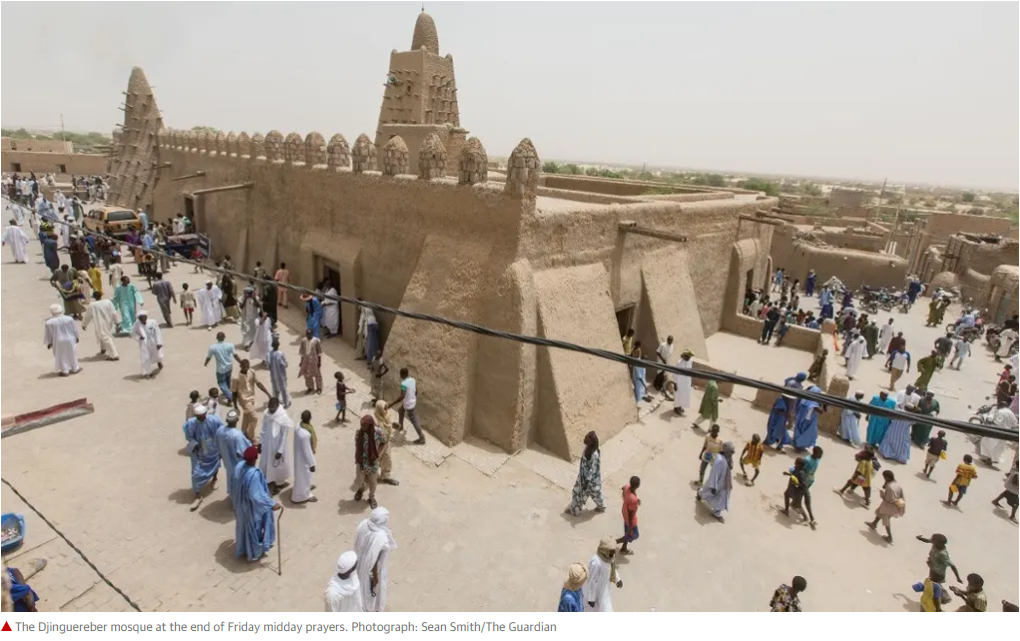
Categories
Uncategorized

Britain’s High Court Repo Men

The content below is from Season 2 Episode 28 of the Who’d a Thunk It? Podcast.

  • Welcome Who’d a Thunkers! This episode is going to be one big recommendation segment for a barely known TV series.
    • No history lesson, no moral theme, and an all-round light episode. Enjoy

RECOMMENDATION SEGMENT

  • This episode’s recommendation segment is pretty straight forward. Go to YouTube and search “Can’t Pay? We’ll Take it Away.” You’ll find dozens of episodes of a British TV Series of which this episode is all about.

NOW FOR THE MAIN EVENT

  • The series follows High Court Enforcement Agents (HCEA, previously known as Sheriffs) in the UK who are tasked with executing privately obtained High Court writs across England and Wales on behalf of private clients, on those who have failed to make repayments on alleged debts or refuse to vacate a property.
    • It sounds a bit dull, but remember, he UK has different laws than America. There is no “Right to Bare Arms” there are no “Stand your ground” laws. So these men tasked to recovering a debt have A LOT more freedom than debt collectors in the US.
  • So here’s the basic break down of just about every episode:
    • Every episode starts with the narrator giving a depressing fun fact about debt and text appears on the screen with the numbers to back up said depressing fun fact.
  • Cut to Two fairly large British guys (some of which are pretty nasty looking bouncer types) driving up to an address. On the way they share the details of the case in the car. They almost always share how much money is owed by the debtor.
    • They arrive at the location and immediately start sizing up the goods.
      • For example: They usually look at the cars parked in the driveway and speculate on how much they are worth.
    • They knock on the door with their body cams and bullet proof vests that say “High Court” on them and politely ask for anyone to open the door.
      • They do this at just about all hours of the day.
      • Usually someone answers in their pajamas with their hair all messed up and with a very unpleasant confused look on their face like “what?! I owe debt? No, can’t be. You must be looking for someone else.”
      • It is very common for the debtor to straight up lie to the High Court Enforcement Agents and say they are someone else entirely. Or that the actual debtor is unavailable at the moment.
    • But the really exciting episodes are when no one answers the door. Either the debtor simply isn’t home or they are hiding… doesn’t matter. These big debt collector blokes are allowed to just tramps on to the property and look for an open door or window to gain access to the property.
      • Once inside they continue to size up goods that they can repossess to cover the debt.
      • When the debtor arrives or anyone else who lives at the property arrives they are reasonably in disbelief that the agents are inside their property without permission.
      • People make threats, lie, and pull all sorts of tricks to get out of the situation.
    • Anytime a debtor says “I don’t have any money.” The agents calmly reply with “Ok no problem. I’ll just be walking all over your house to find something that will cover the debt.”
      • This of course helps the debtor realize that they aren’t going away. These agents are from the Britain’s High Court and they are tasked with settling the debt that very same day whether it means getting paid in full, setting up a payment plan that the client agrees to, or straight up taking everything of value in the house until it can cover the debt.
  • In multiple episodes they explain that having the agents seize goods is the worst option. Because then those goods get auctioned off and the worth of the goods is diminished by every single person involved.
    • For example: if they seize a car the tow truck driver, the person who owns the lot of where the car will be stored, and auctioneers all have to be paid. And the money they get paid with comes right out of the money made off of the car. So the debtor will lose WAY more money in goods than they would if they just paid the debts off.
    • And sometimes when the Agents are rummaging around in the debtors belongings they find some very interesting items.
      • One episode the Agent Steve Pinner found a plywood box that was sealed with 2-by-4’s and screws. It was the size of an end table, but clearly the debtor was trying to keep it safe so naturally Steve thought there was something worth value in it that he could collect. After using a crowbar to get the box opened, stacks and stacks of cash came spilling out of the box. The agents immediately called the police to investigate and I’m pretty sure the cash was counterfeit.
      • Other episodes they’ve found an entire attic full of Cannabis plants.
      • One time they found a few rifles. And in the UK it is very difficult to legally own a gun so they called the cops on that one too.
  • On numerous occasions the person that owes the debt isn’t the one who borrowed the money.
    • One of the best episodes is when the agents go to a young lady’s apartment at like 4AM to collect a debt incurred through unpaid parking fines.
    • When the young lady opens the door for the agents she is confused at first but quickly realizes where the debt came from. The car is in her name, but she allowed her ex-boyfriend to use her car and he was the one who caused the issue. The agents felt for the lady, but she ultimately was responsible for the money. The agents (who always show tons of patience) agreed to wait a few hours to see if the ex-boyfriend would pay instead of having to make this young lady pay.
    • She called her boyfriend who immediately got really mad. He showed up hours after being called and tried to intimidate the agents (this is very common).
    • The agents as always just stood there stone faced with no emotion and no signs of fear or aggression. They eventually go the ex to pay in cash even though he was petty about it and insisted he count the money instead of the agent. But when the agents went to leave he parked them in. The agents, still cool as cucumbers, called the cops and explained. So the ex panics and started to pull out… Thats when they noticed the ex had slashed their tires.
    • The agents STILL kept their cool and just added the “oh and he slashed our tires” to the 999 call (UK doesn’t use 911, they use 999. If you dial 911 in the UK it goes nowhere). The ex ran off, but the agents had all of his contact info and license plate.
  • My favorite HCEA is Paul Bohill
    • The guy has got to be in his 60’s and although he is almost always accompanied by a much younger Agent, he doesn’t really need to be. You can tell by the way he talks he has so much experience on the job he has seen just about everything a debtor can throw at him.
    • That being said, every HCEA on the show has nerves of steel.
      • Which I guess is a must when you have this job.
      • I mean, these guys break in to people’s homes and when the debtor shows up to find a complete stranger in their house they flip out as if they had no idea this law existed. Meanwhile the agents are always just like “sup, I have this piece of paper telling me you owe 5 grand. Can you pay it or am I taking all your family heirloom jewelry?”
From left to right there is Steve Pinner, Ben Pinner (Steve’s son) and then Paul Bohill.
  • Now, collecting debt isn’t all these agents do. Sometimes they have to enforce evictions.
    • Either a tenant hasn’t paid their rent or the agents are tasked with evicting what the UK calls squatters.
    • The residential evictions are usually sad.
      • Usually the debt collections are humorous, but when someone is evicted by the High Court it is done instantaneously. The Landlords can go through county court which takes time and requires multiple notices to be served, OR they can go through the High Court which is who these agents work for. So these evictions are basically kicking people and families out on to the street.
      • Paul Bohill, the older light haired fellow usually with a beet red face, is one of the nicest Agents. He handles these situations well. One episode Paul stayed for like 13 hours outside this families house until “the council” (basically the UK’s version of Welfare) found housing for the family. He gave them help and went above and beyond his duty. It wasn’t Paul’s job to do that, but he couldn’t bring himself to kick a bunch of kids out on the street.
    • The squatter evictions however are not usually sad.
      • UK law is weird with squatting.
      • According to GOV.UK: “Squatting is when someone deliberately enters property without permission and lives there, or intends to live there.
      • Squatting in residential buildings (like a house or flat) is illegal. It can lead to 6 months in prison, a £5,000 fine or both.
      • Although squatting in non-residential building or land is not in itself a crime, it’s a crime to damage the property.
      • It’s usually a crime not to leave land or property when you’re instructed to do so by:
        • the owner
        • the police
        • the council
        • a repossession order” (enforced by the High Court Enforcement Agents on this show)
      • So where the residential evictions are of people who haven’t paid their rent and they are surprised by the eviction… the Squatter evictions are of drifter type people who are living inside an industrial building… and according to GOV.UK they aren’t breaking any laws.
      • This is just how they live their lives. They set up a literal camp in a non-residential building and when someone of authority tells them to leave they peacefully leave. They pack up and go to the next building without ever breaking the law.
  • Can’t Pay We’ll Take It Away is a fascinating factual documentary series full of scenarios you and I will probably never witness.
    • Some of my favorite aspects of the show:
      • Classic reality TV enjoyment of watching real people act like idiots (but this show feels more authentic than American Reality TV)
      • Learning the difference in law between the US and the UK. Then seeing how those differences in law make life very different for their citizens.
      • And lastly watching Can’t Pay We’ll Take It Away always reminds me to PAY OFF MY DEBTS!
        • I’m normally a very frugal person and I’ve never missed a payment for anything. My credit is great. But it doesn’t hurt to reinforce that side of my personality.
        • Perhaps you, my listener (or reader) could also benefit from such a lesson.
      • Oh, and I guess I respect how perfect the show’s title is: they literally go to peoples’ houses and say “If you can’t pay we will take your things away.”

THANKS FOR LISTENING (and reading) WHO’D A THUNKERS!!!

CREDIT
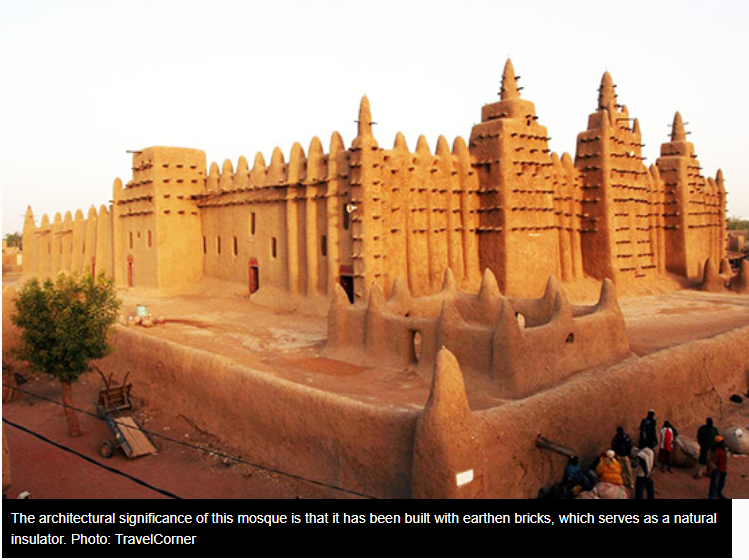
I just thought I would include an episode. This episode has a bit of everything: a celebrity, and eviction, and an aggressive boyfriend lol.
Categories
Uncategorized

IceCraft Carrier

The content below is from Season 2 Episode 27 of the Who’d a Thunk It? Podcast.

Recommendation Segment

  • This episode features another recommendation from my Fiancée Shannon. Tune in to the audio podcast to hear what she decided to recommend.

NOW FOR THE MAIN EVENT

  • Well who’d a Thunkers, I hope you like history because I have yet another World War 2 episode for you!
    • Today we talk about the story behind the Project Habakkuk. That’s when a Brit named Geoffrey Pyke thought it would be a good idea for the British navy to make an Aircraft Carrier out of ice.
      • Sounds crazy I know.
    • But That was the level of desperation that people were dealing with during WW2. Technology was taking off yet they were faced with the largest scale war that mankind had ever seen.
      • The world atmosphere during WW2 was nuts and that’s why there are so many unbelievable stories to come out of it.
      • A few episodes back I talked about how the American Military was funding the psychologist BF Skinner to train pigeons on how to guide missiles.
      • WW2 is so insane that one time my buddies and I were playing BattleField V (a WW2) game. My one friend made a comment on how the Nazis were so successful in their Blitzkrieg across Europe because they were all given Meth. That’s why their attacks were so fast and how they could fight for 48 hours straight with no sleep.
        • Another friend of mine laughed hysterically and thought he was just joking… But we all assured him that it is a fact. The Nazis weren’t prescribed meth… they were given it like you would give a co-worker a cup of coffee.
        • THAT is how crazy World War 2 was.
    • Now this Aircraft Carrier made of Ice sounds crazy to us now, but at the time it made more sense.
  • Britain is on an island roughly the size of the State of Michigan.
    • Being an island country came with both benefits and draw backs during WW 2.
      • They avoided a land invasion from Germany in 1940 because they are an island nation.
      • But that also means their imported goods all need to come by sea.
    • So Hitler thought if he couldn’t invade them outright that he would cut off their supplies from the outside world.
      • The Nazis had 1,162 submarines (or U-Boats as they were called). They targeted allied supply ships.
      • They used what was called the Wolfpack strategy and it was very effective.
      • The Brits weren’t able to deploy their anti-submarine aircraft because the U-Boats were smart enough to only engage far out at sea… too far for the aircraft of that day to reach.
    • Aircraft Carriers were a good defense against U-Boats. They could transport the anti-submarine planes to where the subs were hiding.
      • Unfortunately with the mass production of tanks, planes, and hand held weapons there wasn’t enough steel to just make more Aircraft Carriers back in Britain.
  • Introducing Geoffrey Pyke
    • Pyke was an orthodox Jew studying law at Pembroke College when WW1 started.
      • But he gave up his studies to become a War Correspondent. He convinced the editor of the Daily Chronicle news to fund a trip to Deutschland in the year 1914. He wanted to get a better understanding of the German people at the time as they prepared for war with Russia.
      • He travelled to Berlin with an American Passport, But it only took 6 days for his suspicious behavior to land him in prison. There he suffered harsh conditions for 13 weeks until he was able to escape.
      • He was able to make it back to Britain and his tale of an escaped prisoner of war became popular among the British people.
    • Leading up to WW2, Pyke was involved in a few projects against the Nazi party.
      • He sent journalist spies to cities across Germany to interview citizens on how they felt about all the antisemitism. He was able to conduct a decent sized poll and gather some significant data. But Pyke was never given the chance to present his findings to Hitler himself… Hitler was too busy invading Norway.
    • Once WW2 was well underway, Pyke set his sights on transporting troops in cold conditions.
      • He was put on a team of scientists and engineers to design a reliable vehicle for transporting troops through snow. It was dubbed operation Plough.
      • Pyke helped design the M29 Weasel that was manufactured by the hundreds in America.
  • So when Britain was faced with this U-Boat problem, Geoffrey Pyke was a likely candidate to find an out-of-the-box solution.
    • In 1942 he envisioned a large iceberg out at sea. He pictured the top of the iceberg cut on a level line for a runway and the middle hollowed out to store planes.
      • Pyke drew up a 232 page document to be sent in a diplomatic bag to the Combined Operation Headquarters. He gave specific instructions that only Lord MountBatten, Admiral of the Fleet should read its contents. Mountbatten (Member of the Royal Family and Royal Navy officer) must have been impressed with the plans because he immediately shared them with Winston Churchill (the acting Prime Minister of Britain at the time).
    • Now Icebergs aren’t Ideal for this.
      • At first, the ice berg AirCraft Carrier seemed like a lost cause. While ice was strong, it was also too brittle to hold up its own weight and easily lost shape under pressure. Ice also melts, which required Pyke to develop a complex cooling system that continuously pumped refrigerant throughout the carrier to keep it frozen.
      • So he and a team of scientist went to work combining wood chips and ice. The result was what they called Pykrete.
  • Pykrete is much less likely to sink than regular ice
    • It also melts at a higher temperature and is much more structurally strong.
    • Pyke had gotten the idea for Pykrete from an Austrian-American Chemist Herman Mark.
      • One of Pyke’s collaborators Max Perutz wrote “Blocks of ice containing as little as 4% wood pulp were weight for weight as strong as concrete. In honor of the originator of the project we called this reinforced ice Pykrete. When we fired a rifle bullet into an upright block of pure ice two feet square and 1 foot thick the block shattered. In Pykrete the bullet made a little crater and was embedded without doing any damage.”
      • As long as the Pykrete stayed frozen, it was as good as concrete.
    • The British Government was short on funds and resources thanks to the U-Boats so the thought was that it would be a lot cheaper to produce a Pykrete Ship than a steel ship.
      • 1 ton of ice take less than 1% of the energy to produce than 1 ton of steel.
      • Lord Mountbatten was sure the Pykrete idea would work. He presented the idea to generals, Ministers, and even President Roosevelt.
  • Project Habakkuk
    • Although it is my opinion that “IceCraft Carrier” would have been the best name for it… The official name was Project Habakkuk.
    • Churchill approved the idea, code-naming it Project Habakkuk, a reference to the biblical book of Habakkuk: “… be utterly amazed, for I am going to do something in your days that you would not believe, even if you were told.” (Habakkuk 1:5, NIV)
      • The ship was supposed to be 1.2 Kilometers long (that is over 13 football fields) and 180 meters across (that is almost 600 feet).
      • They decided to build a pykrete prototype in Patricia Lake, Alberta to test the effectiveness on a large scale model.
  • The prototype required a constant refrigeration system to keep cool. If the temperature of the ship rose above three degrees Fahrenheit, it would start to sag and lose shape. Although the pykrete mixture made the prototype stronger than ice, it also required much more insulation.
    • And negating the one major advantage of Project Habakkuk, Steel would still have to be used to insulate the carrier, which would have drained more resources and made it still more expensive. Plus, because the of the sheer size of this behemoth it would be slow and very hard to maneuver.
    • Even though I didn’t see it in any of my sources, I imagine they would only be able to use the craft in colder climates. I mean imagine trying to sale the IceCraft Carrier to the Bahamas!
    • Wood was also in short supply during the war, and building a pykrete aircraft carrier would have negatively impacted paper production. Which the British needed at the time. At the beginning of the war they were cranking out propaganda pamphlets and dropping them all over Europe.
    • Project Habakkuk was great in theory, but terrible in practice.
    • The British turned their attention to more practical projects. What remains of the prototype still lie at the bottom of Patricia Lake along with an informational plaque (thanks to the Alberta Diving Council).
  • The idea of an enormous IceCraft Carrier is really cool to think about, but terribly impractical.
    • And thank goodness they never went through with it. Could you imagine working in a place where it never got above 3 degrees Fahrenheit (that is -16 degrees Celsius)?
    • Thanks for listening Who’d a Thunkers! Until next week!

CREDIT

It may seem odd that I included this video, but without it this episode wouldn’t exist. I am obsessed with this guy’s ear cleaning videos and he compares a dense earwax material that is made denser by ear hair to Pykrete. One minute and 30 seconds in to the video he talks about Pykrete and Project Habakkuk and after hearing it I immediately started researching lol.
Categories
Uncategorized

Clear Channel: Why Radio Sucks

The content below is from Season 2 Episode 26 of the Who’d a Thunk It? Podcast.

RECOMMENDATION SEGMENT

  • Tune in to the Podcast to hear my Fiancée Shannon’s cameo for this episode’s recommendation segment.

NOW FOR THE MAIN EVENT!

  • Unless all other options have been exhausted, I never listen to the radio anymore.
    • Why? Because the radio sucks! Commercials are way too frequent and even worse, the diversity of music is virtually gone.
    • At any given moment the same 5 songs will be playing on the radio. Whether those 5 songs are good or not makes no difference as listeners will be sick and tired of them within the week due to overplaying.
      • No one likes to hear the same 5 songs over-and-over again all week long.
    • Aside from the few remaining independent radio stations still left in America (of which there are about 88 left), American Radio is TRASH!
      • Side note: I actually hosted a weekly show on one of those independent stations for 2 years.
        • Every Saturday from Noon to 2PM, if you were within about 50 miles of Slippery Rock Pennsylvania you could tune in to the Hangover Hangout radio show hosted by yours truly!
        • WSRU is still around today and I’m very happy about that.
    • But why is American Radio trash? It wasn’t always that way.
    • I remember when I was a kid in the 90’s and early 2000’s radio was still a local medium where local DJ’s would play music they loved and fit in the ads necessary to keep their station afloat.
    • How did FM radio in America go from locally selected music and content to this homogenized cookie cutter pop music crap?
  • The main culprit for the trashifying of American radio is a little company called Clear Channel Communications and this is their villainous Origin Story
    • Back in the early 1970’s, one of the companies founders B. J. “Red” McCombs owned a used car lot called Red McCombs Automotive group. He was a savvy car salesman who saw each and every car on his lot as a unit to be sold for money, like most used car salesmen.
    • Well Red then ran in to an investment baker by the name Lester Lowry Mays. Red knew how to grow a business and how to sell units. But it was Mays who had the vision.
      • They were two different businessmen types who were smart and had hustle. Financially they were the perfect pair. Financially speaking they were a success story, but their success came at a great cost. And if they applied their talents to another industry, history would probably just remember them as successful business men, if at all… but the industry they chose to sink their teeth into was radio.
      • Ever since Pittsburgh’s own KDKA (the first licensed commercial radio broadcasting station) went live in 1920, radio has been a medium between one of the greatest creations of mankind; music, and the people who enjoy it.
      • Personally I see music as one of the truly magical creations of our species and Radio was the first medium to make it so virtually everyone could enjoy music.
      • But when these two business men set their sights on the music industry, they didn’t see a medium that carried our magical creation of music to the masses… they only saw money.
      • Red saw units to be sold (every 60 seconds of air time was a unit with potential to sell more ads) and Mays saw an opportunity to blow up Red’s sales on a massive scale. The result of these two men and their company Clear Channel Communications would have on radio was devastating.
    • In 1972, Mays founded the San Antonio Broadcasting Company, which became Clear Channel Communications. The company purchased its first radio station, KEEZ-FM in San Antonio in 1972. He and his business partner Red McCombs bought a second San Antonio Station, WOAI, in 1975. This station was considered a “clear channel” station because no other station operated on its frequency and its 50,000-watt signal could be heard hundreds or even thousands of miles away on a clear night. Over the next several years, the company bought ten more struggling radio stations and turned them profitable, usually by switching their formats to religious or talk programming. The company went public in 1984. In 1988, the company bought its first television station.
    • By the mid-90s, Clear Channel Communications owned 43 radio and 16 television stations.
      • So our two business men looking to financially exploit the radio business and take every drop of musical integrity it had were still owners of a modest radio business. That was until the Telecommunications Act of 1996. You see, the enactment of the 1996 Telecommunications Act deregulated radio, and allowed companies to own as many as 8 stations in one market, a huge change from the previous 40 station per company limit.
    • After the TeleComm Act of 1996 significantly deregulated the broadcast industry, Mays and his company purchased 49 radio stations and an interest in New Zealand’s largest radio group. A merger with Jacor Communications, based in Covington, Kentucky (who had bought the former broadcast side of Nationwide Insurance a year earlier), brought the operation of 450 stations to the Clear Channel portfolio. Within eight years, and with an influx of capital investment from the private-equity Griffith Family, Clear Channel had accumulated ownership of over 1,200 radio stations and 41 television stations in the United States, one of the nation’s leading live entertainment companies, and over 750,000 outdoor advertising displays.
      • So Clear Channel went from 43 stations in 1996 to over 1,200 stations in 2004… it was huge.
      • The TeleComm Act of 1996 gave them the legal wiggle room they needed to take over the country’s radio stations, but it was Clear Channel’s business model that made them soar to heights that other communications companies never hit. Instead of playing music and finding ads to play in between songs, Clear Channel saw it the other way around. The ads came first, and the music was just there to keep the listener tuned in for as long as they could… so they would hear the most advertisements possible.
      • And what did Red and Mays do? Well, like true business men, they sold out.
  • Selling Out
    • On November 16, 2006, Clear Channel announced plans to go private, being bought out by two private-equity firms, Thomas H. Lee Partners and Bain Capital Partners for $26.7 billion including $8 billion in debt.
    • On September 16, 2014, Clear Channel announced they “became” iHeartMedia or as you have probably heard many times over: iHeartRadio. They changed their name to “reflect the company’s success in becoming a one-of-a-kind multi-platform media company with unparalleled reach and impact.”
      • To me that sounds like Dark Vador changing the name of his evil government to make is sound nicer while simultaneously gloating over his total conquest.
        • Something like “We have changed our name from the Galactic Empire to iSpaceRulers to better encapsulate our total domination of every planet within the galaxy. Oh, and remember to download the DarkSide app on your smartphones to get all the latest updates. You can even stream the empirical marches straight to your device. Thank you, and remember to tune in to iSpaceRulers for all your greatest hits.”
  • When Clear Channel was taking over the radio industry in America, the Disc Jockeys (DJ’s) weren’t happy about it either.
    • While listeners were recognizing how overplayed and homogenized the radio stations of America were becoming, the DJ’s were having it affect their everyday lives.
    • DJ’s used to play songs that they enjoyed. They set the vibe for long road trips and daily commutes alike. But when Clear Channel became the boss the DJ’s were given a set playlist by corporate execs. They had to strictly adhere to the playlist regardless of their professional opinions.
      • Besides the quality of radio content going down, so did the DJ’s salaries.
      • The wealth went straight to the guys at the top and not much trickled down the skill-less guys who just pushed a button, no artistic talent involved.
  • Back in 2005, in the documentary “Before the Music Dies” (a documentary about Clear Channel’s take over of radio) Dave Mathews predicted “the excitement of the invention of the radio… that energy will go somewhere else and find a place to blossom there. And probably someone like clear channel will find a way to exploit it.”
    • His prediction was close. Thanks to iPods and then the internet as a whole, the love of music is more accessible than ever. When greed casted too much shade for music to grow and it started to whither…. Music and the love of music DID find another place to blossom: the internet.
      • But now iHeart radio is going after internet music with iHeartRadio.com and the iHeartRadio app….
  • I guess this is a tale as old as time: art gets taken advantage of by business and business flourishes. Then that art either moves on to a different medium or it transforms all together.
    • I like Dave Mathews take on it: “that energy will go somewhere else and find a place to blossom there.”
    • I have to agree. No matter what happens to music, it will live on.
    • My generation (millennials) might have fond memories of a decent radio scene when we were kids, but any younger generation probably doesn’t have any such memories.
    • Now we get in to cars and either pass the aux cord or connect our phones via Bluetooth to play our own curated playlists for each other.
      • And I’m not complaining, that makes the experience even more personal.
      • It is just a shame we can’t just turn a dial and let professional DJ’s set the vibe for us the way they want to.

Thanks for listening Who’d a Thunkers!

  • If you are reading or listening to this then you stuck around after my 2 week break from the podcast and I thank you.
    • Jamaica was great! I needed the R&R, but I couldn’t wait to get back to cranking out podcast episodes.
    • Thanks for listening. Until next week!

CREDIT