Categories
Uncategorized

The Battle of Los Angeles

The content below is from Episode 148 of the Who’d a Thunk It? Podcast

NOTICE

  • This episode was largely copied and pasted from the 3 sources listed at the bottom in the CREDIT section of the podcast.

RECOMMENDATION SEGMENT

  • This week I recommend you go watch some sports.
    • My wife’s cousin John plays hockey. He is a senior in high school so this is the likely the last year we will get to see him play.
    • But they are really fun. I remember the first time Shannon suggested we go see her counsin play hockey years ago. I thought it was going to be a boring thing I was expected to do on a week day.
    • but I truly enjoy the experience each time and I think I’m going to miss it.
    • Everytime we go I get to see my inlaws (company I actually enjoy, sorry, no cliche hatred for my inlaws here). We also get to spectate a sport that is a lot more unpredeictable because they aren’t pros, they are kids. PLUS, you wouldnt’ believe how crazy some of these parents get LOL.
    • The games are fun, it is a family bonding moment, and I feel a little more intune with the community each time I go.
    • So next time your Significant Other, parent, or friend suggests going to a local hockey, football, or any other kind of game… I recommend you go. You might be surprised by how much fun you have and how refreshing it is to change up your weekday routine.
      • Plus, it is always a good opportunity to win some brownie points with your loved ones … or whomever it is that you attend the game with.

NOW FOR THE MAIN EVENT

  • Pearl Harbor happened on December 7, 1941
    • So that’s why in February 1942, the surprise attack on Pearl Harbor was still fresh in people’s minds, and major American cities on the Pacific Coast were worried they would be next.
  • On February 23rd, 1942, a Japanese submarine attacked the Ellwood Oil Field near Santa Barbara, about a two-hour drive north of LA.
  • All it took to kick off a panic was a weather balloon. 
    • Sound familiar? Weather balloons and paranoia?
    • On February 24, 1942, US Naval Intelligence warned West Coast units that the Japanese might descend on Los Angeles within the next 10 hours. At 1 a.m. on February 25, meteorological balloons were launched 120 miles west of Los Angeles to monitor the weather. An hour later, the balloons showed up on military radar.
    • Mistaking the balloons for enemy aircraft, radar operators sounded the air raid alarm, and by 3 a.m., anti-aircraft gunners in Santa Monica started shooting. Over 1,400 rounds were fired in the confusion, but there were no enemy aircraft in the area, and Japan confirmed after WWII that it hadn’t attacked the city. 
    • But the “Battle of Los Angeles” wasn’t a harmless misunderstanding. Three people lost their lives in car collisions related to the false alarm, and two more perished from cardiac arrest. The FBI and LA County Sheriff also arrested several Japanese gardeners who were falsely accused of signaling to Japanese planes. 
    • That evening, many flares and blinking lights were reported from the vicinity of defense plants. An alert was called at 7:18 pm, and was lifted at 10:23 pm. Renewed activity began early in the morning of 25 February.[12] Air raid sirens sounded at 2:25 am throughout Los Angeles County.[13] A total blackout was ordered and thousands of air raid wardens were summoned to their positions. At 3:16 am, the 37th Coast Artillery Brigade began firing .50-caliber machine guns and 12.8-pound (5.8 kg) anti-aircraft shells into the air at reported aircraft; over 1,400 shells were eventually fired. Pilots of the 4th Interceptor Command were alerted but their aircraft remained grounded. The artillery fire continued sporadically until 4:14 am. The “all clear” was sounded and the blackout order was lifted at 7:21 am.[14]
    • Several buildings and vehicles were damaged by shell fragments, and five civilians died as an indirect result of the anti-aircraft fire: three were killed in car accidents in the ensuing chaos and two of heart attacks attributed to the stress of the hour-long action.[1] The incident was front-page news along the West Coast and across the nation.[15]
  • Panic is real people!
  • Within hours of the end of the air raid, Secretary of the Navy Frank Knox held a press conference, saying the entire incident had been a false alarm due to anxiety and “war nerves”. Knox’s comments were followed by statements from the Army the next day[16] that reflected General George C. Marshall‘s supposition that the incident might have been caused by enemy agents using commercial airplanes in a psychological warfare campaign to generate mass panic.[17]
  • Some contemporary press outlets suspected a cover-up of the truth. An editorial in the Long Beach Independent wrote, “There is a mysterious reticence about the whole affair and it appears that some form of censorship is trying to halt discussion on the matter.” Speculation was rampant as to invading airplanes and their bases. Theories included a secret base in northern Mexico as well as Japanese submarines stationed offshore with the capability of carrying planes. Others speculated that the incident was either staged or exaggerated to give coastal defense industries an excuse to move further inland.[18]
  • Representative Leland M. Ford of Santa Monica called for a Congressional investigation, saying “none of the explanations so far offered removed the episode from the category of ‘complete mystification’ … this was either a practice raid, or a raid to throw a scare into 2,000,000 people, or a mistaken identity raid, or a raid to lay a political foundation to take away Southern California’s war industries.”[19]
  • Japanese submarines continued to conduct occasional attacks against allied shipping off the U.S. coast during the rest of the war. Sent to American waters in hopes of targeting warships, the submarines managed to sink only a handful of merchant ships, besides conducting a few minor attacks on shore targets. These consisted of a bombardment of Fort Stevens on the Columbia River, an attack on a Canadian lighthouse on Vancouver Island, and two air raids launched from a submarine in an attempt to start forest fires in southwest Oregon
  • After the war ended in 1945, the Japanese government declared that they had flown no airplanes over Los Angeles during the war.[13] In 1983, the U.S. Office of Air Force History concluded that an analysis of the evidence points to meteorological balloons as the cause of the initial alarm:[12]
  • A photo published in the Los Angeles Times on February 26, 1942, has been featured in UFO conspiracy theories as evidence of an extraterrestrial visitation.[20] They assert that the photo clearly shows searchlights focused on an alien spaceship; however, the photo was heavily modified by photo retouching prior to publication, a routine practice in graphic arts of the time intended to improve contrast in black and white photos.[21][22]Times writer Larry Harnisch noted that the retouched photo along with faked newspaper headlines were presented as true historical material in trailers for the 2011 film Battle: Los Angeles. Harnisch commented, “[I]f the publicity campaign wanted to establish UFO research as nothing but lies and fakery, it couldn’t have done a better job.”[23]

CREDIT:

Categories
Uncategorized

Gypsy

The content below is from Episode #147 The Who’d a Thunk It? Podcast

RECOMMENDATION SEGMENT

  • This week I recommend something a bit out of the ordinary.
    • Instead of recommending a book, show, or movie title, I recommend you get yourself a white noise maker. They are pretty cheap, you can even download an app on your smartpone if you prefer to do it that way.
    • If you have kids, pets, or any other living thing in your home that could possibly make noise or be woken up by noise that you make…. you will benefit from some white noise to smooth that all out.
    • I’m a light sleeper and our noise maker stays on all night long. Tis a game changer.

NOW FOR THE MAIN EVENT

  • What is a gypsy?
    • Well, they were called “Gypsies” because Europeans mistakenly believed they came from Egypt. But Gypsies are actually an ethnic group called Roma (Romani or Romany), NOT to be confused with Romanians or the ancient Romans.
      • Throughout this episode, I will be referring to them as Gypsies AND Roma/Romani because some tribes prefer to be referred to as Roma and other Gypsies.
    • Geneticists have shown that the Roma descended from a single group of people from the Punjab region of NorthWestern India around 1,500 years ago. Around the 8th and 10th Centuries, large numbers of the Romanies entered Europe. By the 19th Century (the 1800s), they had made their way to the Americas.
    • Today you can find Romanies (Gypsies) in just about every continent on the planet (minus antarctica because its too cold for people). They speak their own language conveniently referred to as Romani. Just how there are many different nations and tribes of Romani people, there are many different variations of Romani language, but they all originated from the ancient Sanskrit language and sound a lot like India’s Hindi language.
    • Gypsies don’t have a 1 overall religion either. The majority are Christians or Muslims, but like their language, there are lots of different religions amongst their people. They are nomadic people and tend to adopt the religion that is most popular for the region they currently find themselves.
  • I mentioned the word Gypsy comes from Europeans mistakenly thinking the Roma came from Egypt.
    • This term started around the 16th century and since has taken on a negative connotation. The word Gypsy is often used to describe someone as a cheat or thief rather than their ethnic background. To “gyp” someone out of a deal comes from Gypsy.
  • When the Romani people first came to Europe it was likely hard on them.
    • Historians think they would have been shunned and looked down upon because their nomadic way of life was so different from that of a European farmer always staying in the same place.
    • Gypsy customs and language would have been completely different from the Europeans. They believe the Roma had their own religion until, over time, that religion faded away.
  • From Crosswalk.com (Delores Smyth August 2019)
    • Europeans have long portrayed the Roma/Gypsies as cunning outsiders who steal from local residents before moving on to the next town.
    • Because of this distrust, European nations over the centuries have enslaved, expelled, imprisoned, and executed Romani people. Other European nations used their legal system to oppress the Roma, passing laws prohibiting Romanies from buying land or securing stable professions.
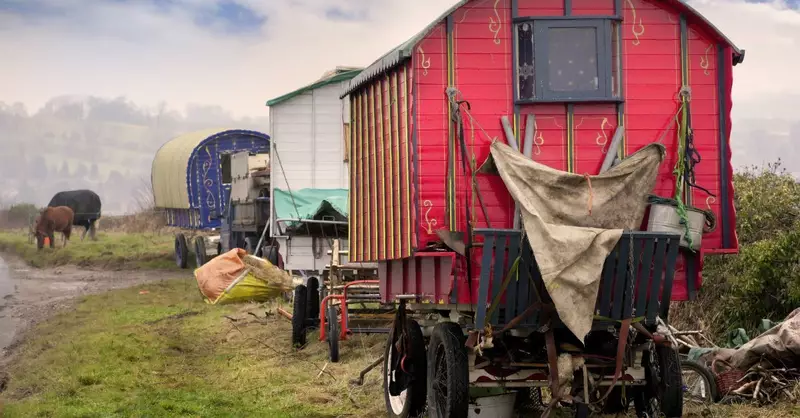
    • Some believe that these legal restrictions placed on the Roma necessitated the continuation of their itinerant lifestyle, forcing Romanies to live on the perimeters of settled society for centuries. These nomadic Roma (gypsies) traveled in horse-drawn, brightly-colored wagons and sought jobs conducive to a transient lifestyle. Such jobs included working as livestock traders, animal trainers and exhibitors, entertainers, fortune tellers, and metalsmiths.
  • Gypsies were victims of the Holocaust
    • according to the US Holocaust Memorial Museum:
      • Most of the Roma View This Term in the Glossary in Germany and the countries occupied by Germany during World War II belonged to the Sinti and Roma family groupings. Both groups spoke dialects of a common language called Romani, based on Sanskrit (the classical language of India). The term “Roma” has come to include both the Sinti and Roma groupings, though some Roma prefer being known as “Gypsies.” Some Roma are Christian and some are Muslim, having converted during the course of their migrations through Persia, Asia Minor, and the Balkans.
        • For centuries, Roma View This Term in the Glossary were scorned and persecuted across Europe. Zigeuner, the German word for Gypsy, derives from a Greek root meaning untouchable.
        • Many Roma View This Term in the Glossary traditionally worked as craftsmen and were blacksmiths, cobblers, tinsmiths, horse dealers, and toolmakers. Others were performers such as musicians, circus animal trainers, and dancers. By the 1920s, there were also a number of Romani shopkeepers. Some Roma, such as those employed in the German postal service, were civil servants. The number of truly nomadic Roma was on the decline in many places by the early 1900s, although many so-called sedentary Roma often moved seasonally, depending on their occupations.
        • In 1939, about 1 to 1.5 million Roma View This Term in the Glossary lived in Europe. About half of all European Roma lived in eastern Europe, especially in the Soviet Union and Romania. Hungary, Yugoslavia, and Bulgaria also had large Romani communities. In prewar Germany there were at most 35,000 Roma, most of whom held German citizenship. In Austria, there were approximately 11,000 Roma. Relatively few Roma lived in western Europe.
    • Until recently, the Romani were the unseen victims in the Nazi persecutions. The Nazi regime pursued and captured the Romani, putting tens of thousands to death by claiming that they were ethnically inferior.
      • Even today, the Romani are persecuted. Lately, many human rights organizations have begun to protest the treatment received by the Romani, whether it is forced expulsion or the denial of social services.
  • A lot of Gypsy/Roma history comes from oral tradition
    • Because they were often shunned from town and always on the move, the Roma rarely attended school and so their population is widely illiterate. Their history is almost entirely passed down through the spoken word.
  • They don’t take well to governments or any outsider telling them what to do. ( I mean, most people don’t, but the gypsies have their own system to govern themselves).
    • Being shunned and disconnected from the rest of the world in some way, the Romani people focus on themselves. They put an emphasis on the family and self-governance.
    • Those of the Gypsy nations/tribes that still remain nomadic, travel in bands of 10 to several hundred extended families. They move about in those caravans of wagons. Each band picks a male leader that keeps everyone in line and a female leader that governs the women and children.
    • Bands throw weddings, christenings, funerals, and other rites of passage. When one of these parties are thrown it is expected that EVERYONE attend. Not attending one of these community bonding parties can result in alienation.
  • Gypsy weddings can be a bit old school.
    • Firstly, they expect all women to only wear dresses once they hit puberty. Some groups still do arranged marriages, expect grooms to pay bride prices, and teen weddings are common place.
  • What if someone gets out of line?
    • The whole self-governance thing applies to punishment as well. If a member of the band commits what his/her fellow band members consider misconduct, they are usually subject to go before the community leaders (elders usually). They can lose their reputation or be kicked out of the band all together.
  • How’s life for a gypsy now? (European Gypsies)
    • Well most gypsies live in Europe. Around 10 to 12 million gypsies live in Europe today with the majority in impoverished eastern European countries. Some of them are still nomadic living in caravans and RVs.
    • The majority of gypsies have settled down though, but this hasn’t helped their socioeconomic standing. A whopping 80% of Romanies are below the poverty line as of 2016.
    • Many European nations have official policies regarding immigration, housing, education, and employment that are directed specifically towards Romani people and they aren’t policies that benefit the Roma community.
      • In recent years, there have been alarming reports of anti-Roma discrimination in Europe, including the systematic demolishing of Roma camps and deportation of thousands of Roma at a time in France, and the horrific forced sterilization of Romani women in countries such as the Czech Republic and Slovakia.
      • In addition, in March of 2019, Amnesty International filed a complaint before the European Committee of Social Rights against the Italian government, alleging international violations against Romanies in Italy, including “widespread forced evictions…use of segregated camps featuring substandard housing and lack of equal access to social housing.” 
      • The plight of the Romanies is also a major concern of the children’s rights organization UNICEF, which is currently working to increase literacy among Romani children in Europe through home-visitation programs that connect new parents with child education and social services.
    • In recent decades European nations have elected leaders with strict policies against gypsies.
      • In Eforie, Romania, after a 6 day notice, authorities forcibly removed 100 people from their homes that they had been living in for 30 years. They demolished their homes so they couldn’t return and left the families in a wasteland to fend for themselves. Amnesty International deemed this a violation of human rights.
  • The American Gypsy
    • Estimates say about 1 million Roma live in the US of A. Like a lot of us, the Gypsies first came to the Americas from all sorts of countries with different cultures and languages.
    • The U.S. has played a role in discrimination against Romanies in the past, as some states have on their books repealed laws that limited where Romanies could rent property, where they could entertain, and what goods they could sell.
      • Although those laws are in the past, the US hasn’t had the best recent track record with immigration.
    • Plus, there isn’t much knowledge on Roma history in the US.
      • America didn’t study Roma people, didn’t ask about Roma heritage on censuses, and didn’t really care. It is also thought that Gypsy culture was kept a secret in the US to avoid being discriminated against.
      • Most Americans don’t even know about Gypsies being a real culture and people. If you ask the average American about a gypsy there is a decent chance they will tell you it is a Halloween costume or a mythical creature.
    • In an effort to remedy the lack of statistics on American Romanies, Harvard University has recently launched a study to assess the structural, social, and economic status of American Romani communities.
  • The Romani are known as nomadic and free spirited people, but they are known as nomadic because they have no country of their own. They have been kicked out of every area they settle upon.
    • The statelessness of the Romani was not fixed by the 1977 creation of the International Romani Union. In 2000, the Romani were officially declared a non-territorial nation.
      • This statelessness makes the Romani legally invisible. Without access to health-care services, they often lack verifiable citizenship or birth certificates. That leads to many of the same issues faced by “legally invisible” people across the world.
      • They cannot access education, health care, and other social services. They can’t even get passports, which makes traveling difficult or impossible.
    • The Romani were an enslaved people in Europe, most notably in Romani, from the 14th to the 19th centuries. They were bartered and sold and considered to be less than human.
      • In the 1700s, Maria Theresa, sovereign of the Austro-Hungarian Empire, made the Romani people, dress, and occupations illegal. This was done to force the Romani to integrate into society.
  • They are an artistic people
    • From early on, the Romani have been connected solidly with singing, dancing, and acting. They have carried that tradition throughout the centuries to leave behind a legacy of massive proportions. Many Romani have assimilated into the world, leaving legacies of their talents and culture.
    • The list of famed musicians with Romani backgrounds includes Kesha, Neon Hitch, Cher Lloyd, Jerry Mason, and Django Reinhardt. Famed LGBT author Mikey Walsh and Pilgrim’s Progress author John Bunyan are two of the many Romani who have given us memorable books.
    • In addition, many famous dancers come from Romani backgrounds. These artists include Carmen Amaya, who is widely hailed as the greatest flamenco dancer of all time.
  • The Romani are sometimes seen as magical and having their own religion.
    • But they are no more magical than the rest of us.
    • They are people just trying to live their lives like you and I.

CREDIT

Categories
Uncategorized

Heavy Gustav

The content below is from Episode 146 of the Who’d a Thunk It? Podcast

RECOMMENDATION SEGMENT

  • Hoopla
    • This week I recommend you checkout the app Hoopla or Libby
    • I think I have mentioned this before, but you can get a Library card for free at your local library. If you use that library number, you can read, listen, and watch a massive library of stories for 100% FREE.
    • Libby is an app I’ve been using for years now.
      • I’ve listened to some of my favorite audiobooks like the Darth Bane trilogy, Red Rising series, Ready Player One, and so on.
    • But the other day I mentioned to Shannon that I wanted to listen to Carl Sagan’s novel Contact, but it wasn’t on Libby. She told me there is another app called Hoopla that basically works the same way: log on with your library card and borrow the titles for about a month for free.
    • Sure enough, where Libby didn’t have Contact, Hoopla did. I am amazed by how much I can listen to for free. I feel so blessed to have so much access. Libraries are the SHIT!
    • Contact is a 1985 hard science fiction novel by American scientist Carl Sagan. It deals with the theme of contact between humanity and a more technologically advanced, extraterrestrial life form. It ranked No. 7 on the 1985 U.S. bestseller list.

NOW FOR THE MAIN EVENT

  • Another WWII episode!
    • Inspired by a scene from Breaking Bad… my favorite drama series.
  • In 1934 Hitler already knew he was going to invade France.
    • The French had constructed the strongest fortification in existence at the time, the Maginot Line, in an attempt to stop the Germans from invading their country.
      • The Maginot line was constructed to avoid the similar destruction that France had suffered in WWI. It was made up of a series of block houses, rail lines, and heavily fortified bunkers.
      • The world saw this Maginot line and thought it was impenetrable.
      • The thick reinforced concrete bunkers built into the earth itself seemed untouchable by any existing weapon.
    • Hitler had a couple ideas to get around this fortification, one of them being the Schwerer Gustav gun.
      • Hitler asked his high command to give him something that hadn’t been built yet. He wanted something that could fire an unstoppable force at the immovable object that was the Maginot line.
  • The Oberkommando des Heeres (German Army high command) asked the Essen weapons creator Friedrich Krupp AG in 1934.
    • Krupp was told to make a gun capable of penetrating 1 meter of steel armor plating or 7 meters of reinforced concrete. They also needed to make this penetrating projectile be fired from a far enough distance to keep the extremely expensive gun protected.
    • Erich Muller, an engineer at Krupp, was put in charge.
      • Erich knew his new project would be a monstrosity, something larger than ever built before.
      • They estimated they’d need an 80 cm (a little over 31 inch or over 2 and a half feet) caliber that would fire a projectile weighing 7 tons and being fired out of a 30-meter (100-foot) long barrel. They knew this sucker would weigh A LOT so they decided to make it deployable on rail tracks.
      • The aiming mechanism, like other railway mobile artillery, would only lift the barrel up or down. In order to aim the gun they would have to position it strategically on a curve in the railway.
    • While drawing up their plans there were proposals for 85 cm and 1 meter (3.2 feet)
    • In 1936 Hitler visited Essen and asked that his gun be battle-ready for the Battle of France.
      • Plans were finished and manufacturing started in early 1937. They estimated completion of the gun would be in 1940, but the insane amount of steel plating needed to create the gun delayed production.

Do you see that image? It is transported via railway… not one railway though…. two…

  • In 1939 a test model was sent from Krupp to Hillersleben for testing.
    • The tests were successful. This monster was able to penetrate the 1 meter (3.2 feet) of steel armor plating and 7 meters (23 feet) of concrete.
  • Hitler and Alfried Krupp met up at Rugenwalde Proving Ground in 1941.
    • Hitler had 2 guns created and the first shot fired from the finished product went off on September 10th 1941 from a makeshift carriage.
    • Then it was tested again in Poland using a 7,100 kilogram (15,653 pound) shell fired at a target nearly 40 kilometers (25 miles) away.
  • While the Gustav Gun wasn’t actually used during the Battle of France due to it not finishing production by the time the Nazis invaded, the invasion was a success.
    • Instead of getting bogged down by the Maginot Line as things played out in WW1’s stagnate trench warfare, German forces went around it, driving their tanks through a wilderness area in neighboring Belgium that the French wrongly assumed would be impenetrable.

We were through the Maginot Line! It was hardly conceivable. Twenty-two years before, we had stood for four and a half long years before this self-same enemy and had won victory after victory but yet finally lost the war. And now we had broken through the renowned Maginot Line and were driving deep into enemy territory. It was not just a beautiful dream. It was reality.”

Erwin Rommel’s Leader of the Nazi 7th Panzer Division
  • While Schwerer Gustav didn’t get to perform in the battle it was designed for, Germany was successful and had A LOT more plans for battle in the coming years, so Gustav would have its day.
    • The Gustav gun was deployed a few times throughout WWII, but the only operation where it was used extensively was in the Siege of Sevastopol (part of Operation Barbarossa) on the Eastern front against the Russians.
    • It was the heaviest piece of mobile artillery ever built and the largest caliber rifle weapon ever used in war.
    • It was designed and developed by the Krupp Family to be a siege weapon.
      • Siege: a military operation in which enemy forces surround a town or building, cutting off essential supplies, with the aim of compelling the surrender of those inside.
    • The fully assembled gun weighed nearly 1,350 tonnes (1,490 short tons), and could fire shells weighing 7 t (7.7 short tons) to a range of 47 km (29 mi).
    • It took 5 weeks and over 4,000 people to get the Gustave gun ready at the Siege of Sevastopol.
  • Those 7 tonne shells could breakthrough 7 meters of reinforced concrete.
    • There was a major downside to this big boy, it took about 500 people just to fire the damn thing and it took about 4,000 more people to transport, protect it, and operate it on the battlefield.
      • About 1,500 soldiers were needed to protect the gun from enemy aircraft.
      • It took 5 days just to assemble the damn thing.
    • By the time the Siege of Sevastopol was over the city was destroyed. The 500 man crew running the gun had fired 48 rounds.
      • The Gustav destroyed several high-value targets, including a munitions depot located roughly 30 m (98 ft) below ground level.
      • Those 48 shots compromised the gun and the 100-foot barrel had to be replaced after the Siege of Sevastopol.

  • After Sevastopol the Gustav Gun was moved to Leningrad and for an entire winter this giant black gun (the largest ever created) loomed outside the city.
    • Before the Gustav could be used at Leningrad the attack was called off, but I feel like seeing this thing outside your city would definitely have some psychological affect.
    • There was a second gun created and used in battle. It was a similar model and named Dora after the engineer Erich Muller’s wife.
      • How romantic. Maybe I will get Shannon a similar present for Valentines day. … now… where do I get an engineering degree, 1,400 tons of steel, and over 7 million Reichsmarks ($24 million USD) worth of funding to make another “largest gun ever created” so I can call it Shannon?
    • Another Model called the Langer Gustav was a 2nd generation model of the Gustav that had smaller shells (1,500 pounds), smaller caliber (52cm/ 20.4 inches), but a longer barrel (43 meters/ 141 feet) for a much longer range (118 miles). This gun could have shot from their claimed territory in Calais France and reached London…
      • Luckily an RAF bombing run destroyed the Langer Gustav while it was still in construction.
  • Third Gen Gustav guns were something from nightmares.
    • The Landkreuzer P 15000 Monster was going to be a gustav gun tank with the 80cm (31.4961 inches) caliber barrel (same size as Gen One), but also was going to have 2 heavy howitzer guns, and MG 151 autocannons for anti-aircraft capabilities. This thing was a small town on tank tracks.
    • Gen 3 Gustav Landkreuzer P15000 Monster was never built. Thank god we beat the Nazis… for a lot of reasons.
      • Some say the 3rd Gen project was scrapped before prototype phase, others say it was a thing of urban myth.
      • But if it was made it would have weighed over 500 tons more than the heaviest tank ever built, the Panzer VIII Maus.
  • The Germans dismantled the Schwerer Gustav before they had lost the war.
    • In the end the Germans realized the Gustav Gun was just too damn clunky. Over 4,000 soldiers were taken off the front line and needed to operate it. It took FOREVER to transport and assemble and once it was finally set up, protected, and manned, its rate of fire was only about 14 rounds per day. It took HOURS to calibrate the damn thing between each shot.
    • Gustav was destroyed by the Germans near the end of the war in 1945 to avoid capture by the Soviet Red Army.
      • The weapons ruins were found on April 22nd 1945 in a foest near Auerbach and Chemnitz.
      • After the soviets got a chance to study it, they sent it to Merseburg where the remains were lost.
      • Dora, the 2nd and last Gustav to be used in combat was destroyed April 19th and discovered by American troops a few days later.
      • Today, some of the remains of Dora are kept in the Dresden Military History Museum of Bundeswehr.
  • Schwerer Gustav was the largest-calibre rifled weapon ever used in combat, and in terms of overall weight, the heaviest mobile artillery piece ever built. It fired the heaviest shells of any artillery piece.[4] It was surpassed in calibre only by the unused British Mallet’s Mortar and the American Little David bomb-testing mortar—both at 36 inches (91.5 cm)—but was the only one of the three to be used in combat.

CREDIT

Categories
Uncategorized

Unwillingly Kept Alive

The content below is from Episode 145 of the Who’d a Thunk It? Podcast

RECOMMENDATION SEGMENT

NOW FOR THE MAIN EVENT

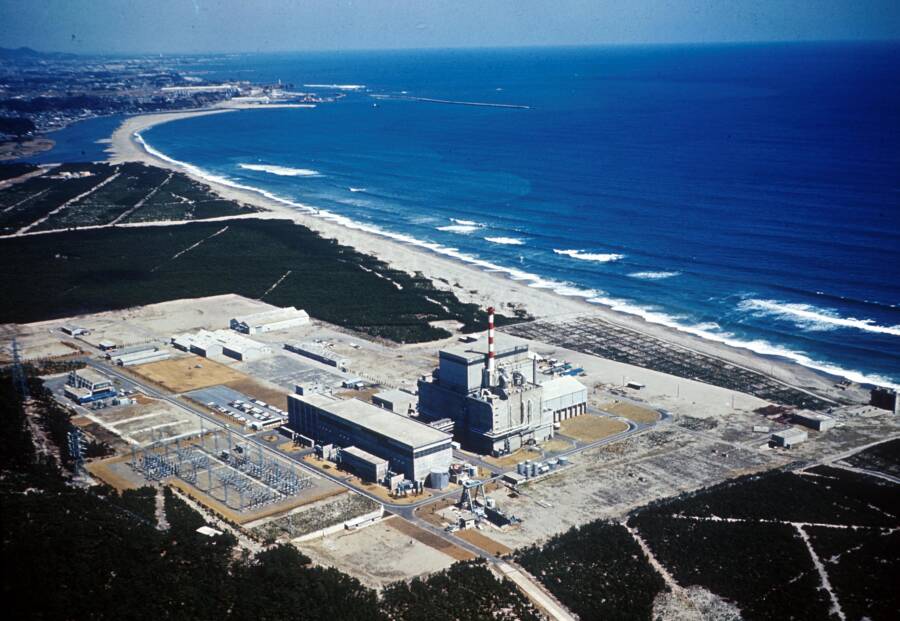
Tokaimura Nuclear Power Plant
  • For this true story, I’m going to ask you to flip your calendars back to 1961 Who’d a Thunkers, the year Japan’s built their first commercial nuclear power plant.
    • Japan (Nippon-koku) is a nation with few natural resources. Before nuclear power, they relied heavily on expensive imports for their energy. So when Japan created their first nuclear power plant in 1961, it was just the beginning.
    • Fast forward just 4 years later to 1965 and a one Hisashi Ouchi (this story’s main character) is born.
Hisashi Ouchi
  • Ouchi would grow up serving his country by working in the Tokaimura power plant.
    • From AllThatsInteresting.com:
      • The power plant location in Tokaimura was ideal due to the abundant land space, and it led to a whole campus of nuclear reactors, research institutes, fuel enrichment, and disposal facilities. Ultimately, one-third of the city’s entire population would rely on the nuclear industry rapidly growing in the Ibaraki Prefecture northeast of Tokyo.
      • The plant converted uranium hexafluoride into enriched uranium for nuclear energy purposes. This was typically done with a careful, multi-step process that involved mixing several elements in a carefully-timed sequence.
    • In March of 1997 the Tokaimura plant exploded. When the government stepped in they attempted a cover-up to hide the blatant negligence going on at the plant. It shocked the nearby residents irradiating some of them. But the horror of this explosion was nothing compared to what would happen just 2 year later.
    • It was in 1999 when plant officials thought they could speed up the process of their multi-step fuel mixture system to meet deadlines with ease… They thought they would experiment… with nuclear fission.
    • On September 28th, 1999 the Tokaimura plant had missed a deadline for creating fuel for the reactor.
  • On the morning of September 30th, 1999, at Japan’s Tokaimura nuclear power plant, a young Hisashi Ouchi was just beginning his day. Hisashi Ouchi, his 29-year-old peer Masato Shinohara, and their 54-year-old supervisor Yutaka Yokokawa tried a short cut.
    • The plant where he worked was under a lot of stress to meet deadline after deadline. Shortcuts were constantly being made to save money and the subsequent years that followed were rife with breaches in safety protocol. The plant was only inspected two times a year by the state regulator. It had never been inspected while the plant was in operation. In hindsight, the Tokaimura plant probably should have been shut down long before September 30th. But while hindsight is 20/20, that morning Ouchi’s bosses at the Japan Nuclear Fuel Conversion Co. (JCO) told him and two of his coworkers to mix another batch of fuel.
    • On top of the shortcuts and seeming indifference to safety, Ouchi and his coworkers were not properly trained to do the job they were asked to complete.
      • Ouchi and Shinohara were mixing a batch of fuel containing uranium in a stainless steel tank while Yokokawa (supervisor) was sitting at a desk 4 meters (just over 13 feet) away.
    • They mixed the nuclear fuel materials… by hand.
    • The amount of uranium used that day by the untrained men was 7 times more than the correct amount and it was poured into the wrong tank, not capable of containing the highly poisonous element.
    • Out of the three workers mixing one of the most dangerous concoctions of all time that morning, Ouchi was the one standing directly over the vessel used to contain the mixture. Though his body was taking on the most, the entire room was being flooded with Gamma rays… unbeknownst to the three men.
    • None of them had any idea what they were doing. Instead of using automatic pumps to mix 5.3 pounds of enriched uranium with nitric acid in a designated vessel, they used their hands to pour 35 pounds of it into steel buckets. They started this work at 10AM. By 10:35AM, that uranium reached critical mass.
      • The room exploded with a blue flash that confirmed that a nuclear chain reaction had occurred and was releasing lethal emissions of radiation.
  • Eventually, the local towns were evacuated to stay safe from the harmful Gamma rays, but Ouchi and his coworkers weren’t so lucky.
    • Ouichi was taken to the hospital where his condition shocked the doctors treating him. He had almost zero white blood cells. He had virtually no immune system so he was kept in a special radiation ward to protect him from pathogens from the outside world.
      • The first place Ouchi and his coworkers (Yutaka Yokokawa and Masato Shinohara) were taken to the National Institute of Radiological Sciences in Chiba. All three of the men were exposed to the radiation, but because of where they were positioned in the room in relation to the reactor fuel mix, they didn’t all get the same amount of radiation.
    • The sievert (Sv) is the International System of Units (SI) derived unit of dose equivalent radiation that takes into account the relative biological effectiveness of different forms of ionizing radiation.
      • It is intended to represent the stochastic health risk of ionizing radiation, which is defined as the probability of causing radiation-induced cancer and genetic damage. The sievert is important in dosimetry and radiation protection.
      • The rule of thumb is that seven sieverts (Sv) is enough to kill a person.
      • Nuclear Radiation 101: Nuclear radiation affects the atoms in our bodies by removing electrons. This breaks the bonds between atoms, including DNA and water in our bodies, damaging them. If your DNA gets damaged enough, cells can’t replicate and they die. Those that can still replicate, create more damaged cells. When damaged cells multiply, it creates cancer.
    • Yutaka Yokokawa, the supervisor that day, was exposed to 3 Sv. He would be the only man out of the 3 Tokaimura plant workers to survive.
  • Ouchi’s pain began immediately.
    • He could barely breathe and was vomiting violently in-between moments of unconsciousness on his way to the hospital.
    • He was crying blood and covered in red radiation burns almost immediately.
    • After just 3 days at the National Institute of Radiological Sciences in Chiba with doctors assessing each of the three men’s internal organs, they were transferred to the University of Tokyo Hospital. There they attempted revolutionary stem-cell treatments.
  • His first week at the University of Tokyo Hospital in the ICU was full of agonizing skin graft after skin graft and blood transfusion after blood transfusion. This was all they could do to keep him alive.
    • That’s when Hisamura Hirai, a cell transplant specialist, said they should try something risky. It was unheard of to treat radiation patients with stem-cell transplants, but then again, Ouchi had been exposed to an unheard-of amount of radiation.
      • The stem-cells worked. They gave Ouchi’s body a chance to create new blood. His sister donated her own stem-cells.
    • But then they started to take a closer look at Ouchi’s body and the scope of its condition became clear. The photos of his chromosomes were disturbingly informative.
      • His chromosomes were obliterated by radiation. They had “shattered like glass.” They could not be identified or arranged. Without chromosomes, his cells could not regenerate and his body could not heal. His white blood cell count was 0. All transplanted blood would quickly need to be transplanted again for more new blood because the radiation running through his body would destroy the introduced blood cells.
      • There are images of Ouchi’s body in the hospital that I have chosen NOT to show here (feel free to google image search is you’d like but be warned, they are gruesome). The photos of his body show that the uncountable skin grafts the hospital put on his body were doing very little. His DNA couldn’t rebuild itself. His skin was melting.
  • It wasn’t long before his skin started to melt off of him and he cried tears of blood begging to see his mother.
  • His body leaked as he endured a level of agony unseen on this Earth.
    • When he was first brought into the hospital, Ouchi did not seem to understand the severity of his radiation poisoning, often asking when he could go home, and asking if this could cause leukemia. But a few weeks later he began to bed for death.
      • He reportedly said things like “I can’t take it anymore,” and “I’m not a guinea pig!”
      • His family, the ones not experiencing his intense pain, insisted he be kept alive.
    • On day 27, Ouchi’s intestines started “to melt.” Three weeks later, he started hemorrhaging. He began receiving blood transfusions, sometimes as many as 10 in 12 hours. He began losing a significant amount of fluids (10 liters, or over 2 1/2 gallons, a day) through his skin so they wrapped him completely in gauze. He was bleeding from his eyes. His wife said that it looked like he was crying blood. Ouchi started receiving daily skin transplants using artificial skin, but they wouldn’t stick. His muscles began falling off the bone.
    • On the 59th day after the accident at Tokaimura power plant, Ouchi, or what was left of him, suffered from numerous heart attacks, but the hospital staff would revive him over and over again.
      • Because of the way end-of-life laws are set up in Japan, if his family wished it, he had to be revived at all costs. His family insisted he be kept alive for as long as physically possible. They wanted him to be resuscitated everytime he died.
      • On that 59th day, Ouchi had 3 heart attacks in just 1 hour.
      •  This severely damaged his brain and kidneys. At this point, Ouchi was on life support.
  • The melting mass that was once Hisashi Ouchi suffered before his final escape in the form of a final cardiac arrest… 83 days after being admitted to the hospital.
    • With his DNA obliterated and brain damage increasing every time he died, Ouchi’s fate had long been sealed. It was only a merciful final cardiac arrest due to multi-organ failure on Dec. 21, 1999, that released him from the pain.

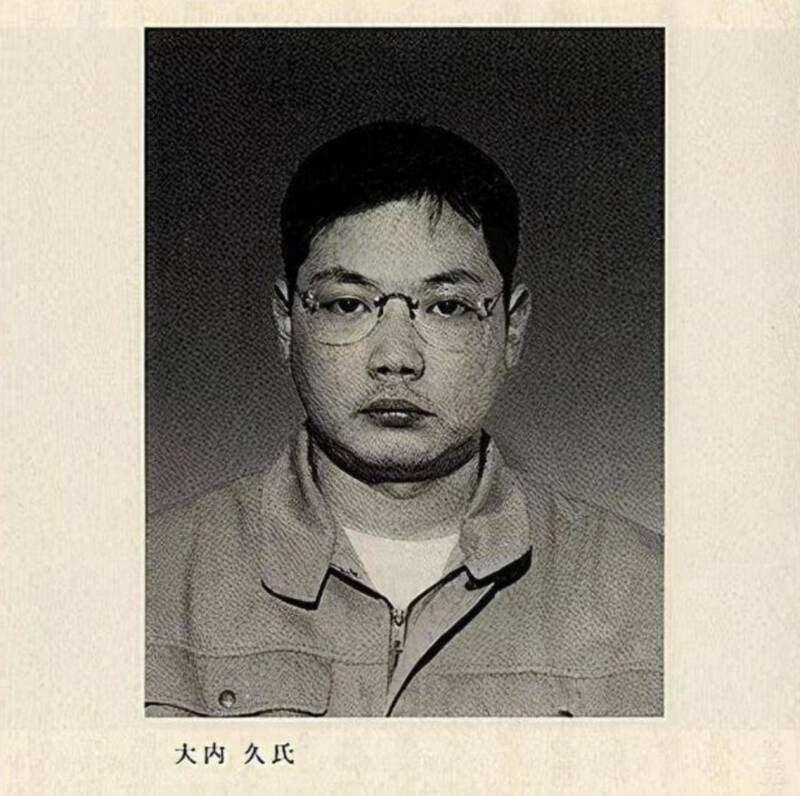
Hisashi Ouchi Photos

Japan TimesA picture of Hisashi Ouchi from his identification badge at the nuclear power plant.

The following paragraphs were taken from AllThatsIntersting.com and ICantBelieveItsNonFiction.com

The immediate aftermath of the Tokaimura nuclear accident saw 310,000 of villagers within six miles of the Tokai facility ordered to stay indoors for 24 hours. Over the next 10 days, 10,000 people were checked for radiation, with more than 600 people suffering low levels.

There was no critical accident alarm at the facility. When the accident first occurred, other workers were unaware of the emergency. After they were made aware, there was confusion as to whether or not the danger had passed. This led to three members of emergency personnel being unexpectedly exposed while trying to rescue the workers inside.

Because the plant was not included in the National Plan for the Prevention of Nuclear Disasters, immediate protocols for the protection of individuals outside of the plant were not in place. Workers at a lumber yard very near the plant were not evacuated until 3pm, 4 1/2 hours after the reaction.

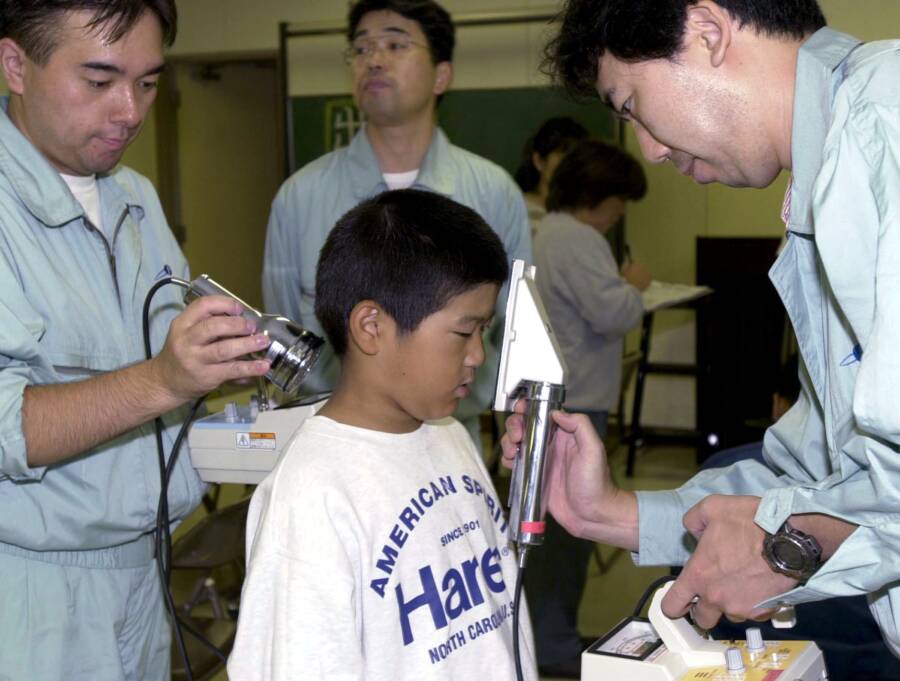
Tokaimura Nuclear Accident Victims

Kaku Kurita/Gamma-Rapho/Getty ImagesResidents in Tokaimura, Japan, being checked for radiation on Oct. 2, 1999.

But none suffered as much as Hisashi Ouchi and his colleague, Masato Shinohara.

Shinohara spent seven months fighting for his life. He, too, had received blood stem cell transfusions. In his case, doctors took them from the umbilical cord of a newborn.

Shinohara seemed to be getting better. On New Year’s Day 2000, he was taken in his wheelchair to visit the hospital gardens.

However, in late February 2000, Shinohara contracted pneumonia and the damage to his lungs from the radiation meant that he needed to be put on a ventilator. This prevented him from speaking, so he had to write messages to nurses and family. Some of the last words written by Shinohara were “Mommy, please.”

Tragically, neither the stem-cell transfusions approach nor skin grafts, blood transfusions, or cancer treatments had worked. He died of lung and liver failure on April 27, 2000.

As for the supervisor of the two deceased workers, Yokokawa was released after three months of treatment. He had suffered minor radiation sickness and survived. But he faced criminal charges of negligence in October 2000. JCO, meanwhile, would pay $121 million to settle 6,875 compensation claims from affected locals.

In reaction to the accident, which was found to be completely the result of human error, the Tōkai-Mura power plant was fully automated and fitted with neutron monitoring equipment. Tōkai-Mura had a history of taking shortcuts and putting their employees at risk to speed up production. The deaths of Ouchi and Shinohara were the ultimate penalty for their carelessness.

One year after the devastating accident, 6 employees were arrested and charged with negligence. One of the 6 was Yokokawa who claimed he “forgot” or was not aware of the dangers in the plant. He pled guilty.

At the time, Japan generated approximately 1/3 of its electricity from nuclear power.

The nuclear power plant in Tokai continued to operate under a different company for more than a decade until it shut down automatically during the 2011 Tōhoku earthquake and tsunami. It has not operated since.

CREDIT

Categories
Uncategorized

The USS Texas

The content below is from Episode 144 of the Who’d a Thunk It? Podcast

RECOMMENDATION SEGMENT

  • This week I recommend you watch Vox Machina on Amazon Prime.
    • Vox Machina was a creation of a group that call themselves Critical Role
      • A band of professional voice actors improvises, role-plays and rolls their way through a `Dungeon and Dragons’ campaign. The voice actors play a diverse cast of characters, who go on adventures within the kingdom.
      • They streamed their D&D gameplay and tried to sell merch.
    • Critical Role’s first campaign was Vox Machina:
      • Vox Machina, a band of eight unlikely heroes, find themselves on a quest to save the realm of Exandria from dark magical forces.
      • There was a kickstarter request from fans to give money for a simple 22-minute episode… BUT fans donated WAY more than expected (over 11 million) so an entire animated season was created and is now on Amazon Prime.
    • You don’t need to know anything about Critical Role, D&D, or any of that because I didn’t and I loved the show. So did Shannon actually, and she isn’t usually big on the fantasy genre.
    • It is a fun adult animated show with a bunch of main characters. They crack genuinely funny jokes and moments and the action is horrifyingly good.

NOW FOR THE MAIN EVENT

  • I want you to imagine you are out at sea on a boat. Any boat will do, so whatever kind of boat your imagination conjured up, thats fine. Now imagine your boat starts filling up with water… bad news right?
    • Well, yeah. Usually when your boat starts filling up with water that means you are sinking.
      • There is a major exception to this: Ballast water is fresh or saltwater held in the ballast tanks and cargo holds of ships. It is used to provide stability and maneuverability during a voyage when ships are not carrying cargo, not carrying heavy enough cargo, or when more stability is required due to rough seas. – National Invasive Species Information Center
      • But for the most part, water in boat=having a bad time.
    • Well, there is one story from history that took this notion and flipped it on its head. The crazy sonz-a-bitches on the USS Texas during WW2 intentionally filled their vessel with water because it somehow helped them defeat the Nazis!
  • The tale of the USS Texas BB-35
    • In 1910, two New York-class battleships were authorized for construction. The winning bid for the USS Texas was $5,830,000 ($182 Million in 2023 dollars according to In2013Dollars.com)
    • The USS Texas first tasted the salty brine of sea on May 18th of 1912. She was commissioned in March of 1914 as the most powerful weapon in the world.
    • She barely had time to get her sea legs. By May of 1914, she was sent to Mexico to aid in a situation going on down south. An American UBoat was being detained in Tampico. The USS Texas stayed in Mexico for a few months assisting US forces from offshore.
  • WW1
    • Then a little skirmish broke out all around the world, forever changing the face of battle for virtually every nation on Earth: World War One.
    • While escorting the merchant ship Mongolia, the USS Texas’ batteries opened fired upon a surfaced German UBoat. It was the first American shot of World War 1.
      • The German UBoat wasn’t sunk, but its attack on the Mongolia was halted.
    • The USS Texas served the rest of World War 1 alongside Britain’s Grand Fleet. She escorted convoys and minelayers.
The time an American battleship flooded itself…on purpose
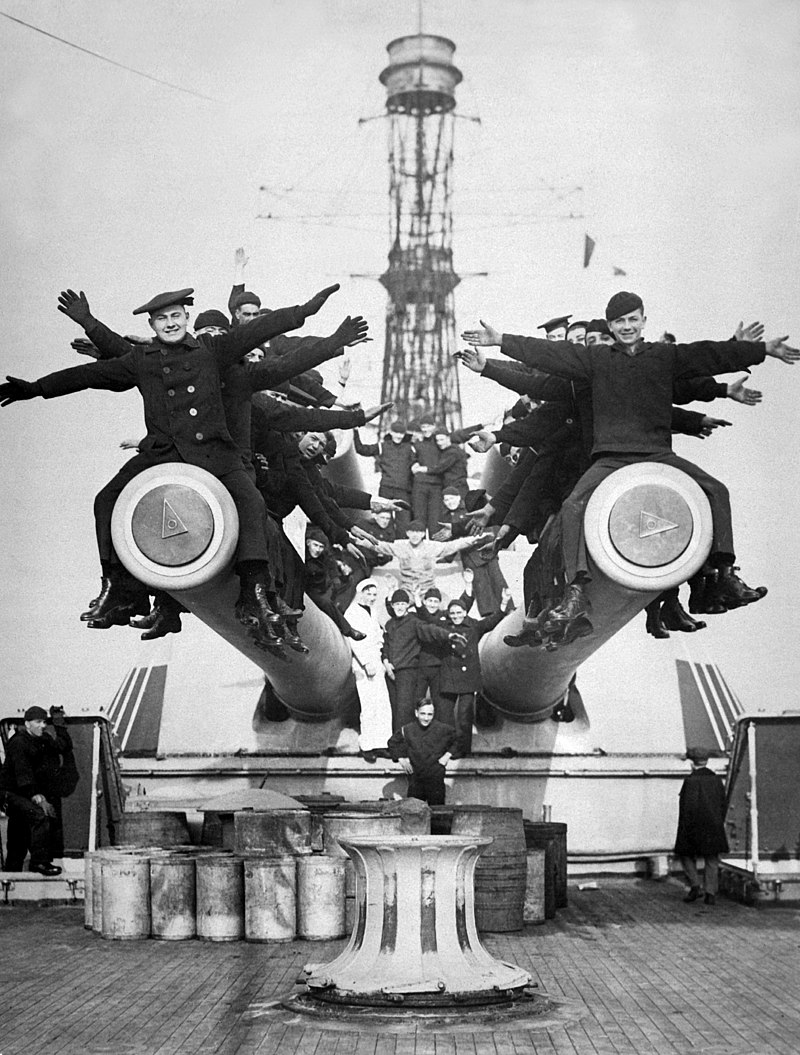
Crewman aboard USS Texas pose on one of the ship’s main 14-inch gun batteries (U.S. Navy)
  • Inter-War
    • In between World War One and World War Two, the USS Texas became the first American Battleship to launch a plane from her bow in 1919.
    • For a short period of time, the USS Texas was the flagship of the US Pacific Fleet. Then, just before WW2 broke out, she returned to serve in the Atlantic.
    • Before America joined the fight, the USS Texas would patrol in the name of neutrality escorting convoys across the Atlantic Ocean.
  • WW2
    • The attack on Pearl Harbor on December 7th, 1941 plunged the US into WW2. At first, the USS Texas was tasked with escorting convoys to places like Panama, Sierra Leone, and the UK.
    • The Allied invasion of North Africa (Operation Torch), the Texas blaired Lt. Gen. Dwight D Eisenhower’s “Voice of Freedom” speech. Its purpose was to reach the Vichy French puppet government to not slow the allied landings. The Texas fired 300 shells to support allied forces during Operation Torch… they thought that was a lot of shells until their next operation…
    • Operation Overlord was the invasion of Normandy (D-Day). The Texas was with the Western Taskforce and on June 6th, 1944 she took her position off Pointe du Hoc. She began her ordered bombardment of the coast to support the 29th Infantry Division, 2nd, and 5th Ranger Battalions.
      • You know, usual battleship stuff.
    • It took the Texas only 34 minutes to fire 255 14-inch shells into Pointe du Hoc…
      • Boy, I can’t even imagine the magnitude of chaos and power witnessed by those who were there that day. And from what I’ve heard from firsthand accounts… I don’t want to know.
    • Those 34 minutes were up and so Air support radioed down to the Texas informing her that German reinforcements had arrived, artillery batteries spotted, and more strong points were farther inland. The Texas adjusted accordingly.
The time an American battleship flooded itself…on purpose
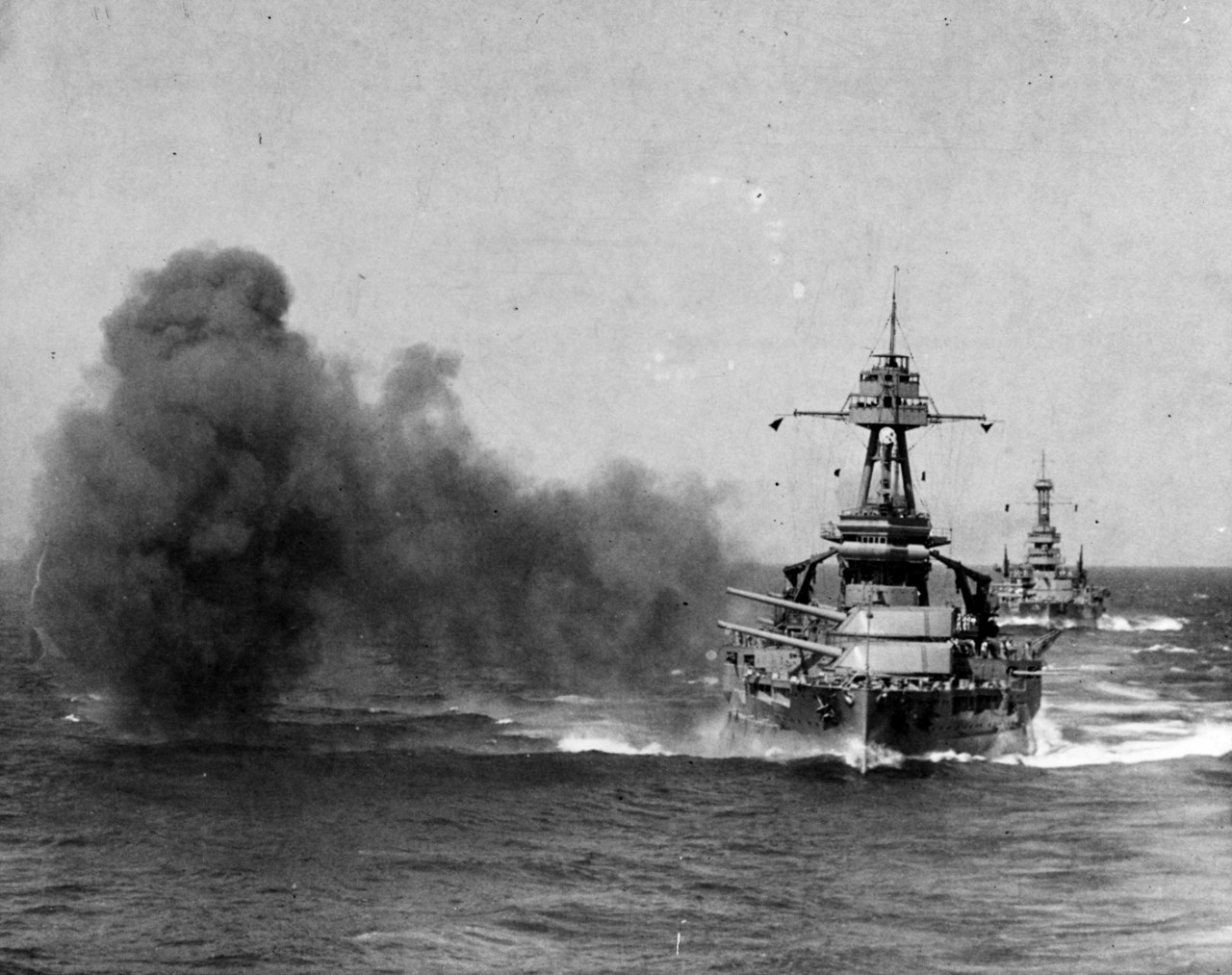
USS Texas fires a salvo from her 14-inch guns (U.S. Navy)
  • As you may know, D-Day was a success for the allies
    • Though it was a hellish slugfest and to-date one of the largest battle operations ever carried out, allied forces did progress inland.
    • As land forces moved farther inland, the need for naval support did too. The Texas moved closer to shore originally stationed 12,000 yards offshore, she crept to 3,000 yards offshore to proceed with her bombardments. After days of providing support in the form of 14-inch shells delivered at high speed to Nazi bunkers and camps, the Texas had to re-arm itself back in England.
    • By the time she returned off the coast of France, the allied troops had pushed so far inland that the enemy targets were now out of reach of naval ships and their guns. While other ships gave up, radioing back to command that they weren’t able to carry out their orders due to impossibility, the Texas‘ crew used their imagination.
    • The Texas was determined to carry out their fire missions. The massive 14-inch guns on her bow didn’t have the elevation capabilities required to reach designated Nazi targets. They couldn’t lob their shots far enough inland as the invading allies needed.
      • I want you to think of a solution here… I’ve given a few hints so far, you might be able to figure out what the crew of the Texas did next.
    • If the guns facing port couldn’t point any higher… than the starboard side of the ship would have to be lowered…
    • The Texas deliberately flooded her starboard torpedo blister and tilted the USS Texas just a smidge back so that her front end would tilt upward. It worked. The Texas’ main batteries were raised 2 degrees, enough elevation to carry out their firing missions. They had overcome where their fellow battleships had seen way of doing so.
      • Meanwhile, the Germans, who had been shelled into oblivion for days, thought they were finally in the clear. Their intel accurately told them that battleships of the time weren’t capable of firing as far inland as they were currently positioned. They still had to deal with encroaching troops and land artillery, but at least they didn’t have to worry about America’s horrifying sea power anymore… or so they thought LOL

“The reason the American Army does so well in wartime, is that war is chaos, and the American Army practices it on a daily basis.”

-from a post WWII debriefing of a German General

I know this story isn’t about the Army, but I thought it was fitting for a story about a ship that deliberately filled part of itself with water…

  • Necessity is the mother of invention. The USS Texas was given a seemingly impossible task. Instead of giving up, they showed ingenuity and adapted to the situation.
  • Today the USS Texas is the last surviving Dreadnought as well as the only battleship in existence today that fought in both WW1 and WW2.

CREDIT:

Categories
Uncategorized

Anniversary Episode 3

The content below is from Episode 143 of the Who’d a Thunk It? Podcast

RECOMMENDATION SEGMENT

  • This week I recommend you read (or listen to the audio book) of READY PLAYER ONE
    • Steven Spielberg directed the 2018 movie rendition of this book and I thought the movie was kickass.
      • It has its flaws like I felt as if it took gaming culture and whitewashed it a bit so that it would apeal to a wider audience. But regardless, it was a fun movie.
    • But then I saw a comment on some social media post saying how the book is leagues better. I placed a hold on my Libby App and within a few weeks I was listening to the virtual adventures of Parzival.
      • I think I’ve mentioned it before, but the Libby App is the library on your phone. You download Libby and all you need to access the Library’s expansive and free catalog of books/audiobooks is a Library card.
    • Anyway, one of the main differences from the movie is that the book can take its time with details further immersing you into the story (like most books vs movies), but it also doesn’t hold punches.
    • Whereas Speilberg had to appeal to a wider audience to turn a profit after using the $175 million dollar budget, author Ernest Cline was writing a story for those who wanted to hear it. PERIOD.
      • Released in 2011, the book doesn’t shy away from the protagonist Wade Watt’s religious and political views.
    • A good example of how the book is more gritty than the movie: in the movie Wade is played by actor Tye Sheridan, a handsome, young, and physically built man. In the book, Wade is a dirt-poor, fat, short, high school student with acne… you know what a LOT of obsessed video gamers actually look like.
    • One last incentive to check out the book: while Spielberg did get the rights to reference an impressive amount of pop culture characters and titles (a central part of the story), the book didn’t have NEARLY as many hoops to jump through as a film maker would. So the best references were made that fit the story instead of what the movie studio owned/could afford.

NOW FOR THE MAIN EVENT

  • For my 3rd Anniversary episode, we will be taking a look back on the past year, not just in what the Podcast has done, but what my wife and I have been through in our personal lives. This is a reflection on 2022.
    • This episode will mostly be Shannon and I recording together and just speaking, not from a script, but from memory.
  • Spotify bought Anchor.fm (the hosting platform for this podcast) and so we get a Wrapped this year.
    • I can’t remember if we got a Wrapped last year, we might have. But this year I will be sharing those stats among others.
  • I feel like that is a high percentage… are most podcasts still technically open, but no longer crank out new episodes?
    • Just sitting there on a server somewhere with no one creating new content or listening to old content?
  • This one I have always been proud of this one because it shows the range of my topics.
    • Ever since the beginning I’ve been reaching all over the world… may not be many listeners, but the listeners I have are from everywhere.
    • 83 countries have tuned in total (not just counting 2022)
  • The Facebook and Other are most likely from me shamelessly promoting my podcast on social media all the time… but I haven’t used WhatsApp since 2015 and I don’t think I text people the link…
    • Have you Who’d a Thunkers been sharing with your friends and family?! THANK YOU!
  • It is always good to grow.
    • I don’t make money off of this podcast. I just like knowing that SOMEONE is listening to the topics I find interesting.
    • I have had quite a lot of people ask me about this podcast in person which is nice. I can talk for hours about topics I’ve covered on here.
  • This one I was baffled by… Who are these people?
Link to my 2022 WRAPPED is in the CREDIT section
  • We have about 30K listens total that Anchor.fm can track. I know there are some sites that my podcast is on and Anchor.fm cannot track how many listens it gets there.
    • 30K is not something a professional podcaster would be proud of… it only comes out to about 10K a year. But I’m not a professional podcaster. I do this for a sense of accomplishment and because I found a passion for hosting shows when I was just a little kid. I enjoy it.
    • So I AM proud of that number.
  • Only counting Spotify, the listenership is 92% male and 51% between the age of 28 – 34.
  • Across all platforms the listeners this past year were 78% from Spotify and 94% from the USA
  • The Blog (accompanying blog post for virtually every episode since mid-2021) has been doing very well.
    • Each year we get more views and visitors from all over the world
  • It is nice to see the blog reaches countries all over the world just like the podcast.
  • WordPress tells you stats down to how many words you typed! LOL

FAVORITE EPISODES OF THE YEAR

ENOUGH ABOUT THE PODCAST! TIME TO HAVE A CATHARTIC REFLECTION ON OUR LIVES THIS PAST YEAR!

  • On December 23rd, 2021, I became an uncle!
    • Enjoy pictures of Shannon and me with little baby Whimsy girl!
  • Then we bought a house!
    • I almost did a separate episode just on us buying this house during one of the craziest times ever to buy a house in this country. It was nuts.
    • We literally saw the house for 15 minutes tops before the we bought it LOL.
  • My dad bought me a Kilt!
  • We went to a few weddings…
    • One wedding was in Pittsburgh and the other was in Las Vegas… and they happened within 24 hours of each other. LOL it was a spur of the moment thing and I’m so glad.
  • And then we had our own!
    • The amount of joy had that day was unbelievable.
  • Thanks for stopping by Who’d a Thunkers!
    • This episode was mostly unscripted, but if you are reading this on the blog that means you got to see all the awesome pictures!

CREDIT

Categories
Uncategorized

Steel Grandpa: Gustaf Håkansson

The content below is from Episode 142 of the Who’d a Thunk It? Podcast

RECOMMENDATION SEGMENT

  • This week I recommend you watch the Banshees of Inisherin
    • Plot:
      • On a remote island off the coast of Ireland, Pádraic is devastated when his buddy Colm suddenly puts an end to their lifelong friendship. With help from his sister and a troubled young islander, Pádraic sets out to repair the damaged relationship by any means necessary. However, as Colm’s resolve only strengthens, he soon delivers an ultimatum that leads to shocking consequences.
    • The acting by Colin Farrell, Kerry Condon, Brendan Gleeson, and Barry Keoghan is a spectacle on its own. But the plot is so simple, yet pulls you in right away.
    • Colin Farrell’s character Padraig goes from being sad, to pathetic, to triumphant, to “dim.”

NOW FOR THE MAIN EVENT

  • Follow me Who’d a Thunkers to a land known as Sweden
    • This mystical Scandinavian landscape shows beautiful glacial mountains, thousands of coastal islands, harsh winters, and gorgeous women.
    • Rewind back to the year 1951, Gustaf Håkansson applied to join in an endurance bicycle race that spanned the entire country… his application was rejected because Gustaf was 66 years old.
    • The 50 or so other racers competing in this stamina testing race were half Gustaf’s age.
    • But you see Gustaf wasn’t about to be deterred. What the race officials didn’t know was that he had ridden 600 miles just to get to the application booth!
    • So he said “shove it” to the officials and showed up to compete anyway. Yes, he did get rejected, but he figured no one was going to stop him (a Swedish citizen) from riding his bicycle along the same route as the race. When the official shot the starting pistol he was there with his rinkly bum on the bike saddle with mudguards, a headlamp, and saddle bags full of helpful goodies (food and water).
  • When the race began it was a mad dash. With so many participants, it wasn’t until about 20 seconds after the starting gun went off that Gustaf was able to cross the starting line. He was off to a rocky start, but no worries.
    • Once the wind started to hit his face, his huge majestic white beard began to part revealing a homemade racer bib. Unlike his competitors, he didn’t have an official racer number on his bib. No, he had written the number 0 on his chest as sort of a “take this” to the officiants.
  • It was 5 days and about 1,000 miles later that the officials saw Gustaf again.
    • Along with spectators, the officials waiting at the finish line saw a blur off in the distance rounding the corner.
    • The spectators rushed toward the mysterious would-be winner to offer food and drink to his exhausted body.
    • They expected a young fit man in his 20’s or maybe 30’s… but what they saw was a frail old man, a giant beard white as snow, nearing the finish line in his rusty old roadster bike teetering toward the finish line with no 2nd place racer anywhere in sight… Gustaf was a FULL DAY ahead of the other cyclists…
  • Now that is the legend, there is some more to the story.
    • Gustaf cheated.
    • Well, technically he didn’t cheat because the old geezer wasn’t even officially in the race. But he did ignore a major rule.
    • Other competitors had to meet and stop at checkpoints at the end of each day to rest. They were expected to wait at these checkpoints for a considerable amount of time.
    • Gustaf did not stop. Instead of getting a few hours of sleep, Gustaf kept trucking on through the night with his hazy old headlamp. While the rest of the riders were snoozing, drinking water, and recharging, the Steel Grandpa (as he would come to be known) would stop for just 1 hour each night then continue on into the darkness.
    • Gustaf was keeping at a 10-mile deficit from the rest of the pack, but after days of not resting while the others did, Gustaf has about a full day ahead of the rest.
    • While he did sort of cheat, he did prove his point without a doubt. He was rejected because the officials thought he couldn’t stand the strain of the race… well he did stand up to it, and even ignored the resting rules proving he was more than capable of beating it.
  • While the race was going on for those 5 days, people started to notice Gustaf was tucking alongside the other racers. Eventually, people became more interested in Gustaf’s plight than the official race participants. Some watched to see if the old man would pass out from exhaustion, others just wanted a good underdog story.
    • People knew he wasn’t stopping to sleep like the others and they figured there was no way he could keep going with virtually no rest.
    • At the 3-day mark, Gustaf’s 10-mile lag from the first day had turned into a 120-mile lead.
    • At this point, the police drove up to Gustaf and tried to get him to stop for a medical examination… but the Steel Grandpa laughed and kept pedaling.
    • Then on the 5th day, just about 800 yards from the finish line, as the officials and spectators saw him nearing the finish line, Gustaf had stopped. He hadn’t stopped from exhaustion as many thought, no, Gustaf’s trusty roadster steed had suffered his first flat tire of the race…
  • After he assessed the situation fully, Gustaf Håkansson the man who had heard towns folk chant “Steel Grandpa” as he rode through their streets for the past 5 days, decided a flat wasn’t going to stop him.
    • Unwavering in his pursuit to show those who rejected him for the race that he could do it, Gustaf got off his bike and started to jog toward the finish line. With only a few yards to go, he saddled back on his bike to cross the finish line at 2:15PM on July 7th of 1951.
    • The same officials that said he couldn’t possibly finish such a long and stressful race watched as he wobbled across the finish line on his rusty roadster bike with greasy hair, tangled white beard, and a flat tire…
  • The Guardian sums up the story well:
    • “Despite the albeit unofficial victory, a subsequent audience with the king of Sweden and generally being showered in fame and honour, Gustaf’s greatest satisfaction came from proving wrong the doctors who had thought he was better suited in a rocking chair than he was in a saddle. The Steel Grandpa continued to ride bicycles until his death in 1987 at the age of 102.”
    • He kept riding until he turned 100 and passed away in 1987 at the age of 101. His wife Maria lived until she was 104.

CREDIT:

Categories
Uncategorized

Nuclear Fusion and our Future

The content below is from Episode 141 of the Who’d a Thunk It? Podcast

RECOMMENDATION SEGMENT

  • This week I recommend you watch new Holiday movies.
    • My wife Shannon LOVES to rewatch old holiday classics like White Christmas (her favorite), Elf, Christmas Vacation, and a bunch of other holiday movies she and everyone else have all seen a hundred times over.
      • And I understand. I have my own Holiday tradition where I watch the South Park Christmas Sing-a-Long special every year.
    • But they are making NEW Holiday movies all the time that I think you should try.
    • I have 3 good ones for you:
  • Klaus
    • Klaus is an animated movie on Netflix. The Animation style gorgeous and took A LOT of time and effort to pull off. Better yet, the story is something completely new and original about the origins of Santa and the Christmas tradition as a whole.
    • This is my favorite new Christmas movie.
    • Plot: After proving himself to be the worst student at the academy, a postman is sent to a frozen town in the North where he discovers a reclusive toymaker named Klaus.
  • A Christmas Story Christmas
    • Sequels are rarely ever worth the effort and especially so when the original is regarded as an American classic. But this movie surprised me.
    • The first 5 minutes had me thinking I was going to hate this movie, but I was quickly convinced it was worth giving it a shot. By the end I was very happy I watched it. It has just the right amount of corniness and charm.
    • I love the original movie, but my one friend who hates the first movie (A Christmas Story) said he enjoyed this sequel much more.
    • Plot: Ralphie returns to give his kids a magical Christmas like the one he had as a child. Long-awaited follow-up to holiday classic A Christmas Story starring Peter Billingsley.
  • Spirited
    • After watching A Christmas Story Christmas I called my dad to tell him how much I enjoyed it and how he should watch it as well instead of just re-watching old classics. He got all excited and told me to watch Spirited with Will Farrel and Ryan Reynolds.
    • It is on Apple TV and really made me smile the entire way through.
    • Plot: A musical version of Charles Dickens’ story of a miserly misanthrope who’s taken on a magical journey.
  • I realize there aren’t any other holiday movies on this list besides Christmas movies and well, that’s because the people I’m surrounded by are mostly Christian and that’s what they like the most.
    • But if you are looking for a good Jewish movie I suggest 8 Crazy Nights by Adam Sandler. It isn’t super new (came out in 2002), but it is hilarious.
    • Plot: Davey Stone (Adam Sandler), a 33-year old party animal, finds himself in trouble with the law after his wild ways go too far. In keeping with the holiday spirit, the judge gives Davey one last chance at redemption — spend the holiday performing community service as the assistant referee for the youth basketball league or go to jail. Davey thinks he’s gotten off easy until he meets Whitey Duvall, the eccentric, elf-like head referee.

NOW FOR THE MAIN EVENT

  • Last week scientists made a breakthrough…
    • Within the last month or so, the US National Ignition Facility in California conducted a nuclear fusion experiment where they pumped a bunch of energy into 192 giant lasers, shot those lasers at a tiny pellet of fuel, and the result was more energy coming out of the pellet than there was energy going into the pellet. This is a landmark achievement that is called ignition or energy gain.
      • That pellet of fuel reached 3m degrees Celcius (hotter than the surface of the sun).
      • The Guardian, Ian Sample breaks down the experiment thusly:
        • “”To achieve the reactions, researchers fire up to 192 giant lasers into a centimetre-long gold cylinder called a hohlraum. The intense energy heats the container to more than 3m degrees celcius – hotter than the surface of the sun – and bathes a peppercorn-sized fuel pellet inside in X-rays.
        • The X-rays strip the surface off the pellet and trigger a rocket-like implosion, driving temperatures and pressures to extremes only seen inside stars, giant planets and nuclear detonations. The implosion reaches speeds of 400km per second and causes the deuterium and tritium to fuse.
        • Each fusing pair of hydrogen nuclei produces a lighter helium nucleus, and a burst of energy according to Einstein’s equation E=mc2. Deuterium is easily extracted from seawater, while tritium can be made from lithium which is found in the Earth’s crust.
        • In the latest experiment, researchers pumped in 2.05 megajoules of laser energy and got about 3.15MJ out – a roughly 50% gain and a sign that fusion reactions in the pellet were driving further fusion reactions. “The energy production took less time than it takes light to travel one inch,” said Dr Marvin Adams, at the NNSA.””
  • What is Nuclear Fusion?
    • From the International Atomic Energy Agency:
      • Nuclear fusion is the process by which two light atomic nuclei combine to form a single heavier one while releasing massive amounts of energy.
      • Fusion reactions take place in a state of matter called plasma — a hot, charged gas made of positive ions and free-moving electrons with unique properties distinct from solids, liquids or gases.
      • The sun, along with all other stars, is powered by this reaction. To fuse in our sun, nuclei need to collide with each other at extremely high temperatures, around ten million degrees Celsius. The high temperature provides them with enough energy to overcome their mutual electrical repulsion. Once the nuclei come within a very close range of each other, the attractive nuclear force between them will outweigh the electrical repulsion and allow them to fuse. For this to happen, the nuclei must be confined within a small space to increase the chances of collision. In the sun, the extreme pressure produced by its immense gravity creates the conditions for fusion.
  • Fusion VS Fission
    • From Energy.gov’s Office of Nuclear Energy:
      • Fission
      • Fission occurs when a neutron slams into a larger atom, forcing it to excite and split into two smaller atoms—also known as fission products. Additional neutrons are also released that can initiate a chain reaction.
      • When each atom splits, a tremendous amount of energy is released.
      • Uranium and plutonium are most commonly used for fission reactions in nuclear power reactors because they are easy to initiate and control.
      • The energy released by fission in these reactors heats water into steam. The steam is used to spin a turbine to produce carbon-free electricity.
      • Fusion
      • Fusion occurs when two atoms slam together to form a heavier atom, like when two hydrogen atoms fuse to form one helium atom.
      • This is the same process that powers the sun and creates huge amounts of energy—several times greater than fission. It also doesn’t produce highly radioactive fission products.
      • Fusion reactions are being studied by scientists, but are difficult to sustain for long periods of time because of the tremendous amount of pressure and temperature needed to join the nuclei together.
  • Why it’s a big deal:
    • International Atomic Energy Agency:
      • Why are the scientists studying fusion energy?
      • Ever since the theory of nuclear fusion was understood in the 1930s, scientists — and increasingly also engineers — have been on a quest to recreate and harness it. That is because if nuclear fusion can be replicated on earth at an industrial scale, it could provide virtually limitless clean, safe, and affordable energy to meet the world’s demand.
      • Fusion could generate four times more energy per kilogram of fuel than fission (used in nuclear power plants) and nearly four million times more energy than burning oil or coal.
      • Most of the fusion reactor concepts under development will use a mixture of deuterium and tritium — hydrogen atoms that contain extra neutrons. In theory, with just a few grams of these reactants, it is possible to produce a terajoule of energy, which is approximately the energy one person in a developed country needs over sixty years.
      • Fusion fuel is plentiful and easily accessible: deuterium can be extracted inexpensively from seawater, and tritium can potentially be produced from the reaction of fusion generated neutrons with naturally abundant lithium. These fuel supplies would last for millions of years. Future fusion reactors are also intrinsically safe and are not expected to produce high activity or long-lived nuclear waste. Furthermore, as the fusion process is difficult to start and maintain, there is no risk of a runaway reaction and meltdown; fusion can only occur under strict operational conditions, outside of which (in the case of an accident or system failure, for example), the plasma will naturally terminate, lose its energy very quickly and extinguish before any sustained damage is done to the reactor.
      • Importantly, nuclear fusion — just like fission — does not emit carbon dioxide or other greenhouse gases into the atmosphere, so it could be a long-term source of low-carbon electricity from the second half of this century onwards.
  • Since press releases claimed this as a huge breakthrough in clean energy, there has been a lot of buzz surrounding the experiment and the potential it promises. BUT this tech is VERY far away from being made into a viable power plant that creates clean energy for a large population (AKA we still have lots of work to do). There is a rush to get this thing ready to be used on massive scales to solve the climate crisis, but there is doubt it would work out that way.
    • I am skeptical that oil company lobbyists would allow that to happen as it would severely uncut their profits.
    • Plus, the calculation that said they got roughly a 50% gain in energy is a tad bit misleading. It was 2.05 MJ that reached the pellet and 3.15 MJ that came out. The pellet of fuel did release more energy than the lasers put in, but they left out the part about 300 megajoules needed to power up the lasers in the first place.
    • Those lasers can be shot about once a day right now. For a power plant to be productive they would need to be fired 10 times a second…
    • The thing the lasers were targetting (fuel pellet and all the tubes and stuff that was holding it) cost tens of thousands of dollars for this Breakthrough experiment, but for a viable power plant, they would need to cost just cents on the dollar.
    • And then there is the engineering problem of “ok so the pellet gave off more energy, but it gave off that energy in the form of heat… how the heck do we take that heat and make it electricity for people to use???”
    • It will take a buttload of money, decades of research, lots of smart people from all different aspects of STEM (science, tech, engineering, and math), and the absence of greed on a societal scale to make this thing work.
    • Justin Wark, a professor of physics at the University of Oxford and the director of the Oxford Centre for High Energy Density Science said that asking how long it could take to overcome the challenges was like asking the Wright brothers how long it would take to build a plane to cross the Atlantic just after their maiden flight. “I understand that everyone wants to think of this as being the great solution to the energy crisis. It is not, and whoever says it is with any certainty is misleading.
      • “It is highly unlikely that fusion will impact on a timescale sufficiently short to impact our current climate change crisis, so there must be no let up on our efforts in that regard.
      • “The latest results also show that the basic science works – the laws of physics do not prevent us from achieving the goal – the problems are technical and economic.”
    • Nonetheless, this experiment did prove we humans can harness the power of the stars right down here on Earth.
      • And all those problems, all those hurdles I just mentioned are solvable… and they are hiring bright young minds to help them solve them right now.
Watch is video (under 2 minutes long) where Marv Adams brilliantly explains what National Nuclear Security Administration accomplished and finishes with “and we’re hiring!”

CREDIT:

Categories
Uncategorized

Blanche Monnier

The content below is from Episode 140 of the Who’d a Thunk It? Podcast

RECOMMENDATION SEGMENT

  • This week I recommend you rewatch an old childhood classic.
    • I recently started re-watching Naruto (a pretty famous Anime series) and it is bringing me such joy!

NOW FOR THE MAIN EVENT

  • Back in the 1870’s, in the French city of Poitiers, there lived a wealthy and respected family, the Monniers. They were part of the French Aristocracy, the wealthy, educated, powerful… the elite of society.
    • The head of the family Emile Monnier was the director of a Poitiers arts faculty. His wife Madame Louise Monnier was awarded by the Committee of Good Works for her gracious contributions to the city. Their son, Marcel Monnier was a successful lawyer who had a family of his own (a wife and daughter).
    • Then there was the youngest, Blanche Monnier. Mademoiselle Blanche Monnier was known throughout the city for her beauty… but you know what they say about beauty… it doesn’t last forever.
  • Fast forward to 1901, the Paris Attorney General gets a strange anonymous letter. It was handwritten and even though it had no signature, the accusation amongst its words motivated the attorney general to investigate.

Monsieur Attorney General: I have the honour to inform you of an exceptionally serious occurrence. I speak of a spinster who is locked up in Madame Monnier’s house, half-starved and living on a putrid litter for the past twenty-five years – in a word, in her own filth.

Anonymous
  • At first, the police were hesitant to pursue the accusation.
    • Before his death in 1879, Monsieur Monnier had a reputation in the art world. Madame Monnier gave so much to the city, and Marcel was a big-shot lawyer.
    • But it was also well known that the Monnier’s had a daughter who hadn’t been seen in a quarter of a century…
      • Blanche was described by friends as “very gentle and good-natured.” She had vanished in the prime of her youth, just as high-society suitors had begun to come calling. Tragic, but not unheard of. No one gave much thought to it, and after being upset for what seemed a reasonable amount of time, the family went about their lives as though it had never happened.
  • The Police went ahead with the search against Madame Monnier’s wishes. Their standard search didn’t turn up much until one officer caught the stench of something fowl coming from the attic.
    • They followed the smell to a door that was padlocked from the outside. They smashed the lock and went inside where misery lay…
  • The room where the stench was coming from was pitch black. There was one window, but the shudders had been nailed shut and large curtains blocked out all light. The stench was so horrid that the head officer ordered the window opened by force to allow air inside.
    • With the window open, sunlight now drenched the room and revealed the source of the smell: discarded scraps of food and pieces of feces laid all over the floor, most concentrated in a ring around a decrepit bed that had a starved woman laying on top.
  • Monnier was rescued by police from appalling conditions, covered in old food and feces, with bugs all around the bed and floor, weighing barely 25 kilograms (55 lb).
    • One policeman described the state of Monnier and her bed thus:[4]

We immediately gave the order to open the casement window. This was done with great difficulty, for the old dark-colored curtains fell down in a heavy shower of dust. To open the shutters, it was necessary to remove them from their right hinges. As soon as light entered the room, we noticed, in the back, lying on a bed, her head and body covered by a repulsively filthy blanket, a woman identified as Mademoiselle Blanche Monnier. The unfortunate woman was lying completely naked on a rotten straw mattress. All around her was formed a sort of crust made from excrement, fragments of meat, vegetables, fish and rotten bread… We also saw oyster shells, and bugs running across Mademoiselle Monnier’s bed. The air was so unbreathable, the odor given off by the room was so rank, that it was impossible for us to stay any longer to proceed with our investigation.

Paris Police Report
  • The police took Blanche to the hospital immediately and placed her mother Madame Louise Monnier and brother Marcel under arrest.
    • At this point, Blanche was 52 years old.
    • They learned that when the police forced the window open it had been the first time Blanche had seen the sun in over 20 years. She had been chained to that rotting straw bed, unable to relieve herself anywhere other than her bed. There was no form of bathing for over 25 years.
    • The hospital staff said her physical well-being was that of severe malnourishment, but otherwise, she was stable. Although Blanche would, for obvious reasons, suffer from serious mental health problems, she said “how lovely it is to breathe fresh air again.”
    • For 25 years she only ever saw her family and the occasional servant who’d throw her table scraps. She spent most of her time with the rats and bugs.
    • Investigators noted how Blanche had covered the walls in words and phrases related to her freedom.
    • Allegedly, the neighbors knew of Blanche’s imprisonment, as they often heard her screaming in her room. If anyone ever asked Madame Monnier what was going on, she claimed Blanche had gone insane. At the time, it was standard procedure to keep mentally ill family members under lock and key, so no one pressed the issue. 
  • Her mother was arrested, became ill shortly afterwards and died 15 days later after seeing an angry mob gather in front of her house. Her brother, Marcel Monnier, appeared in court and was initially convicted, but later was acquitted on appeal; he was deemed mentally incapacitated, and, although the judges criticised his choices, they found that a “duty to rescue” did not exist in the penal code at that time with sufficient rule to convict him.
  • So why? Why did this happen?
    • the website BestFranceForever.com talks about the 2 very different stories:
      • One that is selatious and short, just right to tell in a news article
  • And the Real Story:
    • “Blanche’s mother (75) and her brother Marcel (53) were arrested and charged with offences relating to Blanche’s imprisonment. Though Marcel didn’t live in the same house as his mother and sister, he lived in a house owned by his mother on the opposite side of the street and was known to visit the family home often. Just two weeks after her arrest, Louise Monnier died. She had been ill for some time and seeing the angry mob outside her home caused her health to fail further. Not that she felt any remorse for what she had done; she couldn’t understand why people were upset about her treatment of Blanche and reportedly said, “All this fuss for nothing”.
    • Blanche’s story was headline news across France, accompanied by the horrific image of Blanche on her arrival at the hospital. The public was outraged at the barbaric treatment Blanche had suffered at the hands of her own family. People wanted to know why this had happened and it wasn’t long before an explanation emerged. The story went that Blanche, a beautiful and happy young woman of 25, had fallen in love with a lawyer several years older than her. Blanche’s mother wouldn’t accept the match because he was penniless and a Protestant whereas the Monniers were of noble lineage and Catholic. To put an end the engagement, she imprisoned Blanche in her room, pretending to friends and family that she had disappeared.
    • Google Blanche’s story today and you’ll read the same version repeated in countless blogs, news sites and even the English-language Wikipedia page – a kind of Gothic fairy-tale of thwarted love in which a beautiful princess is held captive in a tower, waiting for the prince that will never arrive. These stories are usually illustrated with before and after photos comparing Blanche on her discovery with her as a young woman. The thing is that the “before” photos are not Blanche Monnier. The woman on the left is the American actress Maude Fealy, while on the right is an unknown woman dated 1914, a year after Blanche’s death aged 65.
    • So the photos are fake but what about the story, the one about the young lovers being kept apart? The lawyer may well have existed but his role in Blanche’s imprisonment was, to say the least, exaggerated. And in spite of the headlines about “a woman held captive for 25 years” there’s even a great deal of doubt about whether Blanche was held against her will. The story that emerged at the trial of Blanche’s brother, the one told by the maids and doctors who cared for Blanche during these 25 years of “captivity” is complicated. Blanche Monnier wasn’t Rapunzel, not was she Elisabeth Fritzl. The evil that was done to Blanche was more banal. The kind of wrongdoing that comes when people – many dozens of people – turn a blind eye or abnegate responsibility.”
  • The real story is that Madame Louise Monnier was 22 years old when she married Charles-Emile Monnier and she wasn’t easy to live with. People said she was anxious, high strung, miserable, and had bad hygiene.
    • She liked to boss her family around. During Marcel’s trial, one maid testified that Madame Monnier wore the same dirty dress every day and another told the story of how that she complained that her children ate too much and ordered that they be served bread intended for the dog. This had nothing to do with money as the family was very wealthy.
    • She bossed around her husband and son, but Blache didn’t take it. Blanche was a rebel who fought with her mom often and that got worse as she got older.
    • Blanche Monnier is said to have had a happy childhood, in spite of whatever difficulties arose out of the family dynamics. As she grew older, she became more interested in religion. For a time, she studied at the Christian Union and wanted to become a nun. It was during this period that Blanche began to have “mystical experiences” that caused her to crave solitude and she spent more and more time in her bedroom. She refused to eat, perhaps initially as a religious fast, but this became more serious until she developed anorexia. In 1872, at the age of 23, Blanche fell ill with a fever and took to her bed. Though the illness eventually passed, she never really returned to the world after this point.
    • It was clear that Blanche was suffering from serious mental health issues by now. She refused to wear clothes in the house and would stand naked at the window of her bedroom, visible from the street. (It was fear of this exhibitionism that led to her parents having Blanche’s bedroom window boarded up, hence the dark, prison-like room that the police found her in.) Blanche’s tormented mental state, interpreted as religious visions, could be more properly attributed to the schizophrenia that she was eventually diagnosed with.
    • Marcel’s trial for complicity to violence began on 7 October 1901 and lasted five days. A great many people who had worked in the Monnier family home over the years testified in the trial. They were asked about Blanche’s condition, the cleanliness of her room and her ability to move around the home. From their testimonies, a picture emerged that diverged greatly from the narrative that had been told in the press and on the streets. Firstly, Blanche’s presence wasn’t a secret. Everyone who worked for the Monniers knew that Blanche was there and that she was ill. Secondly, she wasn’t locked in her room the throughout her confinement; she was able to visit other parts of the house and had continued to play piano for a time. Thirdly, a great many people swore that, for the twenty years that Marie Fazy cared for Blanche, she was washed and her room was clean.
    • Now, these testimonies should be understood in the context of Blanche being a very sick woman who would soil herself, rip her clothes off and destroy objects and furniture in her violent rages. (The court heard from a joiner who had been repeatedly to the house over the years to repair items in Blanche’s room including the door.) Blanche would not have been an easy patient to care for which is why, when her principal carer died five years earlier, things took a drastic turn for the worse.
    • The problem was that Louise Monnier, Blanche’s mother, had seemed to have washed her hands of her daughter by this point. Her husband had died over 14 years earlier and, with him, died Blanche’s last hope of having a person who was able to act on her best interests. Instead of replacing Marie Fazy with another nurse, Louise used a succession of maids – untrained young women who were entirely incapable of managing the needs of a very sick woman. In addition, they were expected to sleep in Blanche’s bedroom – not an appealing prospect – and many left after a very short time.
    • Louise Monnier made the situation still worse with her miserly behaviour. One maid told of how she requested clean nightshirts and bed sheets from the linen cupboard for Blanche, who was incontinent at times, only to be refused. Louise said that Blanche would only rip them or get them dirty again. With her mother’s refusal to hire proper carers, or provide for her daughter’s needs, it is little wonder that she ended up in a pitiable state.
    • Blanche’s condition had degraded 1899 when Louise entrusted two new housemaids, Juliette Dupuis and Eugénie Tabeau, with Blanche’s care. Once again they were young, inexperienced and had difficulty getting their patient to cooperate. Blanche’s mother didn’t actively participate in her care; it is unclear whether she even visited her daughter at this point. Her brother Marcel continued to read to Blanche in her room. When questioned as to whether her room was clean, his response was contradictory. He claimed that it was in an acceptable state while going on to say that he petitioned his mother to remove her to a hospital – something she denied each time. Marcel didn’t have the force of will or legal standing to get Blanche out of the house. He was, in effect, waiting for his mother to die before acting.
    • As it happened, Louise’s declining health was the catalyst for Blanche’s eventual discovery. Six weeks prior to the police’s intervention, Louise became ill to the point where she could not give orders to her staff – and Marcel was too fearful to take up the role himself. Whether through ignorance or laziness, Blanche was not given the care she needed. She was left lying on a filthy straw mattress covered in her own waste, rotten food and vermin. It was seeing her in this appalling condition that finally compelled someone to act. Though it is still uncertain who, it is probably that one of the new maids told a soldier boyfriend about Blanche, and he wrote the anonymous letter alerting the authorities.
    • Marcel was found guilty and sentenced to 15 months in prison but immediately appealed the verdict. His lawyers argued that, as legal guardian and owner of the house, it was Louise who was responsible for Blanche’s condition, not Marcel, and that he was not required under law to intervene. (There was no “good Samaritan” law at the time in France.) The appeal was successful and Marcel was freed in November 1901.

  • In 1930 André Gide used Blanche’s story as the basis for his novel La Séquestrée de Poitiers. In his book a young woman is held captive by her mother because of a love affair that the family did not approve of – a version reminiscent of the rumours about Blanche and the Protestant lawyer that persist today. It’s interesting that we choose to retell this “thwarted love” story. Though in this version an innocent Blanche suffers for 25 years, it is somehow easier to digest because there is an explanation and a single identifiable villain. We can imagine a world in which Blanche would be rescued and freed earlier by a passing policeman, for example.
  • The reality is much harder to accept. Blanche was failed by many people: her parents bear most responsibility certainly, but many others (her brother, her doctors, her hired carers) were aware of her situation and chose not to put an end to it. We like to think that, in their place, we would stand up and say something. Telling Blanche’s true story forces us to consider the possibility that we too would look away.
  • Eventually, after extended care, Blanche gained weight and could speak short phrases, but her imprisonment caused such deep trauma that she was unable to fully recover. She lived in a sanitarium in Blois, France, for 12 years until her death in 1913. 
    • To this day, the identity of the letter’s writer remains anonymous. Some have theorized that it was Marcel Monnier – Blanche’s brother – who wrote it, while others believe it was the partner of one of the family’s servants.

CREDIT:

Categories
Uncategorized

Impostor!

The content below is from Episode 139 of the Who’d a Thunk It? Podcast

RECOMMENDATION SEGMENT

  • This week I recommend HBO’s In Treatment
    • Based on an Israeli Academy Award-winning TV drama series, “In Treatment” features a psychologist confronting some uneasy personal truths. For the first three seasons, the featured doctor is middle-aged Paul Weston, who has sessions with his own psychotherapist. 
      • Apparently, they brought the show back recently and talked about issues like the Pandemic, but with a different cast. I haven’t seen those episodes yet and so I am not recommending those. I am only about 8 episodes into the show. I’m not knocking this newer version of the show… I just haven’t seen it.
    • It has 90% on Rotten Tomatoes and won a few awards back in the day. It originally came out towards the end of the flip phone era back in 2008.
    • Watching In Treatment with my Licensed Professional Counselor wife makes it even more enjoyable, but when I watched the first two episodes by myself and those were the ones that got me hooked.
    • The show is quite simple: each episode starts with the therapist sitting in his chair (sometimes you hear him take a phone call from a family member, sometimes he is just sitting and doing something mundane like reading the paper), but shortly after the episode begins, so does the next session. Patients enter the therapist’s home office and they begin talking about all sorts of facets of their lives. Usually, when the session ends, so does the episode.
  • So In Treatment isn’t an action show and there is only 1 set: the home office. But the dialogue is written with the utmost care and interest. Shannon and I are at the edges of our seats when we watch.

NOW FOR THE MAIN EVENT

  • Even if you aren’t a gamer, chances are you have seen an Among Us character somewhere. They are the little colorful space characters with no arms and bluish-gray visors. They’ve been in memes and MANY pop culture references (the latest of which is the Guardians of the Galaxy Volume 3 trailer).
    • At 45 seconds and 1 minute-10 seconds, you see characters in different colored space suits… I know, that could be just a coincidence and not a direct reference to the game as different colored suits is pretty simple of a concept… but I’m telling you: Shannon and I both looked at each other and said “Among Us!”
      • well… technically Shannon said “Impostor” because she can never remember the actual name of the game and just calls it Impostor, but you get it. Anyone who plays Among Us and saw this trailer KNEW it was a reference to Among Us.
  • A little side note, like Among Us, Guardians of the Galaxy is a black sheep title in its genre.
    • Just how Among Us is a game that non-gamers can and DO enjoy (my wife for example), Guardians of the Galaxy is a superhero movie franchise that is enjoyed by people who typically don’t like superhero movies.
    • Both Among Us and Guardians of the Galaxy were released with little expectation of success because the concepts don’t fit the mold of the genre they are in… yet they both became mega hits.
    • I just wanted to point out that similarity.
  • Among Us[c] is a 2018 online multiplayersocial deduction game developed and published by American game studio Innersloth. The game was inspired by the party game Mafia (also referred to as Werewolf) and the science fiction horror film The Thing.
    • John Carpenter’s The Thing is my #1 favorite horror movie because of the social deduction concept used in the movie: who’s the impostor?
    • What is social deduction?
      • social deduction game is a game in which players attempt to uncover each other’s hidden role or team allegiance. Commonly, these games are played with teams, with one team being considered “good” and another being “bad”. During gameplay, players can use logic and deductive reasoning to try to deduce one another’s roles, while other players can bluff to keep players from suspecting them.
    • Among Us takes place in space-themed settings where players are colorful armless cartoon astronauts. Each player takes on one of two roles: most are Crewmates, but a small number (1 to 3 depending on the host’s decision) play Impostors, which appear identical to Crewmates. The goal of the Crewmates is to either identify and vote out the Impostors, or to complete all the tasks around the map like calibrate the phasers and unload the trash. The goal of the Impostors is to covertly sabotage the mission either by killing the Crewmates before they complete all their tasks or by triggering a disaster that is not resolved in time.
  • The game was created by a small independent company in 2018 and had very little success, but online Twitch streamers started playing it and made it famous.
    • Twitch is like YouTube, but is mainly used for video game streaming.
    • While Among Us released in 2018, it was not until mid-2020 that it saw a surge of popularity, initially driven by content creators online in South Korea and Brazil. Bromander stated that the game is more popular in Mexico, Brazil, and South Korea than the United States.According to Willard, Twitch streamer Sodapoppin first popularized the game on Twitch in July 2020.Many other Twitch streamers and YouTubers followed suit, including prominent content creators xQcPokimaneShroudNinjaDisguised Toast and PewDiePie.
    • The COVID-19 pandemic was frequently cited as a reason for the popularity of Among Us, as it allowed for socializing despite social distancing. Emma Kent of Eurogamer believed that the release of Innersloth’s The Henry Stickmin Collection also contributed to awareness of Among Us,[56] and PC Gamer‘s Wes Fenlon credited Twitch streamer SR_Kaif for “prim[ing] Among Us for its big moment.” Fenlon also praised Among Us for improvements over other popular tabletop games that had been inspired by Mafia, such as Secret Hitler. He said other video game adaptations of Mafia such as Town of Salem and Werewolves Within were “just add[ing] an online interface for the basic Werewolf rules,” whereas Among Us is as an entirely new take on the concept.[37] Along with Fall Guys and the Jackbox Party PacksAmong Us provided a narrative-less experience that helped to avoid the “cultural trauma” of the pandemic, according to M.J. Lewis of Wired
  • The game embraces how silly it is.
    • The colored astronaut characters have no arms and bounce around when they walk in a comical way.
    • You can also pick from various “hats” (including ball caps, a fried egg, a plunger, etc.), suits (overalls, tuxedo, yeti costume, etc.), and pets (alien dogs, blobs of gue with eyes, etc.)… all of which are only aesthetic and don’t give the player any advantage in gameplay.
    • Yes, players are “killed” in the game, but the deaths are in a cartoonish manner and are typically seen as harmless. Most parents don’t see the game itself as offensive (though other real-world players may say inappropriate things).
  • When a game starts all players launch into the map in the same room (meeting room) that has a big red button in the middle. Each player is shown a screen that informs them if they are an impostor or crewmate before the match begins. The majority of players are crewmates. All the players scatter to different parts of the map, either doing their tasks (crewmates) or trying to find a good place to ambush another player to kill them (impostors).
    • When a dead player is found, other players (both crewmates and impostors) can report it. This brings all the players back to the meeting room where they can discuss what was seen, who is safe, who is “sus” (suspicious), and who (if anyone) should be voted out of the airlock (kill the player). Pressing the big red button in the meeting room does the same thing as reporting a dead body.
      • If you have seen John Carpenter’s The Thing, it is VERY similar to that movie’s premise. There are the good human crewmates who have a murderous monster (or multiple monsters) who can shapeshift to look exactly like a real human among them. And it is the crewmate humans’ job to figure out who the impostor is before they die.
      • Imagine the movie The Thing, but being able to play it… Yeah, this concept could have been made into a horror game, but Among Us isn’t horror, it is more of a light-hearted social experiment.
      • One could also draw similarities between Among Us and a murder mystery dinner date type of game. A video game “Who Dunnit?” type thing.
    • It is during the meeting when everyone is talking to each other to figure out who is the murderous saboteur that the game is most enjoyable. It is also when the game’s true genius shines. The players make the fun. The game itself is super simple compared to most modern video games, yet when you input the complexity of human behavior into this very simple game’s framework, you get true entertainment.
    • On this episode’s blog, I included a video of my friend Travis and I playing Among Us on Playstation one night. I encourage you to watch it or search for Among Us gameplay on YouTube. You will see how friends deceive each other in elaborate ways and how teammates can’t seem to work together no matter how easy it seems to do so.
    • If everyone playing the game was calm and rational and had unlimited time to discuss, every game would be boring and solved easily. A simple use of the Buddy system would expose the impostor very quickly. But that isn’t how games go. Gamers… no people, are erratic, impulsive, and are usually HORRIBLe at communicating with each other. Not to mention, the discussion forum where players have to talk to figure out who is the impostor usually comes with a 90 second timer and is usually only through text (though some people do use Discord and talk audibly).
    • But when in an audio lobby where players can actually hear each other speak are usually even more chaotic. LOL it is hilarious, and fun.
  • I mentioned how Among Us appeals to a wider audience than most games and that is because it feels like an interactive social board game that just happens to be on the video game medium.
    • My wife Shannon has almost 0 interest in video games and hasn’t really liked video games since she was a kid playing mariokart. Yet, she enjoys playing Among Us from time to time with my friends and I. She is pretty good at it too. LOL I remember my buddies and I were stumped one game and couldn’t figure out who the impostor was. I even defended her saying “no way its Shannon guys.” At which point my screen flashed red and her character snapped my neck in the meeting room right in front of the rest of the players. To this day it is one of my favorite moments ever playing Among Us LOL.
  • Shannon caught me watching video game clips on YouTube the other day and saw there is an Among Us VR version. “Virtual Reality Among Us?!” she exclaimed.
    • And I can understand her excitement. Instead of watching a character bounce around on a tiny screen on your phone you can actually run down spaceship hallways fleeing from impostors trying to kill you!
    • There were some independent Among Us VR games that fans created on VR Chat before, but they were a bit clunky and unreliable. The official Among Us VR didn’t release until November of 2022.
  • Here’s another point I’d like to make… the game is Free…
    • On Playstation it cost me $5, but to play on your smartphone is 100% free.
    • I strongly recommend you play Among Us yourself. It may seem daunting at first if you don’t play any video games at all, but you will get the hang of it.
    • Huh… I guess this entire episode is one big recommendation segment. I wanted to talk about how the game is a big social experiment on how people are really bad at working together, and I did a little. But mostly I just want to talk to you guys about this game. What is your favorite part?
    • Anchor.fm, the site I use to create this podcast has a fun interactive Q&A feature. Be sure to write in any of your thoughts there.

THANKS FOR LISTENING WHO’D A THUNKERS!

UNTIL NEXT TIME

CREDIT:

BONUS CONTENT

Here is a video of my buddy Travis and I playing Among Us on Playstation

WARNING: we are drinking beers and we do curse LOL