Categories
Uncategorized

Pigeons and People

The content below is from Season 2 Episode 25 of the Who’d A Thunk It? Podcast.

RECOMMENDATION SEGMENT

  • Record of Ragnarok
    • Last week’s recommendation segment was on Netflix’s live action drama about Norse Mythology. THIS week’s recommendation has a similar title, but a very different plot.
    • Record of Ragnarok is a brand new anime series with only 12 episodes available right now.
      • I know Anime is a super niche genre, but when I realized my Fiancée Shannon was enjoying the show as much as I was I thought it was worth recommending.
      • Unlike most anime series, Record of Ragnarok has a SUPER simple plot:
        • All the gods (Norse, Greek, Hindu, etc.) have grown tired of humanity and want to wipe us all out to start fresh. But at the last second before Zeus bangs his gavel declaring all humanity be eliminated, a Valkyrie from Norse mythology suggests they have a tournament (first side with 7 victories wins).
        • The gods pick their line up of their 13 best warriors and humanity can pick from their best 13 warriors (live or dead). Season 1 only covers the first 3 fights.
    • It is simple, fun, and definitely for adults due to the violence, language, and overt sexualization of Aphrodite lol.
This character from Record of Ragnarok is Adam… as in Adam and Eve. He fights Zeus wearing nothing but a leaf for decency and brass knuckles.

NOW FOR THE MAIN EVENT

  • Pigeons in World War 2
    • If you have taken a Psychology course either in High School or college then you definitely have heard of the renowned Psychologist B.F. Skinner.
      • Skinner was an American Psychologist who studied and conducted experiments out of Harvard University.
      • Early on he worked with rats and discovered that if the rats were given a treat every time they pressed a lever they would press the lever progressively more. He called it Operant Conditioning.
    • Skinner applied his understanding of animal behavior in World War 2, and this may sound like a made-up story, but it is very real.
      • This time, instead of using rats, he used what some New Yorkers call flying rats: the pigeon. How did pigeons play a role in WW2 you ask?
      • Well the Germans had created a modern marvel of destruction: the V2 Rocket.
        • Developed in Germany from 1936 through the efforts of scientists led by Wernher von Braun, the V2 Rocket was first successfully launched on October 3, 1942, and was fired against Paris on September 6, 1944.
        • Soon after Germany’s development in rocket technology, most other players in WW2 were slinging rockets of their own.
    • While rockets proved to create a devastating amount of destruction, they seldom hit their mark.
      • While the militaries of today use GPS guided missiles, back in WW2 times they were 30 years away from GPS technology.
      • Soldiers tasked with launching rockets had to use math to calculate the
        • amount of fuel necessary,
        • the angle the rocket should be launched,
        • wind speed,
        • and possible heavy weather encountered during the rockets approach.
      • That is a lot to calculate. As you might guess the soldiers calculating trajectory on the ground were wrong quite a lot.
      • Remember how I said the first V2 rocket was launched at Paris in 1944?
        • Well, quoting the Smithsonian’s Air and Space Museum: “the rocket was neither accuratereliable, nor cost effective. On 7 September 1944 the first two operational rockets were fired against Paris, but both failed due to premature cutoffs.”
    • While the Germans were deploying unreliable spies in London to report back on how accurate their rockets were, the US was coming up with more unorthodox ideas for missile guidance: Project Orcon.
      • B.F. Skinner was confident that his Operant Conditioning research could be beneficial to the folks trying to guide missiles. Although many were skeptical of Skinner’s plan, the National Defense Research Comittee granted Skinner $25,000 (about $320,000 today)
      • You see, similar to the rat pressing a lever to get a treat, a pigeon could be trained to pet a specified target in order to be fed. (See video below titled Project Orcon).
    • Skinner made that specified target in to what the US Military needed to destroy, enemy battleships out at sea.
      • He then strapped his trained pigeons inside the head of missiles with 3 screens that showed what the missile was currently aiming at (see image below). Depending on which screen and where on the screen the pigeon pecked, the missile would direct course toward where the pecks were being registered by sensors installed in the screen.
        • On paper it was genius. Pigeons can process visual information 3 times faster than humans and cost virtually nothing to produce. Once properly trained, the pigeons were extremely accurate hardly ever missing their targets during simulated runs.
      • But in October 1944 the project was scrapped. The Defense department thought money was better spent elsewhere like the Manhattan Project, AKA the Atomic Bomb which cost $1.9 billion($23 billion today).
      • Defense officials couldn’t bring themselves to entrust billion dollar rocket projects to pigeons.
        • Skinner himself said that the project was scrapped not because it didn’t work, but because no one took them seriously.
  • Skinner’s Superstitious Pigeons
    • That brings me to the real reason I wanted to do this episode. You see I’ve known about the Missile Guiding pigeons for quite some time. I like to tell people about it while I’m out drinking and socializing. The topic is bizarre, exciting, and involves WW2. I love to talk WW2 over a few brews.
    • But there was another experiment that Skinner conducted after the war that really intrigued me. I recently heard about Skinner’s Superstitious pigeons.
    • I stumbled on an old video hosted by the esteemed evolutionary biologist Richard Dawkins.
      • In the video Dawkins explains how Skinner studied pigeons’ behavior in 1947 by placing them in a controlled environment (rather a small transparent box) and feeding them whenever they pecked a button.
      • But then Skinner set the feeding apparatus to feed the pigeon at random. Whether the pigeon pecked the button or not had no bearing on how often the food was dispensed.
    • One might think the pigeons just sat back and waited for their food to be given at random times, but that is not what happened.
      • The vast majority of pigeons in the experiment developed what Skinner himself called superstitious behavior.
      • An example would be that if a pigeon just happened to lift up its right wing when food was dispensed then that pigeon associated the right wing lifting with food. The result was that the pigeon would continuously lift its right wing over and over again until the food was given again. This behavior persisted and further enforced that pigeons false association.
    • What interests me is the implication of these superstitious behaviors and what it means about human behavior.
      • If you think you can’t be compared to a pigeon in this sense you are wrong. We humans are subject to this superstitious behavior just as we are subject to Operant Conditioning.
        • Just as the rats kept pressing the lever for food; Give a patient suffering from pain a button that dispenses morphine in to their bloodstream. It is only a matter of time until they are pressing the button much more than necessary sometimes to the point of overdose.
        • Just as the pigeons displayed nonsensical behavior to be given food; we humans perform all sorts of nonsensical rituals to avoid pain and obtain pleasure.
          • Probably the main difference between humans and the pigeons is the lengths we will go to in our superstitious pursuits. Where pigeons simply make displays with their bodies, we humans create entire industries and institutions around our superstitious beliefs.
    • Some examples of human superstitious behavior
      • Tarot cards
      • Palm readings
      • Knocking on wood for good luck
      • saying “bless you” when someone sneezes
      • Don’t step on a crack or you’ll break your mother’s back
      • Black Cats crossing your path
    • You may think those examples I gave are for children or those more gullible than you, but I would disagree.
      • University of Iowa’s Psychology department provides a definition:
        • Superstitious behavior arises when the delivery of a reinforcer or punisher occurs close together in time (temporal contiguity) with an independent behavior. Therefore, the behavior is accidentally reinforced or punished, increasing the likelihood of that behavior occurring again.”
    • I would argue superstition has invaded just about every facet of our society and given the chance, could destroy it.
      • I’ll end this episode with an example: remember the Salem Witch trials? An entire town allowed themselves to be overtaken with superstition.
        • By the end of the Salem witch trials, 19 people had been hanged and 5 others had died in custody. Additionally, a man was pressed beneath heavy stones until he died.

Yep! I’m ending this one on a cautionary note. Don’t allow yourself to be overtaken by superstition. Build up your mental defenses against it by continuing to learn about the world around you.

Thanks for listening Who’d a Thunkers!

  • DISCLAIMER
    • I’m going on Vacation to Jamaica and will not be producing another episode of Who’d A Thunk it? Until July 15th.
    • Sorry… not sorry lol. I’ll be enjoying genuine Jamaican jerk chicken in a hammock over looking the Caribbean sea.

CREDIT

Categories
Uncategorized

Electric Scooters EVERYWHERE

The content below is from Season 2 Episode 24 of the Who’d a Thunk It? Podcast

Recommendation SegmenT

The guy in the middle with the Redskin’s shirt and jeans is Thor. The guy on the left leaning back in the chair is Loki. Everyone else is forgettable in my opinion.
  • Netflix’s Ragnarok
    • Netflix has this hokey drama series about a small family who moves to the small town of Edda Norway.
      • Supposedly Edda was the last city to denounce ancient Norse mythology and so the town is full of Norse Myth characters.
      • One of the things that I like most about the show is that it doesn’t fall into the same annoying teen drama traps that all American Teen shows tend to do.
      • It is about Norse Mythology and a tiny bit about modern environmental issues. That is it.
      • The rest is just fun. Oh, and I love their Loki character. He is written well.
      • Check it out!

NOW FOR THE MAIN EVENT!

  • As I mentioned in the last episode, I just went to my buddy Shane’s wedding. It was a BLAST!
    • Meeting up with college friends is always fun, albeit dangerous.
    • But the reason I bring it up again is that that wedding trip inspired this episode’s main event: electric scooters
    • You see the wedding was held in Columbus Ohio.
      • I always thought I hated Ohio, but really, it isn’t that bad of a place. I mean, at least it isn’t NEW JERSEY!! … gross
    • But there was 1 major difference I noticed when I travelled from a Pennsylvania city (namely Pittsburgh) to an Ohio city… THERE WERE ELECTRIC SCOOTERS EVERYWHERE!
      • And it started to grind my gears
      • more importantly, it jogged an old memory of watching a short YouTube video made by HBO’s Vice on the topic (see the first video below).
      • I remembered the scooters were wrapped in controversy, and I felt an urge to explore, understand, and eventually blurt out my opinion of that controversy on this podcast…. enjoy!
I’m sorry, but these people just look like dorks to me.
  • The Basics
    • Before I get into all the other adult perspectives, I feel it is important to represent my inner child of which I am still very well connected to and say:
      • These things look very fun!
      • I was always more of a bike kid and usually snickered at the scooter kids. But I must admit, if it didn’t require me to download an app on my phone I would have hopped on one of those scooters I saw in Columbus and immediately ridden circles around my fiancé like a blissful idiot.
    • Not to mention these things go 15 miles per hour!
      • Think of all the dangerous antics you could pull on a standing vehicle that goes 15 mph.
    • It seems like a fun way to spend at least part of your daily commute
      • Plus You don’t have to drop them off anywhere in particular (hence why they are left everywhere
        • I swear, given the opportunity to do so, adults will leave their toys lying about just like a toddler that doesn’t know any better.
    • But you can’t argue with that convenience.
      • Instead of the bikes that you see in my city of Pittsburgh that have to be taken back to specific stations at the end of use, these scooters were designed to be left anywhere!
  • “So people love these Scooters because they are fun, convenient, and relatively cheap, is that what you are saying?”
    • No
      • That is not what I am saying.
      • I was simply highlighting the few redeemable qualities these sidewalk hazards have before I explained my more grumpy-old-man take on these things.
    • The adult in me says these scooters are like garbage left out on the sidewalk.
      • One of the rules you technically have to agree to before using one of these bad boys is you will always wear a helmet. You are also supposed to be mindful of others and never ride on sidewalks. And while all the promotional videos show riders being kind, courteous, and wearing helmets safely… in the real world, people are rude, ride predominately on sidewalks, and never wear helmets. Because, well, we are people.
      • So older people tend to hate these scooters while young healthy people enjoy them.
        • I picture the cliché old man sitting on a bench shaking his head in disgust at a bunch of young whippersnappers zooming around on eScooters… then I realize I AM THE OLD MAN!!! I’m the one with that perspective lol
  • But are they even legal?
    • One of the eclectic scooter manufacturers Unagi posted a comprehensive article about the legality of electric scooters both in each American state and internationally. It is called “The Comprehensive Guide to Electric Scooter Laws” You can find it at UnagiScooters.com.
      • They summed up the legal world’s take on these eScooters quite nicely:
      • “Is your scooter legal? In a massive, growing industry, the opaque nature of the answer to this rather straightforward question borders on the comedic. Laws vary from year to year, from month to month, from state to state, and from country to country… Lawmakers and enforcers across the world have been wrestling the elephant sized conundrum of shared, electric scooters since Bird hit the scene in 2017. While the shared scooter phenomenon created a low carbon, cheap, and efficient means of transportation for millions of commuters and joy seekers worldwide, it also spurred a deluge of complaints from metropolitan pedestrians. Although scooter sharing has its benefits, it also brings about a number of obvious costs: sidewalk congestion, traffic obstruction, de-beautification, and accidents. The backlash stemming from these costs has caused governments on the city, state, regional, provincial, and in some cases, federal level – worldwide – to evaluate the social implications of electric scooters.”

      • I got to give an electric scooter manufacturer props for being so upfront and transparent about the product they make. I don’t know much about Unagi, but if they made an article like this they must have an amazing PR team. Great move on their part. Respect.
    • I wanted to highlight some of the states’ laws on these scooters
      • First, Ohio since it is the state that inspired this episode:
        • In Ohio, scooter riders don’t need a license. You can ride them on the street or bike lanes. You don’t have to wear a helmet and you don’t need insurance.
        • not many restrictions
      • Pennsylvania: my home state and where the vast majority of my listeners are from.
        • Electric scooters are illegal to use on roads in Pennsylvania because “these vehicles do not comply with the equipment standards and inspection requirements for motor vehicles, and cannot be titled or registered in the commonwealth,” according to the Pennsylvania department of transportation (we call it Penn DOT). “In addition, these vehicles cannot be operated on Pennsylvania roads and sidewalks.”
        • Notice the stark difference between the lack of regulation in Ohio vs the all-out ban in Pennsylvania
        • That is why I seldom saw them… I need to get out of this state more often lol…. as long as it isn’t New Jersey… gross
      • Wyoming cracked me up
        • “There is no current, available information on electric scooter law in the state of Wyoming.”
        • Right, because no one in Wyoming is riding a scooter 25 miles to their nearest convenience store in a snow squall LOL.
        • Hardly anyone lives in Wyoming. It is cold, there is unpredictable weather, and a wolf would see a yuppy on one of these scooters and think “hey! meals on wheels!”
          • That’s your dad joke for the day
The many eScooter companies. Screen shot taken from PolyMatter’s video “Why Scooter Startups are Worth Billions”
The parent companies. Screen shot taken from PolyMatter’s video “Why Scooter Startups are Worth Billions”
  • Economics- These scooters are out there making big money.
    • Allow me to throw some numbers at you
    • As explained by the YouTuber “PolyMatter” (see the second video below) there are 3 main companies: Lime (Google), Bird (whose CEO used to run Uber), and Spin, but there are many more out there.
      • Tons of companies are trying to cash in on this market (or at least they were before Covid-19, but I’ll get to that later)
    • The vast majority of the actual scooters are the Mi Electric Scooter model which costs about $250 when purchased in bulk.
      • Most scooters charge consumers $1 at the start of the ride and add $0.15 every minute of the ride.
      • With an average ride costing $3 and most scooters being used about 10 times a day that is $30 dollars a day per scooter.
        • Factoring in that these companies pay people to easily sign up through their phone to charge the scooters’ batteries at night to be paid an average of $7.50 per scooter, that is a $22.50 net income of a scooter per day.
    • With maintenance and theft affecting about 1% of total scooters, that means a scooter pays for itself in under 2 weeks… this has been going on since September of 2017.
      • So just think of all the profit these scooter tech companies are making.
SouthPark’s episode on scooters
  • Lastly, I want to talk about why these things made national news and even South Park made an episode about these scooters
    • It was September of 2017. Santa Monica California was ground zero for the eScooter infestation.
    • Overnight the company Bird had dumped tons of these scooters on sidewalks throughout the city.
    • Was it legal? Kind of, as these scooters fell into a legal gray area. These private transportation companies like Uber, Lyft, and now all these scooter companies act fast using technology so that their product isn’t necessarily illegal because the slow-moving gears of our legal system just can’t keep up.
      • It is a flawed system and ends up making both public officials and the general public mad. But we are a free market society and the outright targeting of a business that isn’t harming anyone is not allowed.
      • Even though the car ridesharing industry (namely Uber) was able to blow up so fast with virtually no legal blowback, our legal system learned a thing or 2. A lot of states and cities were ready to shut down these scooters that is why states like Ohio have hardly any regulations while Pennsylvania only tolerates the use of electric scooters on private property.
    • So the business model for these transportation tech companies is to distribute so fast and so absolutely that some groups of people get used to them and then those people vote on election day to keep the scooters and Ubers in their lives.
      • Uber, Lyft, and now these scooter companies forced themselves into our lives. It doesn’t get more American than that business model, but THAT is why some people hate them so passionately.
      • Weeks after these scooters arrived people started dumping them in dumpsters, waterways, and some people even got so fed up that they defecated on them.
      • That’s right. They were committing the crime of Scooter Pooping!
    • But the Covid 19 virus gave the industry a massive blow because no one was leaving their house for an extended period of time.
      • There are still scooters out there, but just like the great American Buffalo, their herds aren’t nearly the size as they once were.
  • In conclusion
    • I don’t think these scooters are that big of a deal. They look fun and relatively harmless.
      • That being said, I live in a state where I don’t have to deal with them. That is because Pennsylvania’s laws are weird and are constantly being pulled and tugged between Pittsburgh, Philadelphia, and the rest of the state filled with rednecks and Amish people. We aren’t even technically a state. We are the Commonwealth of Pennsylvania. Like I said, weird.
  • Welp! That’s my episode on scooters!
    • Hope you enjoyed Who’d a Thunkers! Until next week.

CREDIT

In this video the narrator says that the scooters were banned by the city of Columbus, but I assure you they were there just 5 days before this podcast episode will be released.
Categories
Uncategorized

ACHOO

The content below is from Season 2 Episode 23 of the Who’d a Thunk it? Podcast.

RECOMMENDATION SEGMENT

  • This week’s recommendation segment is for Mead!
    • Mead is wine made from honey. It is the oldest form of alcoholic beverage.
    • According to researchgate.net
      • The earliest archeological evidence of mead production dates back 7,000 years.
    • Mead tastes amazing and is one of the simplest alcoholic beverages to make.
    • A few weekends back I decided I wanted to have mead during my Memorial day celebrations.
      • The bottle I picked up was made by Chaucers. It came with a note on it saying it goes really well with IPA beer.
      • The drink they suggested was 1/4 Chaucers mead and 3/4 of a bitter IPA
      • I thought that was nuts and how could it possibly taste good, but I mixed them and it was superb!
      • The sweetness of the mead lessened the bitterness of the IPA while also bringing out some of the more hidden IPA ingredients.
    • Mixing Mead and Beer is called Braggot (AKA Bracket, Bragawd, or Braggaut)
      • Braggot was popular among Viking communities especially.
      • Mead used to be very expensive while Ale was less expensive.
        • So drinkers used to mix the two in order to get the sweet mead taste without having to shell out quite as much money.
        • According to most of my friends and family, Braggot isn’t for everyone. LOL a lot of my friends didn’t like it, but I love it.
        • Just be careful. Mead has somewhere between 10 and 15 percent alcohol content and IPAs usually have somewhere between 6 and 9 percent alcohol content. Mixing the 2 together makes a powerful drink that will put you on your butt before you know it… so sip slowly.
    • Mead is the reason for the term Honeymoon.
      • Mead was a special drink. Irish newlyweds used to be given a bottle of mead on their wedding night and were meant to drink it for 1 full moon cycle afterwards. That is where the term Honey-Moon comes from.
    • So if you are of age, go out and get yourself a bottle of mead!
      • And if you are feeling even more adventurous, mix it with a strong IPA.

NOW FOR THE MAIN EVENT

  • This week I wanted to do an episode about the:
    • Autosomal-Dominant
    • Compelling
    • Helio-
    • Ophthalmic
    • Outburst syndrom
      • Which when made in to an acronym spells ACHOO!
  • A shorter term used for the syndrome is the Photic Sneeze Reflex
    • I have this reflex and that means that going from a dark place to a bright place makes me sneeze.
    • The first time I shared this with anyone was in college back in Slippery Rock University.
      • My buddy Shane Whitacre mentioned how annoying it is that he sneezes every time he goes outside. Everyone else in the room had no idea what he was talking about except for me.
        • Side note: One of the reasons I brought up Shane is because I’m going to his wedding this weekend and I’m very excited to see my good friend start this next part of his life.
      • Up until that moment I thought bright lights made everyone sneeze and Shane thought he was the only person in the world that had the reflex.
      • And that is pretty common. Everyone I’ve met who also has the reflex either thinks they are unique or thinks it happens to everyone.
      • I recognized an interesting phenomenon and realized it had a fun social affect too. That’s why I decided to look in to it!
  • Great minds have pondered the reason and implications of the Photic Sneeze reflex for thousands of years
    • In the 3rd Century BCE, Aristotle hypothesized in his Book of Problems that the sun creates enough heat inside the nose that sweat forms and triggers the sneeze.
    • In the 20th Century, Sir Francis Bacon wrote how Aristotle’s hypothesis couldn’t be right, because when the eyes are closed the Photic Sneeze Reflex isn’t triggered.
      • With this information, Sir Bacon deduced that the reflex must involve the eyes.
      • He hypothesized that perhaps the eyes water and the moisture from the eyes trickles down to the nose where the sneeze is triggered.
      • But it turns out that the process of your eyes watering and pooling up enough moisture to stream down your face takes much longer than the immediate photic sneeze reflex. Plus, there is no evidence that tears cause sneezing.
  • Derek Muller from the YouTube channel Veritasium hypothesized that perhaps the reflex is an evolutionary trait
    • When we sneeze we are expelling tons of dangerous bacteria that can grow and thrive in dark places.
    • He thought that maybe our cave dwelling ancestors benefitted from only sneezing when they were outside the cave to sneeze where those potentially harmful bacteria would be killed by UV rays.
    • But Derek ended up throwing out his own hypothesis when he said there would be a much larger percentage of the population with the reflex if it were an evolutionary thing.
  • The fact is that somewhere between 18-33% of the world population has the gene that makes your brain think it needs to sneeze when actually all it needs to do is tell your pupils to constrict.
    • Allow me to explain:
    • The Trigeminal nerve (the largest cranial nerve) is responsible for most of the feelings in your face.
      • The three branches of the Trigeminal nerve are…. hard to pronounce. There is the Ophthalmic branch that goes to the eye
      • And the other branch that involves the Photic sneeze reflex is the Maxillary nerve that goes to the nose.
    • The current theory is that the intense signal being sent from your brain and eye Ophthalmic nerve causing your pupils to constrict crosses over in to the Maxillary nerve and triggers your nose to sneeze.
      • In layman’s terms, us sun sneezers have our wires crossed.
    • The Crossed Wires hypothesis is the best the medical community could come up for a long time, but there is no solid evidence to support it until just recently.
The Trigeminal Nerve
Trigeminal Nerve branches/divisions
  • Genetics have pin pointed the gene responsible for the Photic Sneeze Reflex and it fits very nicely with the crossed wires hypothesis
    • Located on the 2nd chromosome there is a single letter representing a gene.
      • For non sun sneezers this letter is a T, but for us circus freaks going around sneezing at the giant flaming ball in the sky that letter is a C.
      • This was discovered by the company 23&Me. They got about 10,000 people to go online, and fill out if they had the reflex or not.
      • Then those 10,000 participants submitted their DNA to 23&Me.
      • That data was analyzed and they found this 1 letter of DNA had the most significant correlation with how the participants answered their photic sneeze question.
  • Why did it take thousands of years to figure this out?
    • well scientists try to focus on important problems like curing AIDS or Cancer.
    • While some people were curious as to why some of us sneeze at lights and others don’t, the scientific community was fine with keeping that harmless question on standby.
    • Sneezing isn’t really that harmless unless you are doing open heart surgery or operating some complex vehicle.
      • Side note, sun sneezes have almost made me crash my care like 3 times. Driving down the highway at 80 miles per hour and having the sun peak over the horizon for me is a dangerous combination.
  • But anyway, that’s my episode on sneezing LOL
    • I’m a sun sneezer and I’m not particularly proud of it, but I’m certainly not ashamed of it.
  • Thanks for listening Who’d a Thunkers!
    • Until next week 🙂

CREDIT

I used Derek Muller’s video heavily for this video.

Categories
Uncategorized

My Mother and Microwaves

The content below is from Season 2 Episode 22 of the Who’d a Thunk It? Podcast.

Just as a side note, I tallied up all 63 episodes and their run times. There are now over 16 hours of Who’d a Thunk It audio content available across about a dozen platforms. People from all over the globe, 54 countries, have tuned in and I couldn’t be happier about it!

RECOMMENDATION SEGMENT

  • Right now on Netflix (in the US) you can watch season 1 and 2 of Dirty John
    • My sister Cas is the one who showed me this series and I’d like to say Thanks Cas!
    • The show is a true-crime series based on the concept of “love gone wrong.”
    • I’ve only seen a few episodes of season 1 so far, but the show is full of deception and manipulation.
    • To go over the plot would spoil too much for you. Let’s just say it is a fascinating watch with a great cast.
    • Season 1 is based on a podcast about a true story and I highly recommend you check it out.

NOW FOR THE MAIN EVENT

  • I recently spent some quality time with my family back in York County Pennsylvania
    • While at my mom’s I wanted to warm up a bowl full of rice, vegetables, and venison meat. I was quickly reminded of the fact that my mom no longer owns a microwave and isn’t planning on getting one anytime soon.
    • I know as a kid she told me she wasn’t sure about the science behind microwaves. She wasn’t convinced that enough research was conducted in regards to the potential harm microwaves pose to humans.
      • Nowadays she simply says she isn’t a fan of the technology and prefers the conventional oven and stove anyway.
    • Although my mom simply prefers life without microwaves (and I can respect that) I know there are people who genuinely believe microwave ovens are harmful.
      • So I decided to do some digging
  • So let’s talk about Electromagnetic radiation and their direct affect on the body
    • When you pop a bowl of frozen broccoli in the microwave you’ve probably chosen your method of cooking out of convenience.
      • Because using a microwave takes a fraction of the time and effort of a conventional oven or stove.
    • The reason cooking by microwave is so fast and easy is due to electromagnetic radiation.
    • Electromagnetic Radiation (ER) is a kind of radiation including visible light, radio waves, gamma rays, and X-rays, in which electric and magnetic fields vary simultaneously.
      • Depending on the wavelength, the ER has different levels of intensity. Radio waves are some of the lowest while gamma rays (used in medicine to kill cancer cells) are some of the highest level of intensity.
      • Let me offer a comparison: Microwaves use the same size of wave (or frequency) as wifi.
        • The International Telecommunication Union designated 2.4 GHz specifically for Microwave ovens. The decades since that designation, other devices started using that unlicensed spectrum and now microwaves share a very similar frequency with your WiFi.
        • But don’t worry, your WiFi isn’t going to cook you like a hot pocket.
        • HowToGeek.come explains: ” A Wi-Fi router sends its signal out omnidirectionally. That is, it sends it in every direction in a rough circle as far as it can. Your microwave, on the other hand, sends its signal in a single direction, roughly towards the center of the oven. That signal continues until it hits a wall, bounces and comes back (at a slightly different angle). It isn’t a perfect system, due to the nature of radio waves, and so every microwave has hot and cold spots. That’s why microwaves have spinning plates.”
      • But those microwave signals don’t leave your microwave oven due to a marvelous invention called a Faraday Cage
        • Faraday cage or Faraday shield is an enclosure used to block electromagnetic fields. A Faraday shield may be formed by a continuous covering of conductive material, or in the case of a Faraday cage, by a mesh of such materials. Faraday cages are named after scientist Michael Faraday, who invented them in 1836.
        • You can actually see the Faraday cage on your microwave. When you look in to see how your food is cooking, you will see checkered lines partially blocking your vision. Those lines are the conductive material keeping he microwave signals from leaking out of your microwave oven.
          • So don’t ever try to get rid of that cage to get a better look at your food. that cage is keeping you safe and without it, the microwaves could do serious damage to your most sensitive tissue: your eyes.
        • Without the Faraday cage there are potential health hazards: In the early days of microwave ovens, specifically those used in commercial establishments, there was a worker or who deliberately defeated the door interlock system so that the door could be opened and closed without restarting the oven each time, thereby saving time. Leaving the door open on a microwave means the Faraday Cage is not enclosing the Electromagnetic Radiation. Reports were that the person found that they gradually lost the use of the arm they used to place and retrieve food from the oven, due to cumulative thermal damage over time.
    • So my mom’s fears aren’t entirely unfounded. Direct contact with ER can be harmful to humans overtime.
      • But these hazards are well known and well tested safety measures have been put in place to prevent them from happening.
    • Also I wanted to note, specifically with my dad in mind, Pacemakers used to be negatively affected by microwaves. The signals from microwaves used to interfere with Pacemaker signals, but modern pacemakers have security checks against that now.
      • So Pacemaker people don’t worry. Your ticker is perfectly safe while you are warming up noodles in the nuker.
This video is has the simplest possible explanation of how a microwave works.
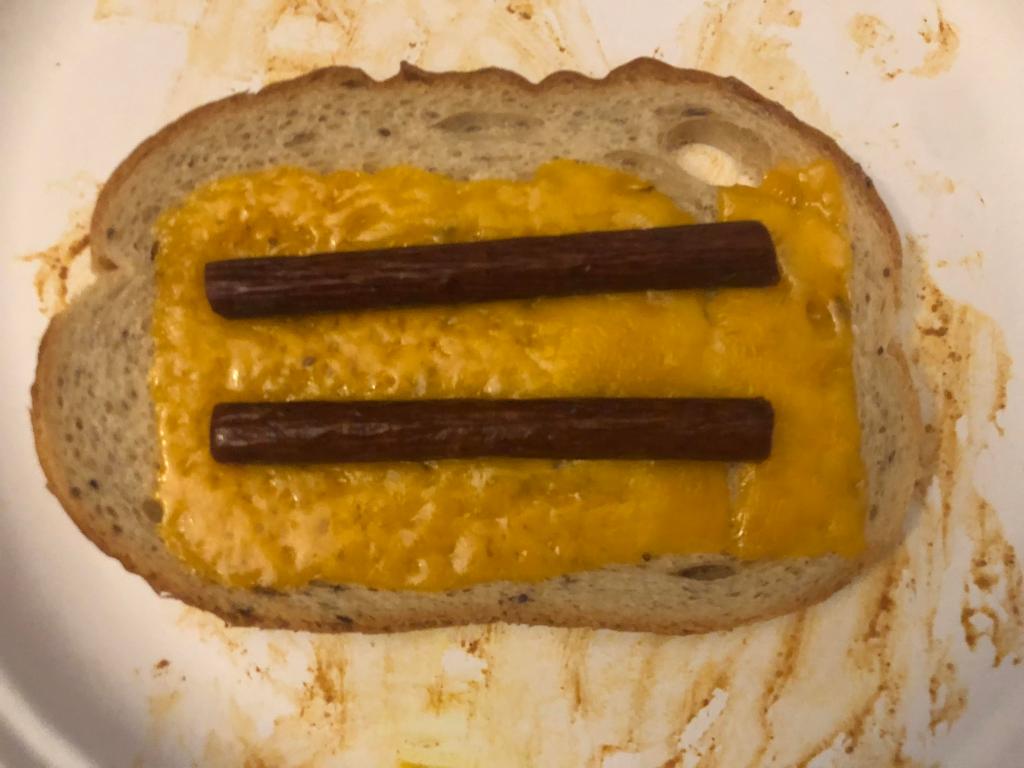
Found on r/shittyFoodPorn, this is microwaved rye bread with American cheese topped with Slim Jims. #HowNotToMicrowave
  • But what do microwave ovens do to our food?
    • well simply put, the microwaves cause the water molecules in food to vibrate which creates heat. That heat is what cooks the food.
    • The claim is that this heating process damages the proteins in foods and therefore destroys nutrients that would otherwise be beneficial for our health.
      • … that’s true actually. Microwaving food does damage proteins and does destroy some nutrients in food…
        • but so does any form of cooking.
      • That is the nature of thermochemistry. Whether you are cooking your food by boiling, roasting, or microwaving, you are going to be altering the state of that food.
      • If you boil broccoli, a lot of nutrients are going to leak out in to the water you are using to boil. Then that water just ends up in the drain.
        • If you microwave that broccoli, the vegetable spends less time being cooked/exposed to heat and there is less water used.
        • Microwaving that broccoli actually leaves your vegetable less nutrient deficient than boiling it. That is, unless you drink the left over boiled water afterwards like an absolute mad man.
          • That is the claim of the BBC’s Earth Lab, but a 2003 study by Journal of the Science of Food and Agriculture claims broccoli retains much more nutrients when lightly steamed compared to being microwaved… contradicting information is frustrating, but I’m afraid it is the reality of science sometimes.
            • If you want ALL the nutrients, just eat your broccoli raw like a real man!!! lol
    • Here is a list of a couple foods and beverages that don’t go well in the microwave
      • As Foods You Should Never Put In The Microwave (mashed.com) states these foods are bad in the microwave:
        • A mug of water
          • The water super heats without boiling then when it comes in to contact with something (tea bag for example) the water boils all at once and can explode
        • Breast Milk
          • Breast milk heats unevenly and could create hot spots that will scald your baby.
        • Chili Peppers
          • Peppers give off fumes of steam that you don’t want to come in contact with.
        • Eggs
          • Eggs steam up until they explode
        • bread
          • Bread gets all rubbery and gross after microwaving
        • leafy greens
          • Kale and other leafy greens can spark if microwaved
        • leftover takeout
          • Most takeout containers are not microwave safe and some have metal handles… metal doesn’t do well in microwaves.
        • Frozen meat
          • If the heat doesn’t distribute evenly, you can end up with hot spots and still-frozen spots, and the growth of dangerous bacteria.
  • Now let me shine a light on a few Actual health risks of using a Microwave
    • Well microwaves do worsen the negative affects of a poisonous material that has invaded nearly every facet of our lives: plastics.
    • Plastic hasn’t just polluted our oceans and landscapes, scientists have found traces of plastic in nearly every animal on the planet. That especially includes us human beings.
      • Instead of putting this in my own words, I felt it best to read from FoodNetwork’s article Is It Really That Bad to Use Plastic in the Microwave? :
      • “The evidence is mounting that plastic food containers are bad for our health. The two key culprits are the man-made chemicals Phthalates and Bisphenol A (BPA), which are often added to plastic to help it keep its shape and pliability. Known as “endocrine disruptors,” these substances have been found to affect hormones, such as estrogen and testosterone, which can cause reproductive and other medical problems. They may be especially dangerous to children, potentially impeding normal growth and development, according to the Pediatric Environmental Health Specialty Units.”
      • “Basically, heat can cause the BPA and Phthalates in plastics to leach into your food. That means – yeah, sorry – you should avoid microwaving food and beverages in plastic. Instead, transfer them into microwave-safe glass or ceramic containers. And those “microwave safe” plastic dome covers? The FDA says they’re OK, but, if you need to cover your food, it’s probably safest to use wax paper, parchment paper, a white paper towel or even a ceramic plate.”
      • “In general, steer clear of plastic with recycling codes 3 (phthalates), 6 (styrene) and 7 (bisphenols) except for those that are marked as “biobased” or “greenware,” the AAP cautions. The Environmental Working Group stresses that, when storing food, if you have to use plastic, you should avoid anything marked with recycling 7 and use 4 instead. “#1 and #2 are BPA-free, but some researchers do not recommend their reuse,” EWG notes. Meanwhile, Harvard Health advises that plastic takeout containers and grocery-food tubs (the kind used for margarine or yogurt) are generally not microwave-safe; prepackaged microwave food trays should not be reused; old, scratched or cracked containers may be especially apt to leach chemicals and should be tossed; and microwaving food in plastic bags is a big no-no.”
  • In conclusion
    • Microwaves can be a great tool for cooking, but be sure to follow the instructions for safety reasons.
      • NEVER tamper with a microwave. That includes the Faraday Cage.
    • After looking in to the technology of the microwave I understand why my mom doesn’t have one.
      • When using a microwave you add a new level of risk when cooking.
      • With conventional ovens and stoves you just have to worry about heat, but with microwaves you have to worry about Electromagnetic Radiation.
      • For people like my mom who are fine with cooking without a microwave and the conveniences it brings, it makes sense to just eliminate that specific risk from their kitchen.
      • I personally love cooking by microwave and I’m fine with the risks.

Thanks for listening/reading Who’d a Thunk It?

Until next week Who’d a Thunkers!

CREDIT

BELOW are a bunch of videos I found about the supposed dangers of microwaves. I picked these videos specifically with my mom in mind.

First video is long but sums up how microwaves were invented and how they actually brought frozen hamsters back to life.

Comedy Central’s Your Worst Fears Confirmed hosted by Natasha Vaynblat made a video that reminded me of my mom’s weird microwave fears.

Quite possibly the greatest podcast in the world: The Joe Rogan Experience hosted Neil deGrasse Tyson many times. During one of the episodes with Neil (a world famous Astrophysicist), he and Joe discuss the fears surrounding Microwaves and the science that says those fears are unwarranted.

Leave it to the BBC to deliver the most clear, concise, and reasonable video on the subject.

MOM, WATCH THIS short VIDEO.

Categories
Uncategorized

Lawn Darts

The content below is from Season 2, Episode 21 of the Who’d a Thunk It? Podcast.

RECOMMENDATION SEGMENT

  • My recommendation this week is for everyone enjoying a nice Memorial Day Party this upcoming weekend.
    • I know cornhole is all the rage for outdoor leisure games right now, but I recommend corn hole’s cooler predecessor: Horse Shoes.
    • My brother Jake and I played a game of Horse Shoes this past weekend in my mom’s backyard. We didn’t know any rules so we just made up our own point system and it was a really good time.
    • Horse Shoes may not be as convenient as placing corn hole boards on the lawn, but I argue digging a pit, hammering some rebar in the middle, and filling it with sand is well worth it.

NOW FOR THE MAIN EVENT

  • This episode is about Lawn Darts
    • This past weekend I went home to visit family. At one point, across a sea of other family members my Uncle Troy points over to me and asks “Hey Zeb, you ever hear of Lawn Darts?!”
    • I knew right then and there that this weeks episode was going to be about the bizarre story of how an ancient weapon was turned in to a backyard family game and then was banned by most of north America.
    • THIS IS a story from AMERICA
  • The Plumbata
    • Some sources say the Plumbata dates back to around 500 BC.
      • Plumbata meaning “lead-weighted” (plumbum = “lead”), Plumbatae were designed to be issued to infantry soldiers in the ancient world.
      • Another name for this ancient war dart was Latin “Martio-barbuli” (“little barbs of Mars”).
    • It was a weighted dart used most notably by the Romans.
      • The design was rather simple: The tip was barbed as to make it more difficult for the enemy to extract it from their flesh and the flesh of their horses.
      • The shaft had a lead weight attached to it in order to increase the amount of force applied when the dart reached its target upon falling back down to Earth.
      • The back of the dart had feathers attached to stabilize the dart for aiming.
    • Shield bearing warriors would carry 5 of these weighted darts.
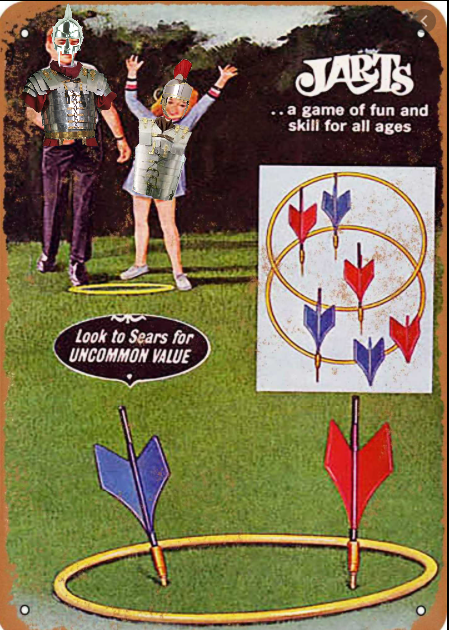
      • When enemy forces closed in on Roman legions, the mid and rear flanks would step back and throw the Plumbata under handed in droves.
      • The weapons was comparatively cheap to produce and the technique was so easy to carry out that virtually any soldier could be trained to throw them.
    • The efficiency of these Martio Barbuli legions was so high that kings from all over the ancient world began to praise these dart wielding soldiers.
      • They were very effective at slowing down large groups of enemy forces and of course they dealt their fare share of killing blows

THEN AMERICA CAME ALONG

  • In the 1950’s a Dentist name Lawrence Barnett from Fort Edward NY invented Lawn Darts.
    • He had no idea his game had been a literal weapon of war when he decided to market it as a family game to be enjoyed by American families during events like this upcoming weekend: Memorial Day.
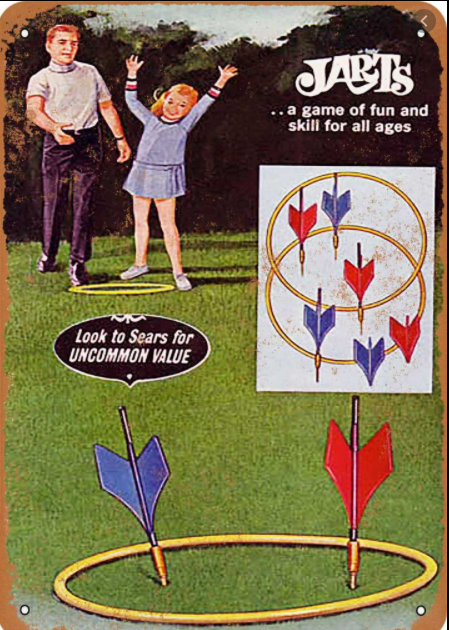
Click and drag the white circle across the image
  • The decades that followed saw thousands of injuries and even more outraged parents
    • In response to these injuries the Consumer Product Safety Commission (CPSC) banned the toy for a number of years.
    • The ban was specifically due to the injuries incurred by children.
    • Lawn Dart and Jart companies went to court over the battle and came to a compromise with the CPSC.
    • There was a regulation stating that lawn darts could be made and sold as long as they were marketed only as a game for adults. A warning label had to be placed on each package alerting consumers to the danger they posed, and the darts couldn’t be merchandised in toy departments or sold in toy stores.
    • These regulations accomplished very little.
    • Toy Stores and Departments ignored the regulations and sold the Lawn Darts anyway.
      • and Manufacturers failed to put those warning stickers on their product
    • Most importantly, the injuries didn’t stop
  • This brings us to April of 1987.
    • A man by the name of David Snow buys a 3-in-1 game set.
      • He only wanted to use the Volleyball game, but the store didn’t have single sets for volley ball. So he bought the combo pack with no intention of using the Lawn Dart game that was included.
      • This purchase would be one of the biggest regrets of his life.
    • MentalFloss.com breaks down the incident:
    • “One Sunday afternoon soon after, his nine-year-old son and some of his neighborhood friends found the Jarts and began tossing them around in Snow’s backyard. One kid tossed his Jart too far and too high, sailing it over the backyard fence and into the front yard, where Snow’s daughter, seven-year-old Michelle, was playing with her dolls. The Jart came down right on her and, with what researchers estimate as 23,000 pounds of pressure per square inch, penetrated her skull. She collapsed, was rushed to the hospital, and was pronounced clinically dead three days later.”
      • 23,000 pounds per square inch is about the force a 700 pound saltwater crocodile can bite. According to a 2012 study by Gregory Erickson of Florida State University, it is the the most powerful bite ever recorded of a living animal.
      • That is what killed David Snow’s daughter in April of 1987.
    • No surprise David Snow was in shock for quite some time, like any parent would be.
      • But David wasn’t like most parents. He was very smart and a very determined individual.
      • He was an aerospace engineer from Riverside, California.
      • Unable to focus on his work, David poured himself in to getting justice for his daughter Michelle.
    • David started researching Lawn Darts.
      • It is always good to note that researching before the internet was something entirely different. It took a lot more time, effort, patience, and know-how.
      • But that didn’t stop David. He found out about the ban on Lawn Darts years earlier and also knew how much said regulation was being ignored.
      • He pressed the CPSC to crack down on the game and ban it entirely
  • The CPSC’s statisticians claimed that only a few dozen ER visits were caused by Lawn Darts. They couldn’t authorize a ban based on such low numbers of ER visits.
    • David insisted their calculations must have been incorrect based on the evidence he saw. He urged the CPSC to tweak their counting.
    • Due to simple human error, a mass amount of Lawn Dart/Jart injuries had been missed by the CPSC statisticians.
      • There had been 6,100 ER visits directly caused by Lawn Darts over an 8 year period…
      • Of those ER visits, 81% were kids under the age of 16. With half of that being under the age of 10
      • The vast majority of Lawn Dart injuries ER visit injuries were to the head, face, eyes, and/or ears. Most injuries caused permanent injury or disability.
      • PEOPLE WERE GOING BLIND
  • The ban went through
    • In 1988, David Snow was putting in work lobbying for his cause. He participated in TV and newspaper interviews. He even met with President Reagan’s assistant for consumer affairs. His work paid off.
    • At the same time an 11-year-old girl in Tennessee was laying in a coma from a lawn dart injury, the Consumer Product Safety Commission voted 2 to 1 in favor of banning lawn darts.
      • They were removed from stores the week before Christmas of 1988 and banned from further sale.
  • Now Lawn Darts are just a distant memory of the 80’s for most people
    • I’m sure some people still have an old set somewhere.
    • There is an underground Jarts tournament in the Dayton Ohio. It was reported on in the book Sports from Hell: My Search for the World’s Dumbest Competition.
      • But I’ve been to Dayton, Ohio… I was in Dayton for 5 minutes during a road trip pit stop and during those 5 minutes I witnessed a break in. Best you just avoid the place altogether.
  • Now my opinion on the ban:
    • Normally I would be against government intervention.
      • Banning something just leads to banning more and more things and consenting adults should be allowed to do what they want, when they want.
      • However, this wasn’t just impacting adults. It was injuring CHILDREN and in rare cases, killing them.
      • This was an ancient weapon for pete’s sake!
      • The commission tried to regulate the game to make it so only adults played it, but the manufacturers ignored it and the result was that kids were suffering.
        • I have no sympathy for the Lawn Dart industry. It seems they dug their own grave on this one.
      • If someone wants to play lawn darts that badly, they can make a set of their own and play on their own time and property.
      • And it’s not like the world is a much worse place without Lawn Darts… There are tons of other games to chose from.
    • Like I said in at the beginning of the episode, just play some Horse Shoes!
  • Thanks for listening Who’d a Thunkers! Enjoy your Memorial Day weekend.
    • My work is forcing me to work on Memorial day, but I’m still going to a party on Saturday where I play to enjoy a nice game of Horse Shoes with my friends and family.

CREDIT:

Categories
Uncategorized

The Nazi Hunting Wizard

The following content is from Season 2 Episode 20 of the Who’d a Thunk It? Podcast

RECOMMENDATION SEGMENT

  • This week’s recommendation segment is simple:
    • anything Sir Christopher Lee worked on or inspired.

NOW FOR THE MAIN EVENT: Sir Christopher Lee

  • To me and my generation,
    • he was the Sith Lord Count Dooku from Star Wars and the Evil Wizard Saruman from Lord of the Rings.
    • It turns out his real-life story was much more legendary than either of those fictional characters combined.
    • This episode is about Sir Christopher Frank Tarantini Lee.
    • Just as a heads up to the Blog Readers: I use a TON of images for this episode. I just kept finding amazing images of this man.
      • Plus, there were a ton of memes claiming extraordinary facts about him that I wanted to double check.
  • So let us start by going over his Guinness Book of World Records:
    • Most screen credits for a living actor in 2007 after being acknowledged to have appeared in an incredible 244 film and TV movies.
      • When he passed in 2015 the number had gone up to 282 acting credits (according to IMDB)
      • Wikipedia has a comprehensive list of his acting credits.
        • HERE is a list of Lee’s filmography over the years according to Wikipedia
      • Some of his most notable roles:
        • Francisco Scaramanga from James Bond: the Man with the Golden Gun
        • Saruman in The Lord of the Rings series 
        • Frankenstein’s Monster
        • Kharis the mummy in The Mummy 
        • Count Dracula
        • Lord Summerisle in the British mystery movie The Wicker Man
        • the diver Martin Wallace in disaster movie Airport ’77
        • Count Dooku from Star Wars
        • Count de Rochefort in a couple Three Musketeers movies
        • Willy Wonka’s Dad
        • Emperor of China,
        • the Grim Reaper
        • Lucifer
        • Grigory Rasputin
        • Ramses
        • Vlad the Impaler
        • hosted SNL
        •  Russian Commandant Alexandrei Nikolaivich Rakov in Police Academy 7
          • Those are just a small fraction of the roles he played. I picked them because they all sound like really fun roles to play.
    • the Tallest actor in a leading role (a record he would go on to share with Wedding Crashers star Vince Vaughan).
      • Lee was 6’5″
    • most films with a swordfight by an actor
      • having dueled in 17 films with foils, swords, and even billiard cues
      • he’s been in everything from cutlass fights on the decks of waterlogged pirate ships to rapier duels in seventeenth-century France to taking on a couple guys one-third of his age with a lightsabers and a fistful of force lightning on the deck of an Imperial Star Destroyer
    • In 2004 he helped set the record for First spoken dialogue in a massive multiplayer online role playing game after lending his vocal talents to the game Everquest II,
    • he played the role of Diz/Ansem the Wise in Kingdom Hearts to set the record for Oldest videogame voice actor.
      • That same year also saw Lee knighted for services to drama and charity before being awarded a Bafta fellowship in 2011.
    • In 2008, he was recognised by Guinness World Records as the world’s Most connected actor living after software developed by the University of Virginia that mapped the working relationship between 1,250,000 actors and actresses in the Internet Movie Database determined that Lee was “at the centre of the Hollywood universe”.
      • His networking skills must have been amazing.
  • But even legends have to start out somewhere
    • Lee was born in England during the year 1922.
    • His father was Lieutenant Colonel Geoffrey Trollope Lee
      • (1879–1941)
      • Lee’s father, was a distant relative of Robert E. Lee and was multi-decorated war hero who’d served as a Colonel in the 60th King’s Royal Rifle Corps during World War I and the Boer War.
    • And his mother, Countess Estelle Marie
      • (née Carandini di Sarzano; 1889–1981)
      • She was an Italian Countess and descendant of Charlamagne
      • One of Lee’s ancestors on that side was the Papal Secretary of State who refused to attend the coronation of Napoleon and is buried in the Pantheon in Rome next to Raphael
      • Her visage was apparently so striking that her portrait was painted by almost a dozen famous Italian painters
    • Lee studied Classics at Wellington College. He was a champion squash player, an amazing fencer, and spent his spare time playing on the school hockey and rugby.
    • In 1939 Lee quit his job as a desk clerk to enlist in the Finnish Army against the Soviet invasion of Finland. He didn’t see much combat by the time he returned to England in 1940, but this means he did technically fight in the WINTER WAR.
    • When Lee did return to England it was to Enlist in the Royal Air Force to fight against the Nazis.
      • He enlisted in the Royal Air Force in 1940 and trained with de Havilland Tiger Moths. Just before he was to have his first solo flight, he was diagnosed with a failure of his optic nerve that caused him headaches and blurred vision. Devastated, he was told he would never fly again. But that wasn’t the end of his military career, far from it…
      • He became an intelligence officer in WW2 and was shipped out to North Africa to join the Long Range Desert Patrol (later known as the British SAS)
        • If you have any knowledge of military powers of the world, or have seen a few movies, or even played a Call of Duty game, you know the SAS are some hardcore warriors.
          • Bear Grylls was in the SAS
          • and Christopher Lee was in LRDP the group that came before the SAS
        • Although Christopher Lee himself seldom spoke about his time in the military, history shows that the LRDP were some of the most elite soldiers in WW2.
        • While in Africa they took convoys hundreds of miles behind enemy lines (braving the formidable Sahara Desert) to sabotage Nazi Luftwaffe airfields with espionage, quick precise attacks, and of course… explosives. The unit Christopher Lee fought in (Long Range Desert Patrol) was very effective.
        • After his time in the LRDP, Lee became a Special Operations Executive. This would later be known as Winston Churchill’s Ministry of Ungentlemanly Warfare (it almost sounds like the British were saying “sorry, not sorry” about being on the winning side of WW2.
          • These Special Operations Executives lead small team assaults on Germany’s top secret nuclear weapons sites in Norway.
          • They worked with Eastern European rebel forces to destroy Nazi supply lines that would have given them a chance to defeat the Soviets.
    • Later in the 2000’s Lee was asked by a reporter about his time in the military. Lee (6’5″ legendary war veteran famous for playing some of the most terrifying roles in cinematic history) stopped dead in his tracks, turned to face the reporter and gestured for him to come closer. … This man has played DEATH and he his now focusing all his attention on this reporter that is about half his height.
      • Lee asked “can you keep a secret?”
      • to Which the reporter eagerly said “YES!” Expecting Lee to finally open up about his combat experience.
      • At this Lee leaned down and whispered in his ear “so can I,” and just walked out the room.
    • Records show that when Lee retired from the Military as a Flight Lieutenant in 1945 he was personally decorated for battlefield bravery by the Yugoslavian, Czech, Polish, and English governments. He was also good friends with the Former President of the Socialist Federal Republic of Yugoslavia Josip Broz.
  • After the war, Lee started his long career of acting in 1948.
    • Nearly 10 years later in 1957 Lee got his first big hit “The Curse of Frankenstein” where he played Frankenstein’s Monster.
    • In 1958 he played one of his most iconic roles in Dracula, playing Count Dracula.
    • In 1959 he played the Mummy Kharis in the movie The Mummy
    • Then in 1974 Lee played Francisco Scaramanga, the main villian from James Bond The Man with the Golden Gun
Lee looks cooler than cool.
  • Even though he played the villian… Christopher Lee WAS James Bond.
    • Although Lee didn’t get an official credit for inspiring the character, Ian Fleming (coincidentally, Lee’s step-cousin), has admitted that Lee’s days as a spy are what inspired him to create the ultimate super-spy, James Bond
    • Ian Fleming and Lee fought together in the SOE (Special Operations Executives) during WWII.
      • … he WAS James Bond
  • Lee was obsessed with Lord of the Rings
    • Out of the entire cast of the Lord of the Rings movies, only Lee met the Author J.R.R. Tolkien.
      • In a 2010 interview with Cinefantastique, Lee described meeting Tolkien “quite by chance.”
      • “I met him with a group of other people in a pub in Oxford he used to go to, The Eagle and Child,” he said. “I was very much in awe of him, as you can imagine, so I just said, ‘How do you do?'”
    • Because he was a massive fan of the books (quote: “greatest literary achievement in my lifetime.”), Lee was determined to be involved in any screen adaptation.
      • So in the 90’s he started trying out for other Wizard roles.
      • By 1997, he landed the role of wizard Olwyn in the TV series The New Adventures of Robin Hood.
      • When he heard Peter Jackson was making the now-famous Lord of the Rings films, Lee sent him a picture of himself dressed as a Wizard (robes and all) with a note saying “This is what I look like as a Wizard, don’t forget this when you cast the movie.”
        • I love this story because it humanizes Lee and makes you realize he had weird quirks like being a MASSIVE Tolkien fanboy.
  • I’m just imagining these two terrors of cinema giggling together like school boys at slapstick comedy in the form of Looney Toons.
Imagine being so cool you turn down Swedish Royalty. I’ve met Swedish women and they are DROP DEAD GORGEOUS!
  • Lee’s Music Career
    • Going back to Lee’s collegiate education on the classics, he was a classically trained vocalist.
    • When he was 88 years old he came out with an album about his ancestor Charlemagne called “Charlemagne: By the Sword and the Cross”
    • He played with Manowar and Rhapsody.
    • His single “Let Legend Mark Me as the King” was written by some Judas Priest band members.
Aside from the content of his words, I am in awe by HOW he speaks.
I had to include an image of Count Dooku
  • Miscellaneous Accolades
    • Oh, Lee’s also a master at golf being the only actor to be a member of the Honourable Company of Edinburgh Golfers, the most prestigious country club in the world.
    • He was married to Birgit Kroencke (a Danish Supermodel for 54 years.
    • He was a Commander of the Order of St. John’s of Jerusalem
      • The Order of St John, short for Most Venerable Order of the Hospital of Saint John of Jerusalem and also known as St John International, is a British royal order of chivalry constituted in 1888 by royal charter from Queen Victoria and dedicated to St John the Baptist.
    • Knight Bachelor of the Order of the British Empire
    • Received the the World Award’s lifetime achievement award presented to him by Mikhail Gorbachev in 2003
    • Also was awarded the Unicef Award of 2012 and the Cinema For Peace Award in 2014, which he received from Angelina Jolie
Order of Saint John
  • His characters have executed both Charles the First of England and Louis the Sixteenth of France.
  • He’s portrayed Englishmen, Egyptians, Spaniards, Transylvanians, Frenchmen, Greeks, Poles, Chinese, Indians, Italians, Wallachians, Romans, Germans, Arabs, Gypsies, and Russians, played the lead role in the biography of Mohammad Ali Jinnah, the founder of Pakistan.
  • He speaks English, German, Russian, Swedish, Italian, and French, can do any English accent he wants, and sings everything from opera and death metal in a hardcore bass voice.
    • Lee’s movies have grossed more than any actor ever – his top five alone grossed $4.4B
    • he filmed every single scene in Star Wars 3 in a single day
    • he’s never received a Best Actor nomination BUT he’s been in 4 movies nominated for Best Picture
    • Lee belonged to three stuntman unions and did all of his own stunts.
      • He even has cool stunt injury stories
        • He once busted his face smashing head-first through an actual plate glass window for a scene.
        • He injured himself falling into an open grave while portraying Dracula, and once had his hand slashed open during a drunken sword fight with Golden Hollywood Era star Errol Flynn.
  • He was a living legend
    • You might point to his incredibly impressive ancestry or perhaps his military training, but after learning about his life you have to realize he was different from most people in a spectacular way.
    • I would have loved to have met him, maybe have a glass of brandy with the man.

CREDIT

Categories
Uncategorized

DeepFake

The content below is the script of Season 2 Episode 19 of the Who’d a Thunk it? Podcast.

Recommendation Segment

  • Levar Burton short story podcast
    • Reading was always hard for me. I’m not entirely sure why but reading words off of a page and trying to comprehend them without my mind wandering to 5 different topics was (and still is) one of the most difficult tasks for me to accomplish.
    • But there was a magical TV program that ran when I was a kid that helped me realize how special reading could be.
    • Reading Rainbow!
      • Take a look, it’s in a book. A READING RAINBOW!
      • For 21 seasons Levar Burton hosted Reading Rainbow, a program that focused on the showing kids that reading could be an amazing experience. Something school NEVER did for me.
      • Burton said in an interview with the Huffington Post:
        • Reading Rainbow‘ was the most used television resource in our nation’s classroom. In 2009, it was [cancelled] due to No Child Left Behind. That government policy made a choice between teaching the rudiments of reading and fostering a love of reading.”
      • So yeah, where school made reading out to be a boring chore that had to be learned, this PBS show for kids made it interesting.
        • Shows like Bill Nye the Science Guy did something similar for the field of science.
      • But that’s not all Levar Burton is known for. He played Geordi La Forge on Star Trek the Next Generation and Kunta Kinte on possibly one of the most culturally moving TV miniseries of all time: Roots.
    • I made this recommendation segment to tell you about Levar’s current on-going project: Levar Burton Reads. A podcast where Levar Burton, the man who showed entire generations to love literature, reads short stories to you for free!
      • And they aren’t kids stories. His main audience is made up of people like me in their late 20’s all the way up to their 40’s.
      • If you are looking to hear a new story for 40 minutes to an hour, check out the Levar Burton Reads. It is sure to give you a slice of nostalgia while you are at it.

Now for the main story:

  • What is DeepFake?
    • Did you know I can make Donald Trump say anything I want?
      • Or at least I can convince you and a decent amount of the public of such a thing.
    • Using a technology known as DeepFake, I can create a convincing video of any celebrity.
    • Ian Sample from the Guardian writes : “The 21st century’s answer to Photoshopping, deepfakes use a form of artificial intelligence called deep learning to make images of fake events, hence the name deepfake. “
  • Progress of Technology
    • DeepFakes started out in Academia in labs dedicated to the field of Computer Vision back in the 1990’s. For a long time the technology was easy to spot and wasn’t really fooling anyone. Plus it was very expensive to create requiring some serious computer hardware and graphics processors to pull off.
      • But just as it is with most technology, DeepFake was improved little by little and now everyone with a SmartPhone can create deepfake videos through a number of downloadable applications.
    • Geoffrey A. Fowler from the Washington Post writes:
      • “A few years ago, deepfake videos — named after the “deep learning” artificial intelligence used to generate faces — required a Hollywood studio or at least a crazy powerful computer. Then around 2020 came apps, like one called Reface, that let you map your own face onto a clip of a celebrity. … Now with a single source photo and zero technical expertise, an iPhone app called Avatarify lets you actually control the face of another person like a puppet. Using your phone’s selfie camera, whatever you do with your own face happens on theirs. “
    • TechCrunch’s Mike Butcher elaborates on the massive growth of this technology.
      • “Run out of Moscow but with a U.S. HQ, Avatarify launched in July 2020 and since then has been downloaded millions of times. The founders say that 140 million deepfake videos were created with Avatarify this year alone. There are now 125 million views of videos with the hashtag #avatarify on TikTok. … its competitors include the well-funded Reface, Snapchat, Wombo.ai, Mug Life and Xpression…”
  • what it is being useD FOR
    • Deepfake is used to create images of people who never existed.
      • Why? You might ask. Well similar to the example I gave in Season 2 Episode 2 “Falun Gong: the Cult You Should Be Watching Part 2.” Where the cult had fake social media accounts made to sway the opinion of American voters. The profile pictures they used were DeepFake people who never actually existed. Instead their faces were computer generated.
    • Audio deepfake is also a lucrative form of deception it seems. Scammers use deepfake to mimic people’s voices and authorize financial transactions in their name.
    • Ian Sample from the Guardian: “Many are pornographic. The AI firm Deeptrace found 15,000 deepfake videos online in September 2019, a near doubling over nine months. A staggering 96% were pornographic and 99% of those mapped faces from female celebrities on to porn stars. As new techniques allow unskilled people to make deepfakes with a handful of photos, fake videos are likely to spread beyond the celebrity world to fuel revenge porn. As Danielle Citron, a professor of law at Boston University, puts it: “Deepfake technology is being weaponised against women.” Beyond the porn there’s plenty of spoof, satire and mischief.”
    • Now one of the newest uses of DeepFake is DeepFake Geography
      • That may sound harmless, but geographic maps from satellites are a MAJOR part of modern warfare on our planet.
      • I have close friends that went to school for geo-mapping and now when I ask what they do for a living they are legally obligated to give me frustratingly vague descriptions.
      • Now that it is possible for DeepFake AIs to manipulate maps all over the globe… I would imagine it is turning heads of some very important people
      • An article published just last month on April 23rd 2021 to the website SciTechDaily.com writes:
        • “In 2019, the director of the National Geospatial Intelligence Agency, the organization charged with supplying maps and analyzing satellite images for the U.S. Department of Defense, implied that AI-manipulated satellite images can be a severe national security threat.”
      • So this technology shouldn’t be taken lightly. It doesn’t just have the capability to tarnish the reputation of a few celebrities. It has the potential to affect our National Defense.
        • Professor Lilian Edwards, a leading expert in internet law at Newcastle University said it perfectly: “The problem may not be so much the faked reality as the fact that real reality becomes plausibly deniable.”
    • What it COULD be used for:
      • Now take a moment and ponder what sinister things this technology could be used for. …
      • Sure it is fun when you are showing your little baby cousin how to use the face altering filters on snap chat or Facebook messenger.
      • But what about when a malicious organization hacks in to media outlets and makes a fake presidential address to the nation?
      • I don’t mean to be a fear mongerer, but it would be foolish to not make others aware of real-world possibilities.
      • Blackmail, politics, fraud, heck with so many working from home DeepFake may even be used to make it appear as if someone is at their desk when they really aren’t.
    • Now the applications of DeepFake aren’t all malicious. Actually there are quite a lot of positive uses for DeepFake
      • Microsoft is working on a way to have DeepFake help the blind by describing the world around them.
      • It can be used in artistic expression
      • DeepFake has been used to enhance movies and assist with acting.
      • And of course DeepFake has made some hilarious memes.

CREDIT

Categories
Uncategorized

The Cult of Personality

Below are the notes for Season 2 Episode 18 of the Who’d a Thunk It? Podcast

  • Welcome back Who’d a Thunkers!
    • I know I just released an episode last week with a warning that I may not be back until October due to taking 3 Masters level certificate college courses, but that didn’t go as planned.
    • Long story short, I realized it isn’t the right time in my life to take on such a responsibility and I’ve dropped all courses until further notice.
    • It wasn’t an easy decision to make, but I’m actually proud of myself for making it.
    • The good news is I’ll be keeping my weekly schedule on this podcast so you can expect a new episode every Thursday!
  • Quick Recommendation Segment here:
    • This week I’d like to recommend my favorite Japanese Anime show, Gurren Lagann!
    • I’m a big comic book nerd and I love Japanese culture so it only makes sense I’d love their versions of comic books.
    • Gurren Lagann is the animated TV series that follows the sci-fi fantasy adventures of a group of humans forced to live underground by a tyrannical evil overlord known as the Spiral King.
    • Their journey to the surface where they come across giant mechanical war machines that they eventually use to face their evil suppressor is a wild ride. The heights this show goes to by the end of its 27 episodes was beyond my wildest dreams of where any story could possibly go. Plus, it checks all the boxes of what a cliche anime show should have.

Now for the main story!

Merriam-Webster defines the term Cult of Personality as: a situation in which a public figure (such as a political leader) is deliberately presented to the people of a country as a great person who should be admired and loved

  • Examples of this would be…
    • Joseph Stalin
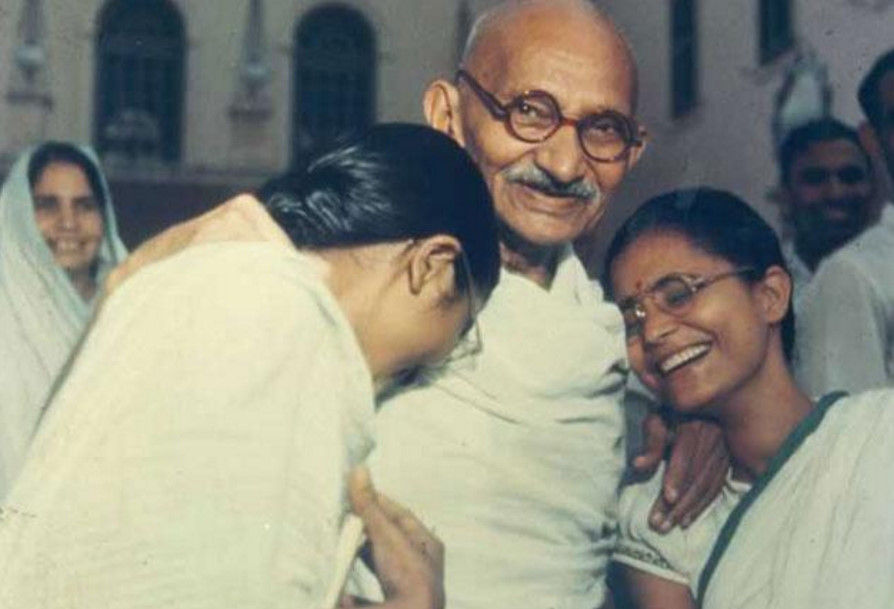
    • Mahatma Gandhi
    • and Donald Trump
  • But this podcast episode isn’t about the term itself.
  • I’ve always loved this song.
    • I loved it as a kid and still love it as an adult.
    • When I find a song I love I play it over and over again until I am sick of it.
    • Then a few months or years go by and I hear it again. Some songs don’t sound the same when they come back in to my life. I’ll hear a song and think: “how did I ever enjoy this garbage?” But not this song.
    • I’ve fallen in love with this song over and over again throughout my life.
    • Just the other day it came on through my car speakers via my old iPod that I keep hooked up and all 1030 songs on shuffle. I jammed out and realized it deserves a podcast episode of its own.
  • When I listen to a song, I am listening from 1 of 2 perspectives.
    • Depending on my mood, concentration level, or perhaps even how the wind is blowing that day, I’m either listening to music for
      • the feel of it – where I am sensing the rhythm, beat, and overall mood of the composition and how it plays with the vocals
      • Or I am listening to the lyrics – or more accurately the message the artist is trying to convey
    • I’ve listened to Living Colour’s Cult of Personality song with both perspectives and I love it through both lenses.
    • The guitar riff used in the song was supposedly stumbled upon while practicing a completely different song.
      • Vernon Reid the founder, song writer, and lead guitarist played the riff by accident and upon hearing it the first time realized he had made a killer sound.
      • Reid also plays the legendary guitar solo during the song which I consider to have the same level of epic-ness as the guitar solo from Lynyrd Skynyrd’s Free Bird. The 2 solos have a very different sound, but both always make me do air guitar moves every time I hear them.
    • As a kid I enjoyed the song for its heavy metal feeling but didn’t really understand what the song was about. Now as an adult I’ve recognized the major names referenced and the significance of the message.
  • For the overall meaning of the song allow me to read the words of Vernon Reid himself in an interview with TheRinger.com’s Alan Siegel in May of 2018:
    • “”The whole idea was to move past the duality of: That’s a good person and that’s a bad person. What do the good and the bad have in common? Is there something that unites Gandhi and Mussolini? Why are they who they are? And part of it is charisma. … “Cult of Personality” was about celebrity, but on a political level. It asked what made us follow these individuals who were larger than life yet still human beings. Aside from their social importance, Malcolm X and Martin Luther King both looked like matinee idols. That was a strong part of why their messages connected. Even now it’s why Barack Obama has that certain something””
  • The song is describing a phenomena that has shaped the greatest empires of man for better and for worse.
    • The Cult of Personality as a phenomena has pushed humanity to accomplish feats that previous generations couldn’t even dream of and it has also driven humanity to commit the deepest of horrors we all wish weren’t attainable.
      • An example being how Hitler convinced a nation to exterminate anyone different from themselves
    • The actual lesson of the lyrics may have escaped me when I heard this song as a teenager, but I did recognize the magnitude of the topic when I heard it.
      • I may not have understood exactly what Corey Glover (lead vocalist) was singing about, but through the power of the medium that is music, I understood it was worth listening to.
  • Lastly, the music video.
    • I had heard the song dozens of times through headphones attached to my iPod in high school home room or in the football locker room pumping myself up for a big game (sometimes played on repeat over and over again).
    • But it wasn’t until a few years ago that I watched the music video as it popped up on my Facebook feed
    • Corey Glover’s performance is moving to me. His facial expression says it all. His brow is pinched at the center and his lips are curled as he gives the crowd a hateful stare.
      • It is as if he is channeling the anger of generations as he sings. His mannerisms seem to portray a profound frustration with the ways of the world as he stomps his feet on stage and swings his dreads around in fury.
      • All this while actual propaganda used on the masses of the past is playing in the background, and a small impressionable girl stares at her TV unaware of how much she is being influenced by the poison of political agendas.

Blog readers: tune in to the podcast to hear my personal story with this song at the end of the episode.

Thanks for reading and tune in next week!

CREDIT

Categories
Uncategorized

Road Trippin’

This episode is dedicated to my Nen.

The following content is the script for Season 2 Episode 17 of the Who’d a Thunk It? Podcast.

No recommendation segment this week. No, instead I have some news to break to my dear listeners/readers.

  • I work for a big company that is closely related to the academic world.
    • They give great benefits for people seeking to further their education like discounts, tuition reimbursement, and even paying tuition upfront in certain situations.
    • One such opportunity came my way via email a few months back and I decided to apply for a post-graduate certificate in Organizational Leadership.
    • It is just 3 courses to get this certificate, but they aren’t going to be easy. They are post-graduate level after all.
    • Starting next week I will be taking 1 course at a time and if everything goes smoothly, I’ll be done by October of this year.
    • If I get a C average or above my company is going to reimburse me for all the tuition cost (which isn’t cheap).
    • I bring this up because if these courses turn out to be more time consuming than expected, I may be short on podcast episodes.
    • I love doing this podcast and you can bet I’ll be back at it as soon as my classes are finished. I may even keep my weekly schedule during my courses, who knows.
    • But I wanted to give you all a heads up. There’s a chance there will be no more Who’d a Thunk it? Episodes until late October of 2021.

Now, to the main event!

  • I talk to my Nen just about every week. She is my grandmother who lives out in Las Vegas and she suggested I do an episode about road trips.
    • It isn’t a typical episode topic for me because it is such a broad topic. But I thought I would give it a try.
  • Oxford Languages defines Road Trip as: a journey made by car, bus, etc.
    • I guess it depends on your definition of the word “journey,” but that would mean a trip to the grocery store is a road trip.
    • And I suppose going to the grocery store could be a road trip or journey for me. It depends on the experiences I might have along the way.
  • But typically when I think of a road trip I think of making memories with good company over the course of hundreds, if not thousands of miles.
    • I think of jamming out to music like Def Leppard, Biggie Smalls, Lynyrd Skynyrd, or anything the other passengers decide is a good mood booster.
      • I’ll even put on a podcast or maybe just the quite sounds of the road.
    • I love being in a car with good company and the old cliché “it’s about the journey, not the destination” is right on the money!
  • I’m not entirely sure if it is just my family or what, but the car is where we do our family bonding
    • We got all of our talking in while driving down the road. We worked through our toughest family strife as passengers of a Ford Pickup or minivan.
    • LOL it is probably due to the fact that everyone was stuck in the car. Luckily no argument was ever bad enough to make one of us jump out of the moving vehicle.
    • But that’s a major reason why I love road trips. Since I was a little kid they meant good music and communicating with the ones I loved on a very deep level. A level that is hard to reach when everyone has the option to just get up and leave the room.
    • And I want to share that meaningfulness with you, my listeners. I want you all to appreciate a good car ride as I do.

Here are some universally good points on why road trips are good for you:

  • Traveling allows someone to get away from their bubble. They have more time to think and make healthy decisions.
    • We all know the person who never left their home town.
      • While there is nothing inherently wrong with those people on an ethical level, they do tend to not understand the world around them. And they usually end up spewing their crappy opinions on social media.
    • It is good to get out of your own little bubble.
      • I’m sure your comfort zone is nice, but if you stay in it too long you’ll get soft mentally and socially.
      • A good way to leave your bubble, to get out and see different perspectives is to take a road trip. It is amazing how our little everyday problems tend to shrink and grow quieter when your hundreds, maybe thousands of miles away from home.
      • LOL dealing with your cranky neighbor back home doesn’t plague your mind when your faced with the dire decision of “do I risk using the restroom of this dirty truck stop or do I try and hold it until we make it to the hotel?”
      • These unique situations we find ourselves in while on the road are what help us grow as people in ways we wouldn’t if we were just at home overcoming the same everyday problems we are always faced with.
  • Better to spend money and time on experiences than material objects.
    • An Example: I proposed to my girl friend back in February. I got her a nice ring that she will keep for the rest of her life.
      • She mentioned she might get me an engagement gift in return and I still haven’t thought of anything. At first I thought about asking for PlayStation 5, but then I thought how her ring holds so much sentimental value.
      • Whereas a PS5 would just be a toy. A REALLY cool toy, I should say, but essentially just a toy that holds no sentimental value.
      • While Shannon’s ring will last her a lifetime, the PS5 will most likely be obsolete within 5 years when Sony makes a PS6.
      • I know I’m only in my late 20’s still, but I’ve begun to think about what really matters in the big scheme of things.
      • LOL I may end up asking for the PS5 because I can’t think of anything else, but at least the mature thought occurred to me.
    • But the same idea of the Engagement Ring vs the PS5 applies to life as a whole. putting so much time and effort in to material things eventually leaves one empty inside.
      • If a life is spent cultivating meaningful experiences then happiness is much more likely to flourish.
      • And guess what! There is a tried and true formula for creating lifelong memories and friends: the road trip.
      • There is a reason why so many movies, books, and tales are about a journey (the Hobbit/Lord of the Rings, The Revenant, Coming to America, Bill and Ted’s Excellent Adventure, etc.)
      • It is because whether you are going on a journey with old friends of complete strangers, you will be forced to overcome obstacles as a team in ways you have never had to before. You’ll be uncomfortable together. You’ll get frustrated with each other, and you will accomplish a goal together (reaching your destination).
  • So whether you are the designated driver keeping everyone alive,
    • the co-pilot deciding the next album to play,
    • or one of the backseat bums enjoying the scenery…
    • Remember to cherish the moment.
  • Thanks for listening Who’d a Thunkers!
    • Road Trips are one of my happy places. As I get older I’ve noticed there is less opportunities for them, but that just means they are even more special than before.
    • I don’t know the next time you’ll hear from me. Maybe these classes won’t be so bad and I will be back next week!
    • Either way, until next time. Thanks for listening 🙂
Categories
Uncategorized

Smalls

This episode is dedicated to my sister Cas. Even though she’ll never hear it lol.

The content below is the script/notes of Season 2 Episode 16 of the Who’d a Thunk it? Podcast.

Recommendation Segment

  • This episode’s recommendation segment is loosely connected to the main topic. I strongly recommend you check out music from The Notorious BIG, also known as Biggie Smalls.
    • **Warning** His music is seldom ok for kids to listen to and I like to keep this podcast clean as possible. You have been warned. Biggie’s art is quite explicit.
    • But I am a huge Biggie Smalls fan and have been ever since my little chubby legs were dangling from my car seat in the back of my families big green van. My mom would put on Biggie’s music when my sister and I were toddlers.
    • My favorite album is Ready to Die. I listened to that album on repeat during Two-A-Day football practice weeks in high school.
  • MAJOR SIDE NOTE
    • I WAS going to do this recommendation segment about how I only have 3 tattoos right now and 1 of them is a Biggie Smalls quote. It is the tattoo I got with my sister at the same time. It is on both of our left biceps….
    • I was going to write how proud I was of the tattoo and show you how big of a biggie fan I was that I got his words tattooed on my body.
    • But when I went to look up which song the quote came from I found it was from “I’m with Whateva,” and the lyric I got as a tattoo is from a verse sung by a different artist…. let that sink in.
    • That Lyric that I have tattooed on my body with the initial “BIG” next to it was actually rapped by Lil Wayne.
    • Lil Wayne was just a feature on the song whereas Biggie got the main artist credit. So when Cas and I saw all these quotes online saying Biggie was quoted saying “If you don’t love yourself I’ll make you see your own heart.” Those people were actually mistaken. If you listen to the song, Lil Wayne is the one who actually said it…
      • I am NOT a Lil Wayne fan.
      • But, c’est la vie.
      • It is still a cool quote. I actually find it hilarious and a good representation of my sister and I’s sibling relationship.

Captain Robert Smalls

Now for our main story about Captain Robert Smalls. This is another historical episode. I hope you enjoy!

  • BIRTH OF A LEGEND
    • Robert Smalls was born in to slavery in 1839 in Beaufort, South Carolina. His mother, Lydia Polite, was a house servant on the plantation she was enslaved to. She gave birth to Robert in the cabin behind their slave owners house.
    • As Robert grew he became a favorite amongst the slave owners due to his intellect and charm.
    • Being sold off and separated from her family at the age of 7, Robert’s mom was no stranger to horrors of slavery. Lydia saw that her son was being treated more kindly than most other slaves on their plantation. Fearing he would grow up naïve of his owner’s cruelty, Lydia requested her son work out in the fields so he could witness the brutal whippings of his people.
      • Lydia’s intended message was received. Robert led the rest of his life fully aware of the darkness of the society he lived in.
    • By the age of 12 Robert began to act out. After being arrested for the heinous crime of being in public past 7PM with his friends, Lydia decided it was best to “lease” her son to the dockyards in Charleston.
      • Saying all things like “his owners” and “leased out her son” feels so wrong. I, like everyone in American public schools, was educated on American slavery, so it shouldn’t be a shock. But it is. It feels wrong even saying those things. But it was the reality back then.
    • Smalls did hard labor for years rigging ships and receiving a pitiful fraction of the pay of his white co-workers. The bulk of Robert’s pay went to his new master. Robert received only $1 a week. That comes out to about $34 dollars a week in today’s economy.
    • While working on the docks Robert found he had a love for the sea. He worked as a longshoreman, a rigger, a sail maker, and eventually worked his way up to become a wheelman, more or less a helmsman (basically a boat pilot), though slaves were not permitted that title. Through his hard work, Robert Smalls was able to become quite familiar with the Charleston Harbor. Knowing it like the back of his hand.
    • When he was 17 he married an enslaved hotel maid named Hannah Jones. They settled down, had 2 kids and went on with their lives… until war broke out.
  • CIVIL WAR
    • When the Civil War broke out in 1861 with the Battle of Fort Sumter. It was so close to home for Smalls that he could probably hear the cannon fire from his apartment.
    • His skills as a seaman didn’t go unnoticed. He was immediately pressed into service about the CSS Planter, a converted cotton steamer that was now working as a supply ship ferrying food, ammo, and other supplies from the Charlestown docks to the various forts that defended the harbor. 
  • Now Smalls was fighting in the American Civil War, but Charleston South Carolina wasn’t part of the Union North. When he was forced to work as the Wheelman of the CSS Planter, it was for the Confederacy. The side that, if they were victorious, would continue to keep Smalls and his family enslaved… And remember Robert Smalls wasn’t dumb. He was smart as a tack, charming, and the images of his fellow slaves being whipped in the fields was forever burned in to his mind.
    • For 9 months Smalls piloted the CSS Planter around Charleston harbor. He made mental notes about troop placements, currents, tides, and, most importantly, signals and codes sent between the ship and the forts that dotted the harbor. He also noticed his enslaver captain and crew were sloppy and underestimated him.
    • Every time he left shore he told his wife Hannah to have a go-bag ready incase they needed to flee the area.
  • On May 16th 1862, after a long days work ferrying supplies all over the harbor, the white captain and crew of the CSS Planter stopped the boat near a small island and after midnight told his men to camp out to catch some sleep.
    • Smalls stayed on the boat with the 7 other slaves and as soon as their slavers were asleep on the island, Smalls, like a total boss, stole the boat!
      • Keep in mind, steamboats are loud. Their charcoal boilers make quite the ruckus, but somehow Smalls got away.
    • He and the 7 other slaves high-tailed it back to Charlestown where they scooped their families. The now 17 escape slaves loaded 6 cannons on the CSS Planter on Smalls’ orders.
      • He planned to sneak or charm his way past the numerous Confederate checkpoints and forts, but if it came to it, Smalls wanted to be prepared to fight to the death rather than fall victim to slavery again.
      • Smalls stationed a man in the boiler of the ship and ordered him to blow the ship to Kingdom-come if it looked like they were going to be captured.
      • It seemed all those aboard the CSS Planter agreed they were either going to make it to freedom, or die free that very night.
      • One could imagine the Confederates weren’t too forgiving to mutineer slaves if they were caught.
    • Smalls remembered the signals necessary to seem an ally to each Confederate sentry. He donned the captains uniform (using the large hat to hide his face). Thankfully most sentries didn’t think twice when Robert spoke with them as they had seen him pilot the boat through the harbor many times before.
    • When it came to the final checkpoint, Fort Sumter, Smalls knew this largest checkpoint would be the most trouble. His crewmates tried to convince him to pilot the CSS Planter in a wide route around the fort, but Smalls knew that would seem suspicious.
      • He chose to bravely steer the ship in a direct line to the Union Blockade. Luckily it worked.
    • Robert Smalls captained an enemy ship past 5 Confederate Checkpoints with 17 slaves on board. He steered to freedom using nothing but his intelligence and boldfaced confidence.
    • When the Confederate troops finally realized what was going on it was too late. Alarms were sounded and ships were set in pursuit, but all was in vein. Smalls and crew made it to Union held territory.
      • Union forces almost opened fired on the CSS Planter, but thankfully Smalls’ wife had packed a white bed sheet. Quick thinking on Smalls part led to the sheet being hoisted to signal surrender to the Northern Forces.
    • Making national news in the north, Smalls was an instant hero for freeing 17 slaves and bringing a 6 cannon warship over to the North.
      • He went on to speak with Lincoln and convince him to allow African Americans to fight for the Union.
      • He briefly went on a tour of the North recruiting African American men to the fight (he was credited for recruiting 5,000 men).
    • But Robert Smalls wasn’t a man to sit back while a war was being fought. A year after he commandeered the CSS Planter away from the Confederates he joined the Union army and eventually took over as Captian of his own ship….. the USS Planter.
      • Commissioned as an officer in the United States military, Robert Smalls participated in 17 naval military actions in and around Charleston Harbor between 1863 and 1865.  He piloted a US Navy Ironclad, the USS Keokuk, during the attack on Fort Sumter in April 1863, and earned a commendation for bravery at the Battle of Folly Creek in June while piloting the Planter – the ship’s captain got a little shell-shocked from the heavy fire the ship was taking and ran to hide in the boiler room, so Smalls took over active command and helped his crew fight off the enemy attack.  He was promoted to captain, earned a salary of $150 a month (making him among the highest-paid black soldiers of the Civil War), and watched proudly from the deck of the Planter when Charleston surrendered to the Union in April 1865.
      • This living legend showed up to battles as the official captain of the ship he stole from his enemies…. that is jaw dropping historical fact.
      • I am in awe of this man’s story.
      • After the war, Robert Smalls was appointed Brigadier General of the South Carolina militia, and he took his wife and kids back home to Beaufort where he bought the house he was born in.
        • Smalls allowed his former owners to stay on his land and live among his family.
  • He was elected first to the South Carolina State Senate, then was elected to the United States House of Representatives in 1874 after winning 80% of the vote from his district.
  • In 1877, the Former Representative that Smalls beat for his seat in the House planned to scandalize General Smalls out of office. The claims were that Smalls had taken bribes.
    • He was sent to court in Charleston, given a joke trial, convicted, and sentenced to three years in jail, but only ended up serving two days before the Governor of South Carolina pardoned him. The Governor knew the charges brought against Smalls were bogus. 
    • Apparently Congress agreed with the Governor because Smalls didn’t even lose his seat in the House over it — he just walked out of jail and went right back to the House of Representatives. 
    • He went on to serve three more terms in Congress, where he worked to desegregate the military, restaurants, and railroads, fought for debt relief for Southern families who had lost their homes and property during the War, battled for voting rights for black people, and fought against the KKK whenever he got the chance
    • In 1912, at the age of 73, General Robert Smalls stopped a lynch mob from hanging an African American boy in the street near his home. He walked right up to the mob, address its leader, and threatened to rally every black person in Charleston to burn the entire city to the ground if they didn’t let the boy go free. THAT is power used for good.
    • Smalls ended up serving 5 terms in Congress.
    • He died at his home in 1915 at the age of 75.  His home is now a national landmark. Numerous schools in South Carolina bare his name. And in 2004 he became the first African-American to have a US warship named after him – the support ship USAV Major General Robert Smalls.
    • The story of Robert Smalls blew me away when I first read it. But after reading his story again for this episode I can’t help but notice it all seemed to have started with his mom. She recognized his potential and steered him to where he could have a chance.
  • Thanks for listening Who’d a Thunkers! I hope you enjoyed.
    • MAJOR shout out to one of my favorite history blogs “Badass of the Week.”
    • I discovered Robert Smalls’ story on this blog and I borrowed a lot of material from their post about Smalls.

CREDIT